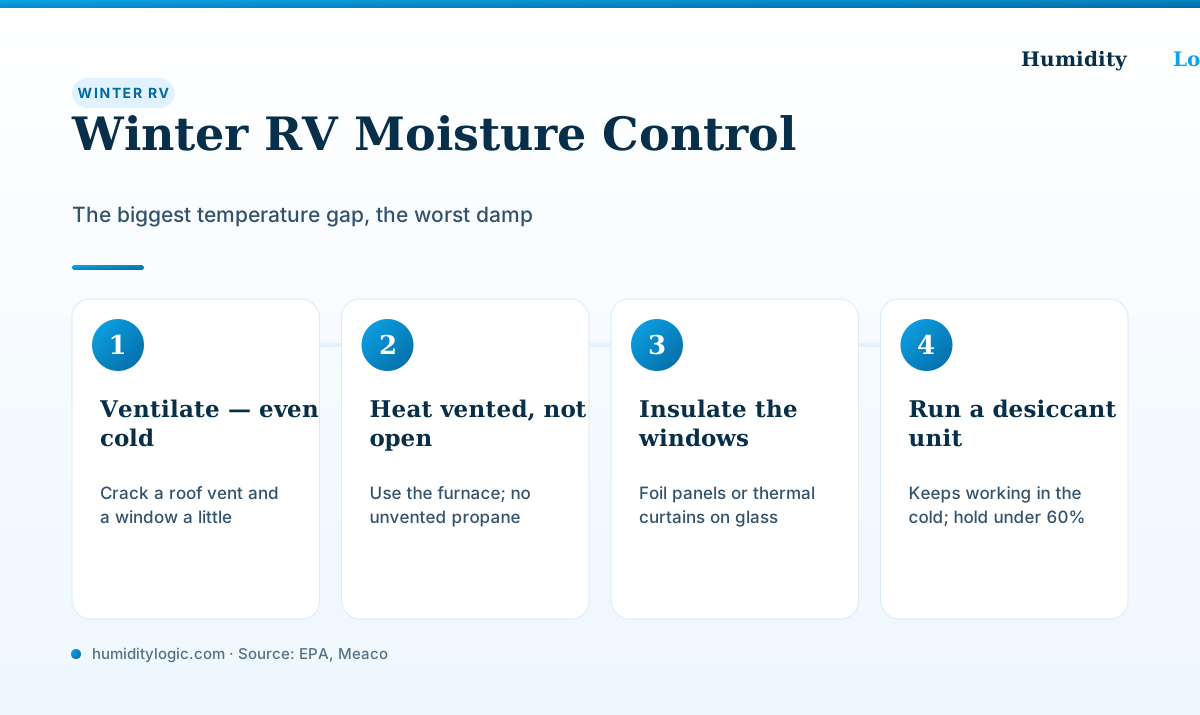
Winter is when RV moisture turns from a nuisance into a real problem — dripping windows, damp bedding, even frost on the inside of the glass. Control cold-weather RV moisture by ventilating even when it is cold, heating with vented appliances, insulating the windows, and running a desiccant dehumidifier — because the huge gap between a warm cabin and freezing surfaces drives condensation hard. Here is the winter playbook.
Why winter makes it so much worse
Condensation is driven by the temperature gap between humid indoor air and a cold surface. In summer that gap is small; in winter it is enormous. Warm, moist cabin air meets walls and single-pane windows chilled to near-freezing by the air outside, and water condenses heavily on every cold surface — exactly the mechanism the EPA describes, warm humid air meeting a cold surface (EPA Mold Course, Chapter 2). In a hard freeze it can even form frost or ice on the inside of the glass. And because you keep the cabin warmer and more sealed in winter, the humidity climbs faster. This is the season RVs grow mildew behind cushions and in corners, so it is worth getting right. The general causes and fixes are in RV condensation; this page focuses on the cold-weather specifics.
Ventilate — yes, even when it’s freezing
It feels wrong to open vents when you are trying to stay warm, but a little steady airflow is the most important thing you can do. Crack a roof vent and a window a small amount to let humid air escape, and open up more while cooking, showering, and sleeping — the three biggest moisture events. Sealing the RV up tight to trap heat is precisely what causes the dripping windows. A powered roof fan on low moves that moist air out efficiently for very little heat loss.
Heat with vented appliances only
How you heat matters enormously in winter. Burning propane produces water vapor, so an unvented catalytic or portable propane heater adds significant moisture to the cabin — along with carbon monoxide (EPA — Combustion Pollutants and Indoor Air Quality). Use the RV’s built-in furnace, which exhausts combustion gases outside, or electric heat when you are on shore power — both add heat without adding water. Never heat with the stovetop or oven. If you do run any unvented propane appliance, keep a window cracked and a working CO alarm nearby.
Insulate the cold surfaces
The less cold the surfaces, the less they condense. Winter RV standbys:
- Insulate the windows — reflective foil panels, bubble insulation, or heavy thermal curtains over single-pane glass dramatically cut the condensation there.
- Skirt the RV to block wind under the floor and keep the belly and tanks warmer.
- Pull cushions and mattresses off cold walls and add airflow underneath (slatted bases or ventilating underlay) so moisture does not collect in those trapped, cold spaces.
Run a desiccant dehumidifier
A dehumidifier is the reliable way to hold humidity down when you cannot ventilate enough in the cold. Type is critical here: a standard compressor dehumidifier ices up below about 50°F and stops working, while a desiccant unit keeps removing water in the cold and gives off a little warmth as it runs (Meaco). For short cold trips, rechargeable moisture absorbers plus good ventilation can be enough; for winter living in an RV, a desiccant dehumidifier is the tool. Size it to the small cabin with the dehumidifier size calculator, and see the dehumidifier for a camper guide for small-space picks. Aim to keep the cabin under 60%, ideally 30–50% (EPA — A Brief Guide to Mold, Moisture and Your Home).
Winter storage
If the RV is parked for the season, the same logic applies without you there to manage it. Dry everything out first, leave cushions tilted and cabinets open for airflow, and place moisture absorbers throughout the cabin. Crack roof vents if your cover allows, and check on it periodically. Over months of storage the goal is simply to keep interior humidity under 60% so mold never gets started on upholstery and wood.
Ventilate, heat dry, insulate the glass, and dehumidify — do those four and a winter RV stays dry instead of dripping. For the year-round routine, see how to dehumidify an RV.
See it in 3D. For the same cold-surface condensation ideas in a full home, explore The Humidity House, our interactive 3D home.
Frequently asked questions
Why is condensation so bad in my RV in winter?
Because the temperature gap is biggest. Warm, humid cabin air meets walls and single-pane windows chilled by the freezing air outside, so water condenses heavily on every cold surface — and in a hard freeze it can even turn to frost or ice on the inside of the windows. The warmer and more humid you keep the cabin, the more it condenses.
Should I ventilate my RV in winter even though it is cold?
Yes. A little steady airflow is essential — crack a roof vent and a window a small amount, especially while cooking, showering, and sleeping. Sealing the RV up tight to stay warm is exactly what causes the dripping windows and mildew. You lose a little heat, but you keep the cabin dry and healthy.
Do propane heaters cause moisture in an RV?
Unvented ones do. A catalytic or portable propane heater that vents into the cabin produces water vapor and carbon monoxide as it burns. Use the RV's built-in furnace, which exhausts combustion gases outside, and never heat with the stovetop or oven. If you use any unvented propane appliance, ventilate and run a CO alarm.
What dehumidifier works in a cold RV?
A desiccant dehumidifier. It keeps removing water in the cold, where a standard compressor unit ices up below about 50°F, and it gives off a little warmth as it runs. For short cold trips, rechargeable moisture absorbers plus ventilation can be enough; for winter living, a desiccant dehumidifier is the reliable tool.
How do I keep an RV dry in winter storage?
Before closing it up, dry everything out, leave cushions and cabinets open for airflow, and place moisture absorbers throughout. Crack roof vents if the cover allows, and check on it periodically. The goal over months of storage is to keep interior humidity under 60% so mold never starts on upholstery or wood.
Sources & references
Every figure on this page is checked against these published sources. Last reviewed October 25, 2026.