A camper is small, cold a lot of the time, and short on power — which means the dehumidifier that works in a house is often the wrong choice. For most campers, a small desiccant dehumidifier is the best all-rounder, a compact compressor unit wins in warm weather, and rechargeable moisture absorbers cover short trips and off-grid stays. Here is how to pick for your rig and how you camp.
This is the equipment-picking guide for small campers, vans, and pop-ups. For the broader RV overview and the condensation fixes themselves, see RV dehumidifier and RV condensation.
The two things that make a camper different
Space: a camper is tiny, so even a small dehumidifier can keep up — but that small, sealed volume also means humidity climbs fast from cooking, showering, and breathing. Power: most campers run on limited battery, solar, or intermittent shore power, and a full dehumidifier draws more than an off-grid setup can sustain for long. Those two realities decide which tool fits.
Your options, from most to least capable
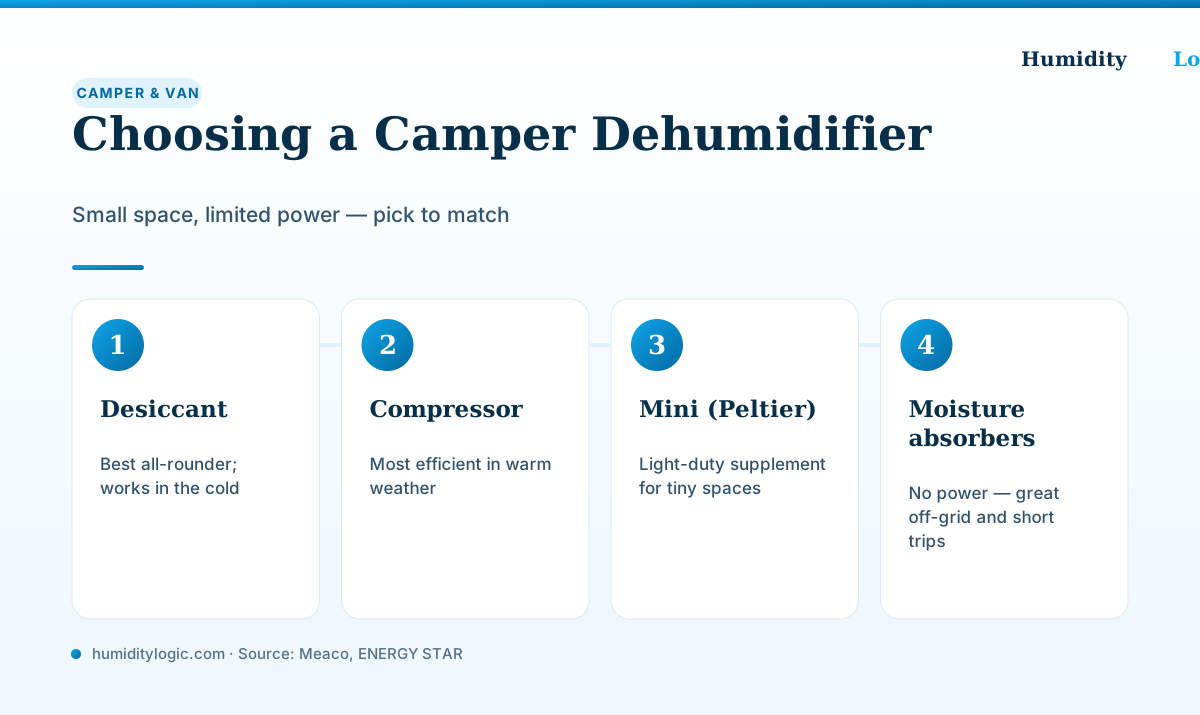
- Small desiccant dehumidifier — the best all-rounder. Compact, and it keeps working in the cold where a compressor unit ices up below about 50°F (Meaco). It also gives off a little warmth as it runs — welcome in a chilly camper. The trade-off is higher power draw, so it is mainly a shore-power tool. For cold-weather trips especially, this is the pick; see RV moisture control in winter.
- Small compressor dehumidifier — warm-weather efficiency. In a warm camper it removes more water per watt than a desiccant unit. Choose one with auto defrost if nights get cool, and know it will fade below 50°F. The full comparison is in our desiccant dehumidifier guide.
- Mini thermo-electric (Peltier) dehumidifier — light duty. These tiny, quiet, low-power units pull only a small amount of water a day. They help in a very small, closed space — a van, a wardrobe, a damp cupboard — but cannot keep up with two people cooking and showering in a larger camper. Treat them as a supplement.
- Moisture absorbers — no power needed. Rechargeable desiccant tubs or disposable calcium-chloride pots quietly pull moisture down with zero electricity, which makes them ideal off-grid and for short trips. Place them by the coldest windows and empty or recharge on schedule.
Match the choice to how you camp
- Weekends, warm weather, hookups: a small compressor unit, or just moisture absorbers plus ventilation.
- Cold-weather or shoulder-season camping: a small desiccant dehumidifier, which keeps working as temperatures drop.
- Off-grid / van life / limited power: moisture absorbers plus disciplined ventilation, with an electric unit run only when you are plugged in.
- Full-time living: a desiccant dehumidifier as the main tool, backed by absorbers.
Sizing and setup in a small space
Do not oversize — a camper is small — but do size by dampness, not just floor area. Put a hygrometer in the camper for a few days; if it sits above 60%, you need active help. Convert your area and dampness into a target capacity with the dehumidifier size calculator, and keep the cabin under the EPA’s 60% ceiling, ideally 30–50% (ENERGY STAR — Dehumidifiers; EPA — A Brief Guide to Mold, Moisture and Your Home).
Place the unit where air can circulate around it, and empty the tank often — in a camper you will rarely plumb a drain hose, so a smaller tank means more trips to the sink. Whatever you run, pair it with ventilation: cracking a roof vent and a window cuts the moisture load so the dehumidifier (or the absorbers) can actually win. That combination is what stops the condensation the EPA describes, warm humid air meeting the camper’s cold walls and windows (EPA Mold Course, Chapter 2).
Pick for your climate and power, keep the camper under 60%, and the damp mornings and musty cushions stop. For the full moisture routine, see how to dehumidify an RV.
See it in 3D. For the same ideas scaled up to a full house, explore The Humidity House, our interactive 3D home.
Frequently asked questions
What is the best type of dehumidifier for a camper?
For most campers, a small desiccant dehumidifier is the best all-rounder: it is compact, works in the cold where campers spend a lot of time, and gives off a little warmth. In warm weather a small compressor unit is more energy-efficient, and for tiny vans or short trips, rechargeable moisture absorbers are often enough.
Can I run a dehumidifier in a camper off battery or solar?
A full compressor or desiccant dehumidifier draws too much for most battery/solar setups to run for long, so people use them mainly on shore power. Off-grid, lean on ventilation plus rechargeable or disposable moisture absorbers, which need no power at all, and run the electric dehumidifier when you are plugged in.
What size dehumidifier do I need for a small camper?
Campers are small, so a modest unit goes a long way — but size by how damp the space is, not just the floor area. Measure with a hygrometer, and if you are consistently above 60%, a small compact dehumidifier or desiccant unit will hold it. Our calculator converts area and dampness into a capacity.
Do mini dehumidifiers work in a camper?
The tiny thermo-electric (Peltier) mini dehumidifiers pull only a small amount of water per day, so they help in a very small, closed space like a van or a closet but cannot keep up with cooking, showering, and two people breathing in a larger camper. Treat them as a light-duty supplement, not the main tool.
Are moisture absorbers enough for a camper?
Often, for short trips and small campers. Rechargeable desiccant tubs or disposable calcium-chloride pots need no power and quietly pull moisture down, especially paired with good ventilation. For full-time living, humid climates, or cold-weather camping, an electric desiccant dehumidifier does a more reliable job.
Sources & references
Every figure on this page is checked against these published sources. Last reviewed October 27, 2026.