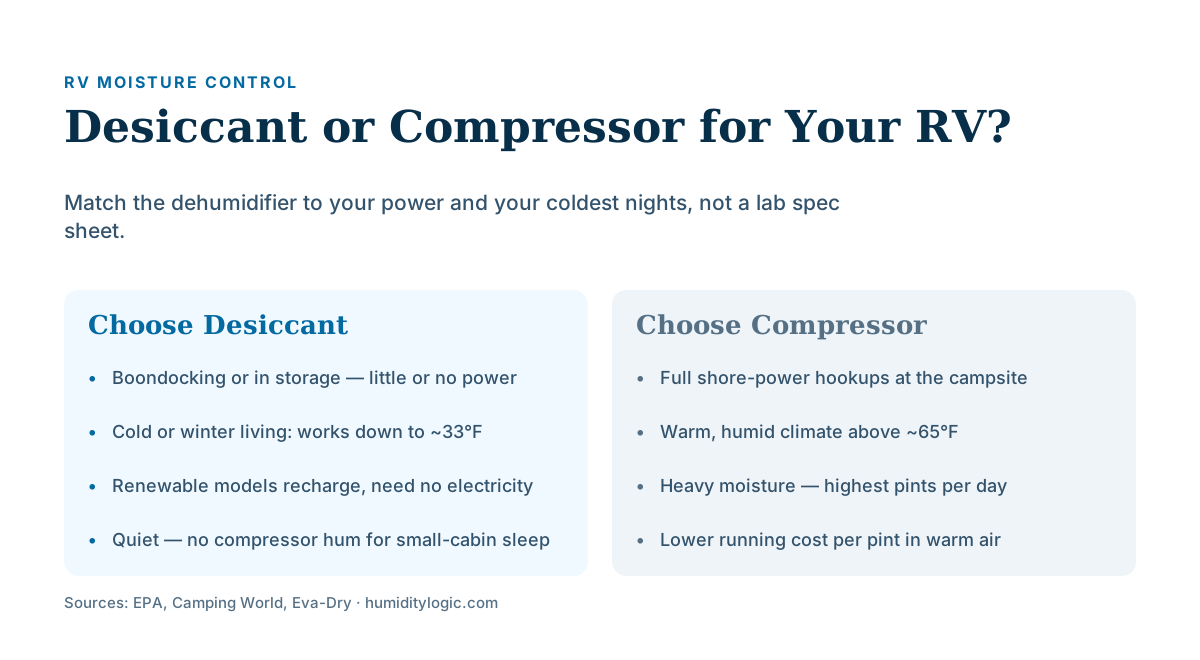
An RV dehumidifier has to solve two problems a house never faces: no power and real cold. For boondocking or winter storage, use a renewable desiccant unit — it absorbs moisture with no electricity and keeps working down to about 33°F. On full shore power in warm weather, a small compressor unit pulls more water per watt. Either way, hold the rig at 30–50% relative humidity.
What’s the best dehumidifier for an RV — desiccant or compressor?
Match the machine to your power situation and your coldest nights, not to a spec sheet measured in a warm lab. A compressor (refrigerant) dehumidifier condenses water on a cold coil, which works well above 65°F but frosts over and quietly stalls in a cold camper. A desiccant dehumidifier absorbs moisture into a silica-gel wheel with no cold coil to freeze, so it keeps extracting near freezing — and renewable desiccant units need no power at all.
That splits the decision cleanly:
- Boondocking, dry camping, or storage: you have little or no shore power, so a 300–550-watt compressor is a non-starter off a battery bank. Use a renewable desiccant unit that runs on chemistry, not electricity.
- Cold-weather or winter living: desiccant wins outright. Compressor extraction falls off below about 65°F and the coil ices near 41°F, exactly when interior condensation is worst.
- Warm climate on full hookups: a small compressor unit is the value pick — more pints per kilowatt-hour, and the campground pedestal makes its power draw irrelevant.
This is the same cold-space logic that governs a garage dehumidifier; for the full technology teardown, see our compressor vs desiccant comparison.
How do you keep an RV dry with no shore power?
Use a renewable desiccant dehumidifier, which pulls moisture out of the air with no electricity. These are cordless silica-gel canisters: the beads absorb water vapor until a color indicator turns from blue to pink, then you plug the unit into any outlet for 8–10 hours to drive the moisture off and reset it. A common model like the Eva-Dry E-333 covers up to 333 cubic feet, absorbs roughly 6–8 ounces of water over 20–30 days between recharges, and lasts about 10 years of that cycle.
For a small van or a rig in storage, that is often all you need — drop one or two in the cabin and a couple in closed lockers and closets. The catch is throughput: a renewable canister removes ounces over weeks, not pints per day, so it manages the slow moisture of an empty or lightly used rig, not the gallon a family breathes and cooks into the air while living aboard.
When you are living in the RV off-grid and need more than a canister can handle, the next step up is a low-wattage electric desiccant unit rather than a compressor — it runs off a modest inverter and, unlike a compressor, actually works when the cabin is cold. Estimate any electric unit’s real running cost with our electricity cost calculator before you plan your battery budget.
What size dehumidifier does an RV need?
Smaller than you think — an RV is a fraction of a house. Sizing starts with interior floor area: a 30 ft by 9 ft rig is about 270 square feet, so a compressor unit rated for 300 sq ft, or roughly a 20-pint model, covers it with headroom. Desiccant units are often rated in cubic feet instead, so match the canister or wheel to your cabin volume.
| RV type | Interior floor area | Sensible starting point |
|---|---|---|
| Camper van / teardrop | Under ~150 sq ft | Renewable desiccant canister(s), or a mini electric unit |
| Travel trailer | ~150–250 sq ft | Compact desiccant (rated ~300 sq ft) or a small compressor on shore power |
| Fifth wheel / Class A | ~250–400 sq ft | 20-pint compressor when plugged in and warm; desiccant if cold or off-grid |
Two adjustments push you toward the larger end. First, an RV is effectively a very damp, cold space — thin walls, single-pane glass, an occupant load packed into tiny volume — so treat it like a damp basement, not a dry bedroom. Second, cold cuts real-world compressor output, so if you run one in shoulder-season weather, buy a size up. Run your exact dimensions through the dehumidifier sizing calculator to confirm.
Why does my RV get so much condensation?
Because a camper is a small metal-and-glass box full of moisture sources, wrapped in thin, cold walls. Warm, humid interior air meets a cold window or aluminum frame, and the water vapor condenses out as droplets — the same physics as a cold drink sweating on a summer day. In an RV the cold surfaces are everywhere and inches from where you breathe, cook, and shower.
The moisture load is surprisingly heavy for the space. A sleeping adult exhales roughly a pint of water overnight; two people plus a hot shower, a boiling pot, and a wet dog add up fast in a couple hundred square feet. Left alone, that moisture soaks into cabinetry and soft goods and grows mold on cold, hidden surfaces — behind the mattress, in the corners of overhead lockers, along window frames.
How do you stop condensation while living in the RV?
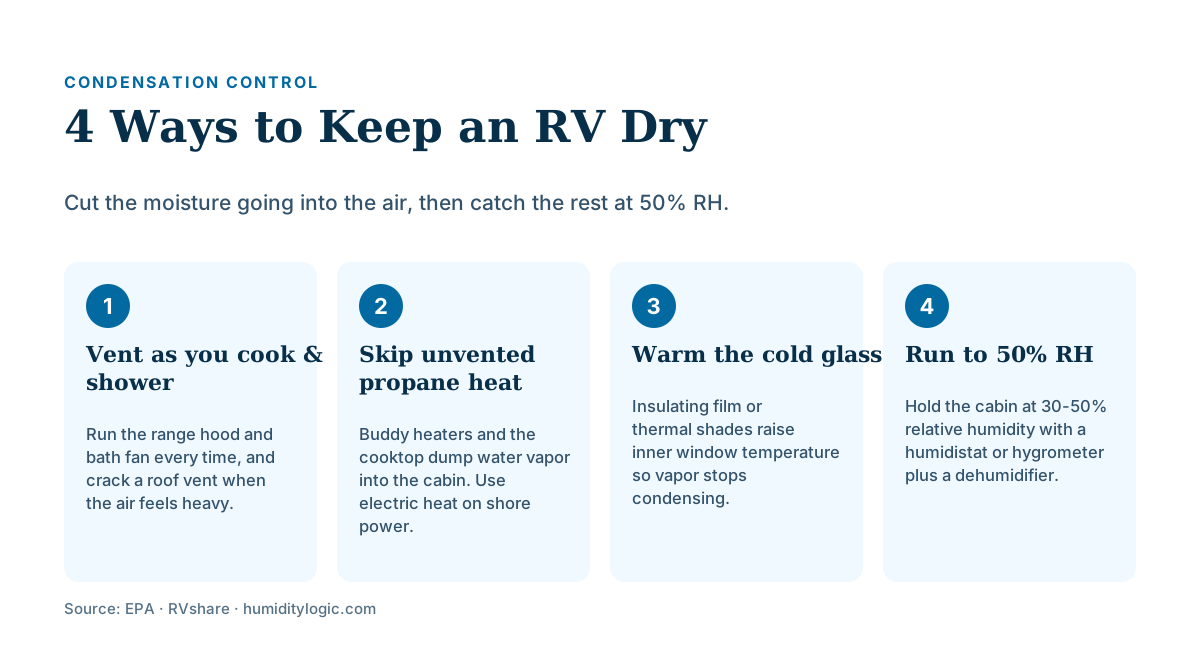
Cut the moisture entering the air, warm the cold surfaces, and let a dehumidifier catch the rest. The measures that matter, in order of payoff:
- Vent while you cook and shower. Run the range hood and bathroom fan every time — this is where the biggest moisture spikes happen. Crack a roof vent a couple of times a day when the air feels heavy to swap humid air for drier outside air.
- Skip unvented propane heat. A sealed, vented RV furnace exhausts its combustion moisture outside, but a portable “buddy” heater or the propane cooktop dumps water vapor straight into the cabin. On shore power, an electric space heater adds no moisture at all.
- Stop drying clothes inside. Wet laundry, dripping coats, and towels can add a surprising amount of water to the air; hang them outside or use a campground dryer.
- Warm the glass. Insulating film, thermal shades, or reflective inserts raise the inner surface temperature of single-pane windows so vapor has nowhere cold to condense — the same fix that beats window condensation at home.
- Open interior doors and lockers. Air has to reach closed cabinets and closets, the exact dead-air spots where mold starts. Prop them open when you run the dehumidifier.
- Run a dehumidifier to a target. Set a humidistat (or a $10–15 hygrometer plus manual on/off) to hold 50% RH or below. That single tool is the most effective control you have.
What humidity should you keep an RV at?
Hold it below 60%, and aim for 30–50%. The EPA recommends keeping any indoor space below 60% relative humidity, ideally between 30% and 50%, to prevent mold — guidance that matters more, not less, in an RV, because thin walls and cold single-pane glass condense moisture faster than a house does. Our guide to ideal indoor humidity levels explains why that band is the sweet spot.
Below freezing outside, don’t chase the top of the range. In hard winter, 30–40% is a realistic target that keeps enough moisture off the windows without over-drying. A cheap hygrometer placed away from the dehumidifier’s own optimistic sensor is the honest referee.
If you do find mold, fix the moisture source first — a dehumidifier that never addresses a leaking window seal just keeps drying the same wet spot. The EPA’s rule of thumb is that you can clean a moldy patch under about 10 square feet yourself; larger areas, or growth after major water intrusion, call for a professional. Anything electrical, propane, or refrigerant-related in an RV is a technician’s job, not a weekend project.
Do moisture absorbers like DampRid work in an RV?
Yes, for small, closed, low-traffic spaces — not as a whole-rig solution. Disposable calcium-chloride tubs (DampRid and similar) and renewable silica-gel canisters both pull moisture passively, which makes them ideal for a locker, a closet, a wardrobe, or a rig sitting closed in storage. They remove ounces slowly and silently with no power, exactly matching a low-moisture, unattended space.
What they can’t do is keep up with two people living aboard in humid or cold weather — that load needs an active dehumidifier moving real airflow. The smart setup combines both: an active unit for the living space while you’re in it, and passive absorbers tucked into the dead-air cabinets an air stream never reaches. Empty a full DampRid tub carefully; the collected brine is corrosive and should not spill on surfaces or skin.
The bottom line
Start with your power and your temperatures, not a product ranking. Boondocking or storing the rig cold? A renewable desiccant unit runs on chemistry, works near freezing, and never touches your battery bank. Living aboard on full hookups in warm weather? A 20-pint compressor is the value pick. Whatever you run, size it for a small damp box rather than a warm room, hold the cabin at 30–50% RH, and back it up with venting and passive absorbers in the lockers — that combination keeps an RV dry through the dampest, coldest season.
Frequently asked questions
What is the best dehumidifier for an RV?
It depends on power and temperature. If you boondock or store the rig cold, a renewable desiccant dehumidifier is best — it needs no electricity to absorb moisture and keeps working near freezing. If you camp on full shore power in warm, humid weather, a small compressor unit pulls more water per watt.
What size dehumidifier do I need for an RV?
Most RVs are small enough that a 20-pint compressor unit or a compact desiccant model rated for 300 sq ft is plenty. Measure your interior floor area — a 30 ft by 9 ft rig is about 270 sq ft — and treat it as a damp, cold space rather than a warm living room.
Will a dehumidifier work in an RV in winter?
A desiccant dehumidifier will — most operate down to about 33°F and lose little capacity in the cold. A standard compressor unit frosts up and largely stops extracting below about 65°F, and stalls near 41°F, so it is the wrong tool for a cold, unheated camper.
What humidity should I keep my RV at?
The EPA recommends keeping any indoor space below 60% relative humidity, ideally between 30% and 50%. In an RV that range also protects cabinetry, wiring, and soft goods from the mold and rot that thin, cold walls invite once moisture climbs.
How do I stop condensation on my RV windows?
Cut the moisture going into the air and warm the glass. Vent while you cook and shower, crack a roof vent, avoid unvented propane heat and drying clothes inside, and run a dehumidifier to hold RH near 50%. Insulating film or thermal shades warm the inner glass surface so vapor stops condensing there.
Sources & references
Every figure on this page is checked against these published sources. Last reviewed July 21, 2026.