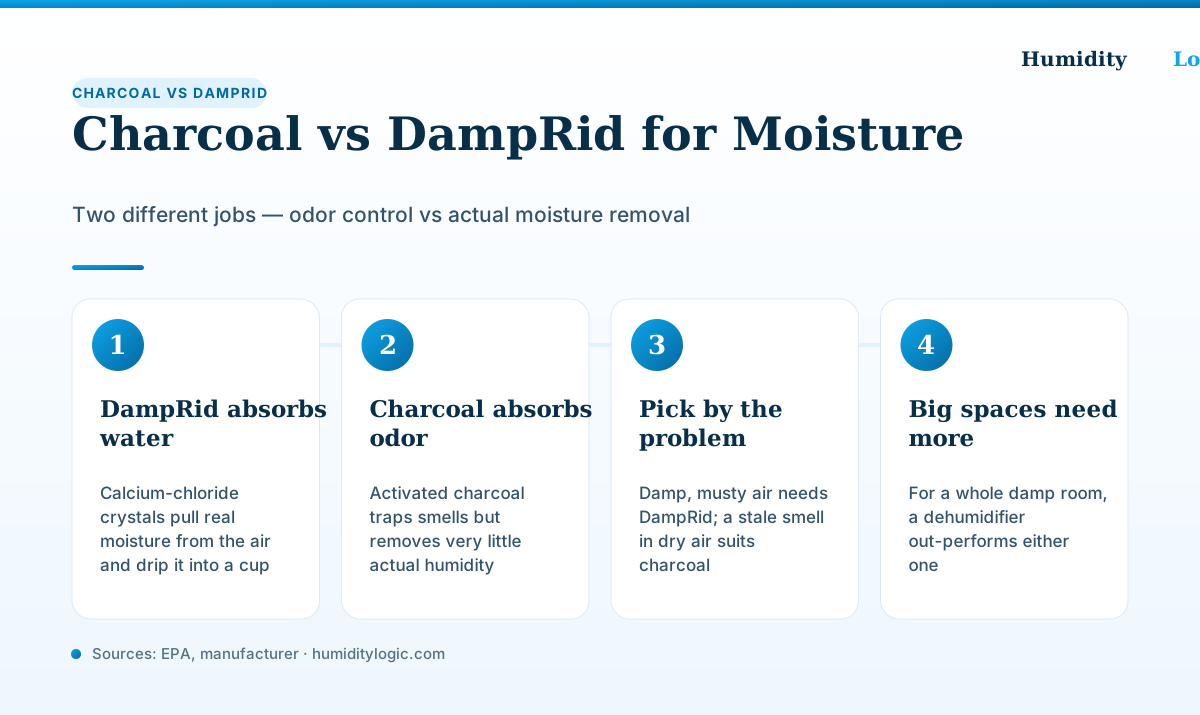
If you are weighing charcoal against DampRid, start with what each one actually does: DampRid absorbs moisture, and charcoal absorbs odor. Pick by whether your real problem is dampness or smell. DampRid is a calcium-chloride absorber that pulls water vapor out of humid air and drips it into a reservoir, which genuinely lowers the moisture in a small space. Activated charcoal and bamboo charcoal bags are odor tools: they trap smells and some pollutants but remove very little actual humidity. They look like competitors on the store shelf, but they are solving two different problems.
What does DampRid actually remove?
DampRid is a hygroscopic salt, mostly calcium chloride, sealed in a container. The crystals attract water molecules straight out of the surrounding air and slowly dissolve into a saltwater brine that collects in a lower chamber. There is no fan and no electricity, just salt with a strong chemical pull toward water. That is why the container gets heavier and the crystals shrink over time: the weight you see in the bottom is real moisture that used to be in the air.
Because it works by absorption, DampRid measurably lowers humidity in a small, still, enclosed space. The manufacturer notes that DampRid does not absorb standing water, only moisture from the air, and that its larger hi-capacity tubs are meant for areas up to about 1,000 square feet. In practice it shines in closets, safes, cabinets, boats, and RVs in storage, where the air is calm and there is no outlet for a dehumidifier.
What does activated charcoal actually remove?
Activated charcoal, including the popular bamboo charcoal bags, is riddled with microscopic pores that give it an enormous internal surface area. That structure is excellent at adsorption, where odor molecules and some airborne pollutants stick to the surface of the carbon. It is what makes charcoal a great deodorizer for shoes, fridges, gym bags, and stale-smelling rooms.
What charcoal does not do well is remove humidity. A typical bag holds only a few dozen grams of carbon and saturates fast, so it cannot pull the pounds of water out of the air that a damp room contains. One manufacturer describes its bag as absorbing “odors, excess moisture, and harmful pollutants,” but the meaningful effect in a genuinely damp space is on smell, not on the humidity reading. If you hang a charcoal bag in a wet basement expecting drier air, you will be disappointed. Hang it in a dry-but-stale closet and it does exactly what it is designed to do.
Charcoal vs DampRid: which should you pick?
The decision comes down to one question: is your problem dampness or smell?
| Factor | DampRid (calcium chloride) | Activated / bamboo charcoal |
|---|---|---|
| Main job | Absorbs moisture from the air | Adsorbs odor and some pollutants |
| Effect on humidity | Real, in small enclosed spaces | Minimal |
| Effect on smell | Reduces musty, damp odors indirectly | Directly neutralizes odors |
| Best use case | Damp, clammy, musty air | Stale smell in already-dry air |
| Reusable? | No, crystals are disposable | Yes, recharge in sunlight |
| Coverage | Up to ~1,000 sq ft (hi-capacity) | Small spots (closet, car, shoes) |
| Safety note | Keep from kids, pets, metal | Generally low-risk |
If the air feels clammy, the walls sweat, or fabric smells persistently damp, that is a moisture problem and DampRid is the better match. It also helps to know what counts as high humidity before you decide, since a space that only feels stuffy may just need airflow and odor control. If the space is already dry and simply smells old or musty from being closed up, that is an odor problem, and charcoal is the cleaner fix. It is worth learning what mold actually smells like too, because a mold odor is a signal of hidden moisture that neither product will fully solve on its own.
How much space can each one handle?
Both are small-space tools, but DampRid covers more. Its hi-capacity tubs are rated for areas up to roughly 1,000 square feet and stay effective for weeks, while charcoal bags are meant for very small zones like a single closet, a car, or a pair of shoes. Neither is built to dry an open room with normal air movement.
This is the key limit to keep in mind: a passive absorber only affects the still air right around it. If you are trying to protect clothes and shoes, our guide to preventing mold in a closet walks through pairing an absorber with better airflow, which matters far more than the product you choose. For anything larger or consistently damp, you will get much better results sizing an actual appliance; the dehumidifier size calculator and our explainer on what size dehumidifier you need will point you to the right capacity.
Reusability and cost over time
Charcoal wins on reusability. A bamboo charcoal bag can be reactivated by setting it in direct sunlight for an hour or two roughly once a month, which drives off trapped moisture and odors, and a good bag can last up to two years. That makes it inexpensive over its life.
DampRid is disposable by design. The active crystals dissolve into brine and get used up, so you pour out the liquid, refill or replace the crystals, and the container itself can be reused. Over a year of steady use, DampRid means buying refills, while charcoal mostly costs you a few minutes in the sun. That difference matters if you are treating a space long-term, though it does not change which tool is right for the job.
A safety consideration for DampRid
DampRid deserves more caution than charcoal. Because it is calcium chloride, the manufacturer says to keep all products out of the reach of children and pets. The crystals and the concentrated brine they create can irritate or burn if swallowed, and that salty liquid can corrode bare metal and stain carpet or leather if it spills. Give the container a stable spot with some clearance from tools, appliances, and metal shelving, and consider a hanging version in rooms where kids or animals roam. Charcoal, by contrast, is generally low-risk, though you should still keep any small bag away from pets that might chew it.
Neither one replaces a dehumidifier
The most important point is that a genuinely damp room needs more than either product. The EPA is blunt that the key to mold control is moisture control, and it recommends keeping indoor humidity below 60 percent, ideally between 30 and 50 percent. DampRid can help hold a small closet in that range, and charcoal can freshen the air, but neither can pull a whole basement or laundry room under 60 percent the way an electric dehumidifier can. A dehumidifier moves far more air and removes many pints of water a day.
So think of it as a hierarchy. For a real, ongoing dampness problem in a room-sized space, a dehumidifier is the fix, and our DampRid vs dehumidifier comparison covers when to step up to one. For a small enclosed space that is damp, reach for DampRid. For a small space that is dry but stale, reach for charcoal. Match the tool to the problem, and you will stop wasting money on the wrong one.
Frequently asked questions
Does activated charcoal lower humidity?
Barely. Activated charcoal and bamboo charcoal bags are built to adsorb odor molecules and some airborne particles, not to pull meaningful amounts of water out of the air. A small charcoal bag holds only a few grams and saturates quickly, so it will not noticeably drop the relative humidity of a room. If your goal is drier air rather than fresher-smelling air, charcoal is the wrong tool. DampRid or a dehumidifier removes real moisture; charcoal mostly handles smell.
Is DampRid or charcoal better for a musty closet?
It depends on why the closet smells musty. If the air is genuinely damp and clammy, DampRid is better because it removes the moisture that feeds mildew and the musty odor. If the closet is already dry but still smells stale, a charcoal bag is the simpler fix because it targets the odor directly. Many people use both: DampRid to control the dampness and charcoal to freshen the leftover smell. First figure out whether you have a moisture problem or just an odor problem.
Can charcoal replace DampRid?
Not for moisture. Charcoal cannot match DampRid's ability to draw water out of humid air and collect it as brine, so it will not keep a damp space dry. Charcoal can replace DampRid only when the actual complaint is a lingering smell in air that is already dry. For a damp basement, crawl space, or closet, charcoal is not a substitute.
Is DampRid safe around kids and pets?
Use it with care. DampRid is mostly calcium chloride, and the manufacturer says to keep all products out of the reach of children and pets. The crystals and the salty brine they form can irritate or burn if swallowed, and the brine can corrode or stain metal, carpet, and leather if it spills. Place DampRid where it cannot tip or be reached, and hanging versions are a safer choice in occupied rooms.
Do I still need a dehumidifier if I use DampRid or charcoal?
For a genuinely damp room, yes. Both DampRid and charcoal are passive helpers for small, enclosed spaces. Neither can dry a whole basement, laundry room, or living area the way an electric dehumidifier can, because a dehumidifier moves far more air and removes many pints of water a day. If a room is consistently damp or humid, a dehumidifier is the real fix, with DampRid or charcoal handling the small spots it cannot reach.
Sources & references
Every figure on this page is checked against these published sources. Last reviewed August 3, 2026.