No — do not drink dehumidifier water. It is condensate: room moisture that condenses on the cold coils and drips into an open tank, and along the way it rinses off dust, mold, bacteria, and trace metal and solder residue from inside the machine. It is never sterilized or filtered to drinking standards, so even though it looks as clean as distilled water, it is not safe to drink, cook with, or give to pets.
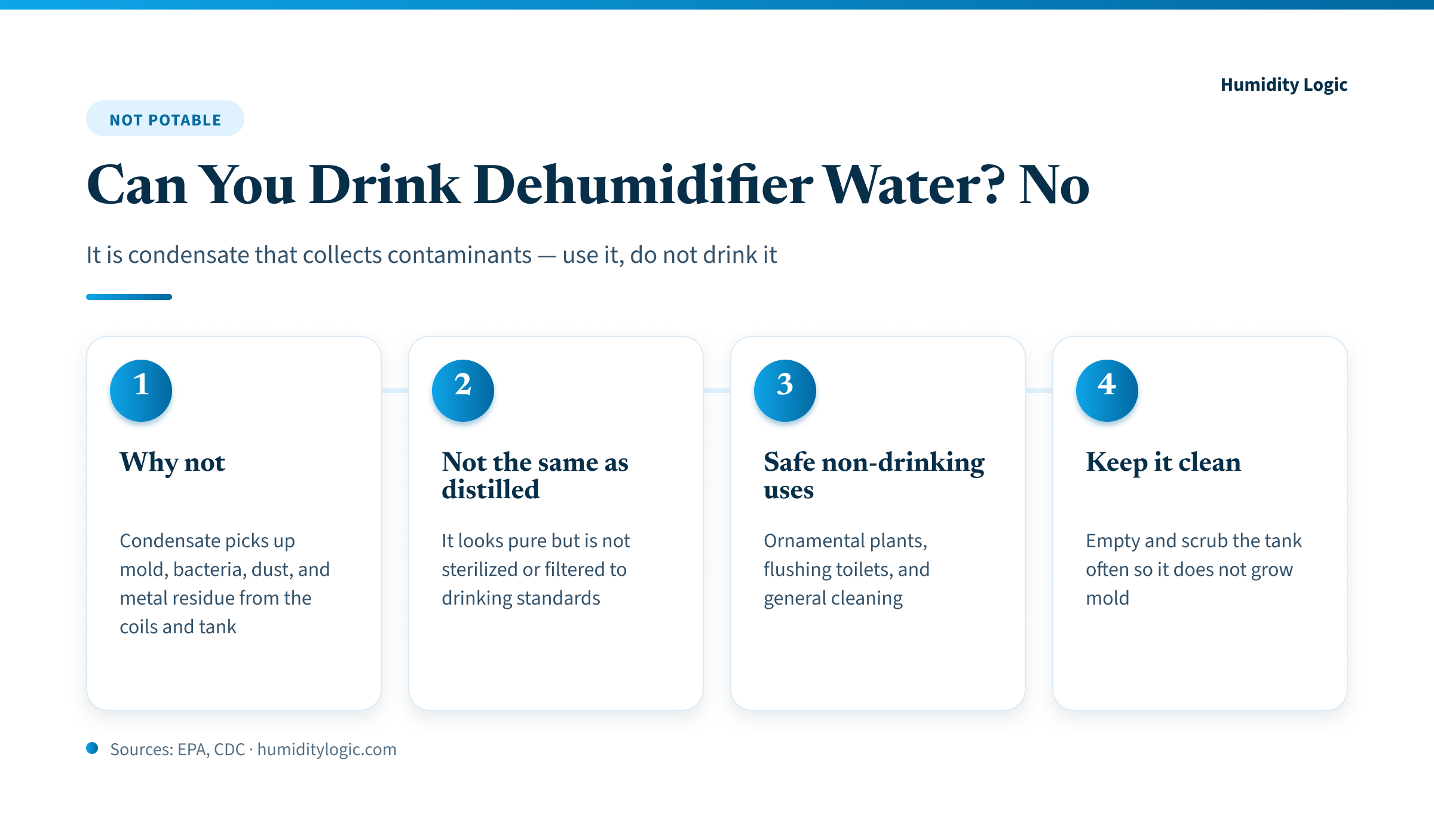
It is easy to see why the question comes up. A busy dehumidifier can pull gallons of clear, odorless water out of the air in a day, and it looks exactly like the distilled water you would buy for an iron. But how the water is made, and where it sits afterward, are what make it unsafe. Below is what actually ends up in that tank, why it falls short of drinking water, and the non-drinking jobs it does handle well.
Why can’t you drink dehumidifier water?
You can’t drink it because the condensate collects contaminants from the moment it forms until you pour it out. A dehumidifier works by drawing warm, humid air across a refrigerated coil so moisture condenses on the metal — the same process our explainer on how a dehumidifier works walks through. That coil is coated in whatever dust and grime the air carried in, plus manufacturing residue, so the first thing the water does is rinse the machine’s insides.
Health and science sources are direct about the result. Stanford’s Ask the Expert column puts it plainly: do not drink the condensate, because “stagnant condensate can harbor biological contaminants, including mold, mildew and algae” and “can contain lead and other metal residues from the component parts.” The water then sits in a warm, open tank — exactly the kind of standing moisture the EPA warns will grow mold, since “the key to mold control is moisture control.” None of that gets removed before it reaches you.
What contaminants are in dehumidifier water?
The water carries a mix of biological and metal contaminants picked up from the coils and tank. There are three broad sources worth knowing about, because they explain why filtering out one problem still leaves the others.
- Mold, bacteria, and algae. The tank is warm, dark, and permanently damp, so microbes multiply in it the same way they would in any container of standing water left out for days.
- Dust and airborne debris. Whatever the intake air was carrying — dust, dander, spores — lands on the coil and gets rinsed into the tank along with the condensate.
- Metal and solder residue. The condensate forms on metal coils and runs past solder joints and plastic parts, so it can pick up trace lead and other metals, which is why it should never touch food crops.
This is also why a tank that smells musty is a warning sign, not just an annoyance; if yours has a stink, our guide on a dehumidifier that smells bad covers what that odor means and how to clear it.
Is dehumidifier water the same as distilled water?
No — it resembles distilled water but is made a completely different way. Distilled water is produced by boiling water into steam and then condensing that steam back into liquid; the boiling step sterilizes it and leaves impurities behind. Dehumidifier water skips the heat entirely. It only condenses, so nothing ever kills the microbes it gathers, and instead of being purified it is actively picking up residue off the coils.
That difference matters because the two are easy to confuse by eye. Both are low in minerals and both look crystal clear. But as the Stanford column notes, dehumidifier water “is never sterilized through boiling,” so the visual similarity is misleading. Low mineral content is genuinely useful for some household tasks, which is where the safe uses below come in — but it is not the same thing as being clean enough to drink.
Can you make dehumidifier water safe to drink by boiling or filtering it?
No — home boiling or basic filtering does not make it drinkable, and it can make one problem worse. The CDC is clear that while boiling and chemical disinfection kill microbes, “if the water is contaminated with a chemical, disinfectants will not make it drinkable.” Boiling handles the mold and bacteria but does nothing about metals.
In fact, boiling concentrates metals like lead: as the water turns to steam and the volume shrinks, the metal that was dissolved in it stays behind, so the water left in the pot carries a higher concentration than you started with. A simple pitcher or carbon filter is not designed to certify water microbially safe either. The honest answer is that there is no quick home treatment that turns condensate into reliable drinking water, and clean tap or bottled water is cheaper and safer than trying. If you are unsure how much water your unit even produces, the dehumidifier size calculator gives you a realistic daily estimate.
What can you safely use dehumidifier water for?
You can safely use it for non-drinking, non-food tasks, as long as you handle it like gray water. Bob Vila lists several practical uses, and the common thread is that none of them involve people or pets ingesting the water. Reusing it this way also displaces clean tap water you would otherwise pour down the drain.
- Watering ornamental plants. Its low mineral content suits houseplants and flowers. Use caution and let the water be reasonably fresh rather than weeks old.
- Flushing toilets. Pour it into the tank or straight into the bowl. The toilet does not care about bacteria, and you save clean water on every flush.
- General cleaning. Mopping floors, rinsing outdoor gear, or washing the car all work, especially once you mix in soap, which breaks down whatever is in the water.
- Steam irons — only if it is clean. The low mineral content resists scale, but only use freshly collected water from a clean tank, and check your iron’s manual first.
Never use it on vegetables, herbs, or fruit you plan to eat — edible plants can take up trace lead and pass it into the food — and never store it for drinking, cooking, or filling pet bowls.
How do you keep collected dehumidifier water from getting worse?
Keep it usable by treating the tank like any container of standing water: empty it often and clean it regularly. The longer condensate sits, the more mold and bacteria it grows, so a tank you emptied this morning is far cleaner than one that has been full for a week. Pour out what you are not using rather than letting it stagnate.
Regular tank cleaning is part of routine dehumidifier maintenance anyway — scrubbing the bucket with warm, soapy water every week or two stops the pink or black slime that otherwise builds up. Keeping the machine and its water clean also keeps the unit itself from becoming a mold source in a damp room, which matters if you are running it to fight mold in the first place. The point of a dehumidifier is to hold indoor humidity in the healthy range — the EPA advises staying below 60 percent, ideally 30 to 50 percent — and a dirty tank quietly works against that goal.
Frequently asked questions
Can you drink water from a dehumidifier?
No. Dehumidifier water is condensate that drips over cold metal coils and pools in an open tank, where it picks up mold, bacteria, dust, and trace metal residue from the machine. It is never sterilized or filtered to drinking standards, so treat it as gray water and use it only for non-drinking tasks like watering ornamental plants.
Is dehumidifier water the same as distilled water?
No, even though both come from water vapor. Distilled water is boiled and its steam recaptured, a process that sterilizes it. Dehumidifier water is only condensed, never heated, so nothing kills the microbes it collects, and it also rinses dust and metal residue off the coils. It looks pure but is not purified to any standard.
Can boiling make dehumidifier water safe to drink?
No. Boiling kills bacteria and mold, but the CDC notes that disinfection does not remove chemical contaminants. Boiling actually concentrates any lead or other metals left behind as water evaporates, so you end up with less water carrying a higher share of the contaminants you most want to avoid. Boiling does not make it drinkable.
Can you water plants with dehumidifier water?
You can water ornamental, non-edible plants with it, using caution. Because it is low in minerals it works fine for houseplants and flowers. Never use it on vegetables, herbs, or fruit you plan to eat, because edible plants can take up trace lead and other metals from the water and pass them into the food.
What can you safely do with dehumidifier water?
Use it for non-drinking, non-food tasks: watering ornamental plants, flushing toilets, general cleaning and mopping, and topping up a steam iron only if the tank is clean. Empty and scrub the tank regularly so the water does not sit and grow mold, and never store it for later drinking or cooking.
Sources & references
Every figure on this page is checked against these published sources. Last reviewed July 29, 2026.