If your dehumidifier smells bad, the smell itself tells you what to do. A musty, moldy, or dirty-sock smell means mold and mildew are growing inside the unit — in the tank, the filter, or on the coils — and that is a straightforward cleaning job. A burning, acrid, hot-plastic, or electrical smell is completely different: it points to an overheating or failing electrical part, so you should unplug the unit, stop using it, and not run it again until it has been inspected or replaced. Never try to “clean away” a burning smell. Sort your problem into one of those two buckets first, then follow the matching steps below.
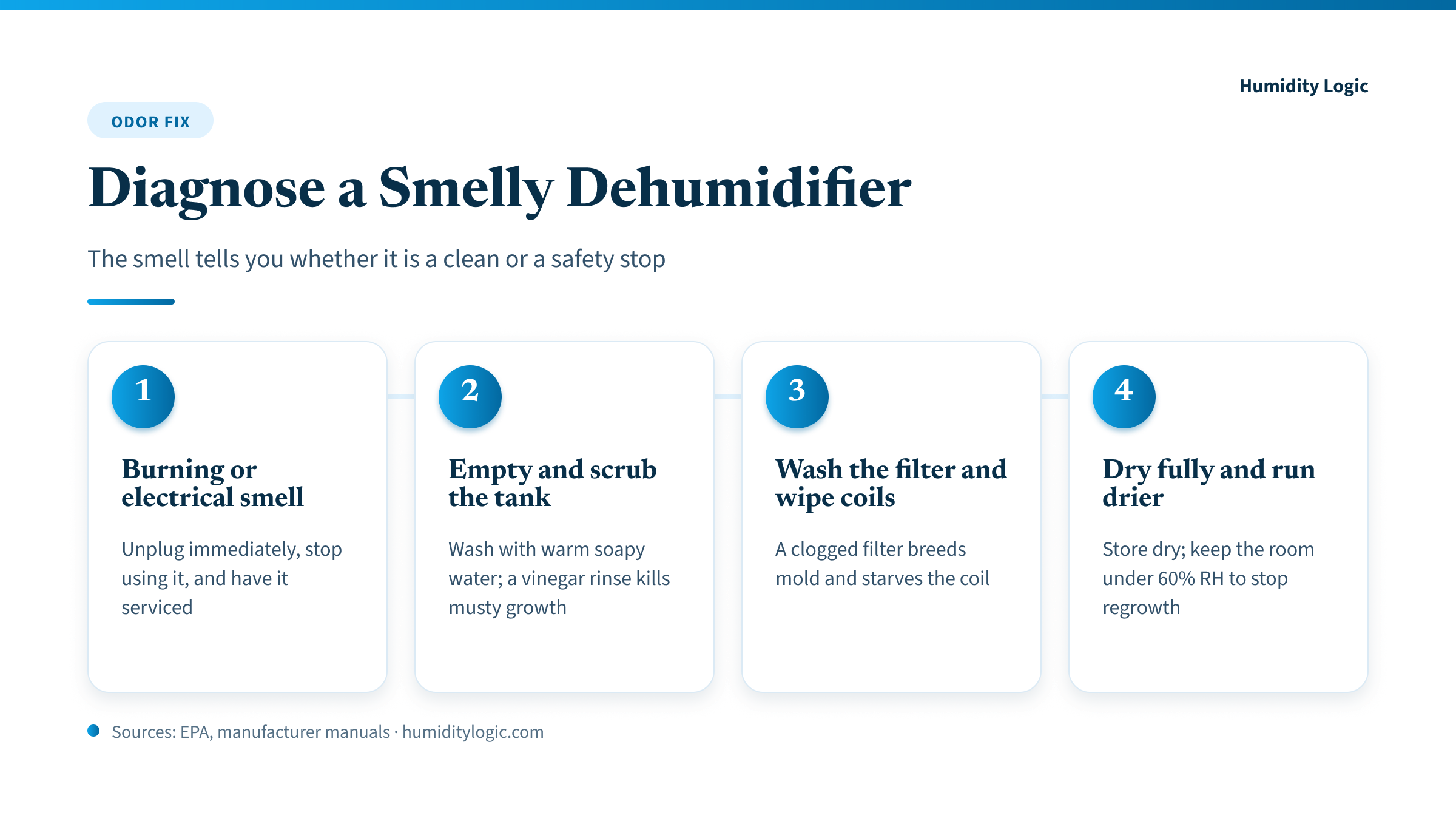
Is it a musty smell or a burning smell?
The single most important step is naming the smell, because the two categories call for opposite responses.
A musty smell is damp, earthy, and organic — think wet cardboard, old basement, or a gym bag left closed. It gets stronger when the unit first kicks on and blows air through itself. This is biological: something is living in the moisture. It is safe to unplug, open up, and clean.
A burning smell is sharp and chemical — hot plastic, scorched wiring, or an electrical “ozone” bite, sometimes with buzzing, crackling, or visible smoke. This is not biological and never gets better with cleaning. It signals an electrical fault, and it is the one smell that means stop. If you are unsure which you have, treat it as the burning category and unplug it until you can inspect it safely. When in doubt, err toward safety.
What should I do about a burning or electrical smell?
Treat a burning smell as a safety emergency, not a maintenance task. Unplug the unit at the wall immediately — pull the plug rather than just pressing the power button, so all power is cut. Do not plug it back in to “test” it, and do not keep running it because the room feels damp.
A burning or hot-electrical odor typically traces to a damaged power cord, a loose connection that is arcing, or a failing capacitor, relay, or fan motor that is overheating. Any of these can ignite. Look — without touching anything live — for scorch marks or melting on the plug, the cord, or the outlet. If the outlet itself is discolored or smells hot, stop using that outlet too and have an electrician check it. Opening the sealed cabinet, splicing the cord, or “repairing” the wiring yourself is not a safe DIY project; this is a job for a qualified appliance technician, or a reason to replace the unit.
Burning smells are also worth taking seriously because dehumidifiers have a real fire history. The U.S. Consumer Product Safety Commission has repeatedly warned owners to stop using and unplug recalled units, with millions of dehumidifiers recalled over overheating and fire risk and hundreds of fires reported. Before you do anything else, find your model and serial number (usually on a label on the back or side) and check it against the CPSC recall list. If it is listed, follow the manufacturer’s recall instructions for a refund rather than repairing it.
Why does my dehumidifier smell musty or moldy?
A musty smell is the predictable result of what a dehumidifier does. It pulls warm, humid air across cold coils, condenses the moisture, and collects it — which means the inside of the machine is dark, cool, and wet for hours at a time. That is close to ideal conditions for mold and mildew. The odor almost always comes from one of three places:
- The water tank (bucket): standing water left sitting grows a film of mold and bacteria, especially in the corners and around the float.
- The air filter: a filter clogged with dust traps moisture and organic debris, becoming a mat for mildew — and a clogged filter also chokes airflow.
- The coils and drip pan: dust settling on the cold evaporator coils gives mold something to feed on right where condensation forms.
This is the same organic, earthy odor covered in our guide to what mold smells like. If the smell fills the whole room and not just the unit, the dehumidifier may be reacting to a bigger moisture problem — see musty smell in a basement for tracking down the source.
How do I clean a smelly dehumidifier?
Cleaning is straightforward and fixes the vast majority of musty odors. First, turn the unit off and unplug it — every manufacturer, including GE, says to disconnect power before any cleaning to avoid shock. Then work through it in order:
- Empty and scrub the tank. Pour out any standing water. Wash the bucket with warm water and a small amount of mild dish soap, scrubbing the bottom and corners where slime hides. For a musty smell, follow with a rinse of equal parts white vinegar and water, let it sit about 10 minutes, scrub again, then rinse clean. Avoid abrasives and bleach on the plastic tank, which manufacturers advise against.
- Wash the filter. Slide out the air filter (usually behind the front grille or in the bucket area) and rinse it under warm water; if it is greasy or heavily soiled, wash it with mild soap. Never put it in the dishwasher.
- Clean the coils and grille. Gently vacuum the coils and front grille with a brush attachment, or wipe the coils with a soft, damp cloth to lift the dust that mold feeds on. Do not bend the thin metal fins.
- Dry everything completely. This is the step people skip. A filter or tank put back damp just restarts the mold. Let all parts air-dry fully before reassembling — a filter reinstalled wet is the fastest route back to a musty smell.
Once it is back together, run the unit and confirm the smell is gone. Build this routine into your regular dehumidifier maintenance: empty and rinse the tank each time, wash it thoroughly every few weeks, and clean the filter every couple of weeks during heavy use.
How do I stop the musty smell from coming back?
Cleaning removes today’s mold; keeping the environment dry stops it from returning. Mold needs moisture, so the fix is to leave less of it sitting around. Empty the tank promptly instead of letting water stand — or, better, run the unit to a continuous drain hose so the bucket never fills. Keep the filter clean so air keeps moving through the machine.
Most importantly, control the room’s humidity. The EPA recommends keeping indoor relative humidity below 60 percent, ideally between 30 and 50 percent, which is exactly the range that starves mold both inside the unit and in the room around it. A cheap hygrometer ($10–$50) lets you check. If your dehumidifier cannot hold the space under 60% RH, it may be undersized for the room — our dehumidifier size calculator matches capacity to square footage and dampness so the unit actually keeps up.
Finally, remember why this matters beyond the odor. The EPA notes mold can begin growing on damp surfaces within 24 to 48 hours, so a unit that smells musty is also a sign of moisture that could be feeding mold elsewhere. If you are running the dehumidifier specifically to fight mold, pair it with the strategies in our guide to using a dehumidifier for mold, and if you also see water pooling under the unit, work through why a dehumidifier leaks water — standing water is exactly what the smell is warning you about.
Frequently asked questions
Why does my dehumidifier smell musty?
A musty or moldy smell comes from mold and mildew growing in the damp, dark parts of the unit — standing water in the tank, a clogged filter, and dust caked on the cold coils. It is a cleaning job, not a fault. Empty and scrub the tank, wash the filter, wipe the coils, and dry everything fully before running it again.
My dehumidifier smells like burning plastic. What should I do?
Stop using it right away. Unplug it at the wall — do not just switch it off — and do not plug it back in. A burning, acrid, or hot-electrical smell points to overheating wiring or a failing motor or capacitor, which is a fire hazard, not a cleaning problem. Have it inspected by a qualified technician or replace the unit.
Does vinegar get rid of the musty smell in a dehumidifier?
Yes. After washing the tank with warm, soapy water, a rinse of equal parts white vinegar and water helps kill lingering mold and mildew that cause the odor. Let it sit a few minutes, scrub the corners, then rinse and dry completely. Skip bleach on a plastic tank, which manufacturers such as GE advise against.
How often should I clean my dehumidifier to prevent smells?
Empty and rinse the tank every time you empty it, wash the tank thoroughly every few weeks, and clean the filter every couple of weeks during heavy use. Regular cleaning stops the mold and mildew that cause musty odors from ever taking hold.
Is a burning smell from a dehumidifier dangerous?
Yes. A burning or electrical smell can mean frayed wiring, arcing, or an overheating motor — all of which can start a fire. The CPSC has recalled millions of dehumidifiers over overheating and fire risk. Unplug the unit, stop using it, and check whether your model is under recall.
Sources & references
Every figure on this page is checked against these published sources. Last reviewed July 27, 2026.