A dehumidifier leaking water almost always comes down to where the collected water is supposed to go and what is stopping it. The two most common causes are a collection bucket that is full, cracked, or not seated properly and a drain hose that is kinked, blocked, or running uphill. Both are free to fix. Unplug the unit first, then work down the list below in order — most leaks are solved before you reach cause three.
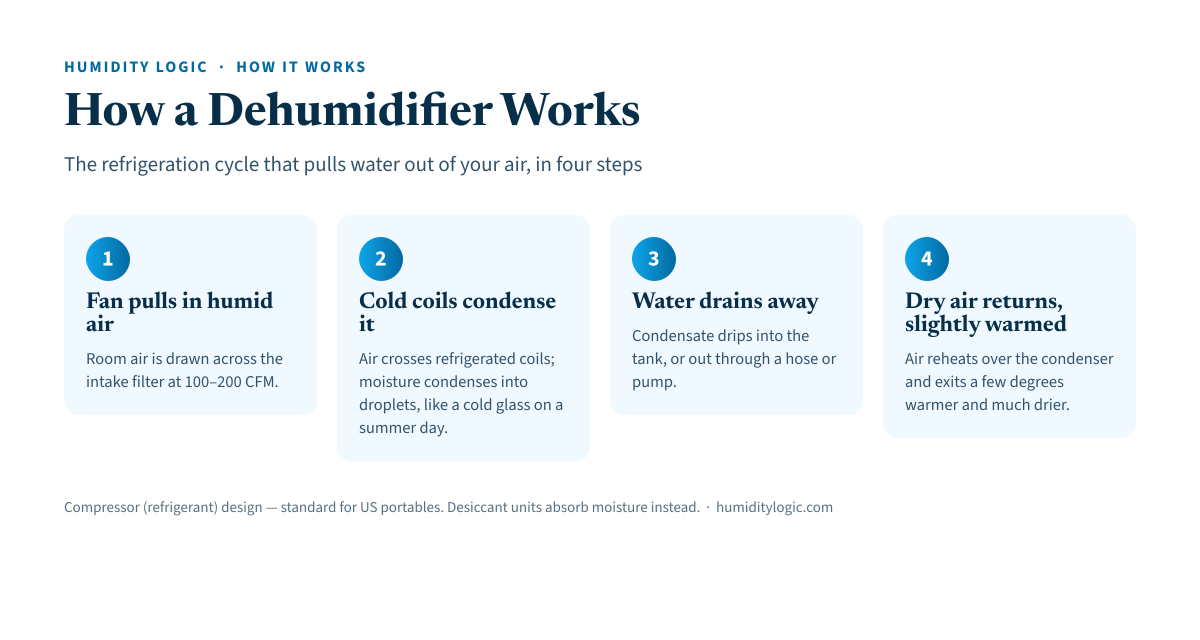
Understanding how a dehumidifier works makes leaks easier to diagnose: air condenses on cold coils, drips into a drip pan, and flows to either the bucket or a drain. A leak means water escaped somewhere along that path.
Why is my dehumidifier leaking from the bottom?
Water pooling under the unit points to the collection bucket first — it is the single most common leak source. Pull the bucket out and check three things: whether it is simply full and overflowing, whether it has a hairline crack near a seam or the handle, and whether it seats squarely against the float switch when you slide it back in. A bucket that sits crooked lets the float ride high, so the unit keeps running and the pan overflows.
Inspect the bucket in bright light and run a finger along the inside bottom and corners. Hairline cracks weep slowly and are easy to miss. A cracked bucket is a cheap replacement part from the manufacturer — do not keep running the unit with a bag or tape as a patch, because the leak will worsen.
Is the drain hose the problem?
If you drain continuously through a hose, that hose is the second most likely culprit. A drain hose only works when gravity is on its side: it must run continuously downhill from the drain port to a floor drain or sump, with no sags, no kinks, and no section that rises even slightly above the port. Water cannot climb, so a single high spot backs the line up until it overflows inside the cabinet and out the bottom.
Detach the hose, take it to a sink, and run water through it. If flow is slow or blocked, algae and mineral scale have built up inside — a common problem on lines that have run for a season or more. Flush it out or replace it, then re-route it with a steady slope. Check the connection monthly as part of routine dehumidifier maintenance.
Could it be a loose or worn hose connection?
A leak right at the drain port usually means a loose fitting or a worn washer, not a fault inside the machine. Threaded ports (most units use a standard garden-hose thread) rely on a rubber washer to seal. Old or hand-me-down hoses often have a cracked, flattened, or missing washer, so water weeps from the joint even when the hose itself is clear.
Hand-tighten the fitting — do not over-torque plastic threads — and drop in a fresh washer if the old one looks compressed or split. Push-fit drain tubes on some models can also work loose over time; reseat the tube firmly until it clicks or bottoms out.
Is the unit sitting level?
A dehumidifier that is tilted sends condensate over the edge of the internal drip pan instead of into the drain channel, so it leaks from the bottom with no obvious bucket or hose fault. This is easy to overlook on uneven basement or garage floors.
Set the unit on a firm, level surface and check it with a level if you are unsure. Raising it a few inches on a stand or blocks also improves airflow underneath and, in cold spaces, keeps the base off a chilled floor — which reduces the icing that causes a related leak, covered next.
Are iced-over coils melting onto the floor?
In a cold room, frost builds up on the coils, then melts into more water than the drip pan and drain can carry, and the overflow escapes as a leak. This is really a temperature problem wearing a leak’s disguise. If your space runs below about 65°F, a standard compressor unit will ice up, and many stop extracting near 41°F.
Unplug the unit and let it thaw completely before running it again, and read our full guide to a dehumidifier freezing up. If the room is genuinely cold, the real fix is a low-temperature or desiccant model rather than any repair — see the size and technology guidance in our dehumidifier size calculator.
When is it a failed float switch or internal fault?
If the bucket, hose, connection, and level all check out and the unit still overflows, the float switch that is supposed to shut it off when the bucket is full has likely failed. A stuck or broken float lets the machine run past capacity, so the bucket brims over even though everything else is correct.
At this point you are into a genuine component fault. On most portable units the cost of a service call approaches the cost of replacement, so check the warranty first. Do not open sealed electrical or refrigerant components yourself — the sealed system is not a DIY repair.
Clean up promptly to prevent mold
However small the leak, dry the area quickly. The EPA notes that mold can begin growing on damp surfaces within 24 to 48 hours, so standing water against baseboards, carpet, or drywall is a real risk, not just a nuisance. Mop up, dry the surface, and confirm the leak has stopped before walking away. If the leak has soaked an area larger than about 10 square feet of drywall or carpet, EPA guidance points to professional remediation rather than a DIY dry-out.
Once the leak is fixed, a correctly sized and drained unit should run for years without trouble. If yours also struggles to pull water in the first place, work through why a dehumidifier stops collecting water, and if you are draining somewhere higher than the unit, our guide to a dehumidifier with a pump covers the setup that ends bucket-emptying for good.
Frequently asked questions
Why is my dehumidifier leaking water from the bottom?
A leak from the base almost always traces to the collection bucket — it is full and overflowing, cracked, or not seated squarely on its switch. Unplug the unit, pull the bucket, empty it, and inspect it under bright light before looking anywhere else.
Can I run a dehumidifier with a drain hose instead of the bucket?
Yes. Most portable units have a threaded drain port for continuous gravity drainage. The hose must run continuously downhill to a floor drain or sump with no sags or kinks, or water backs up and leaks from the unit.
Why does water collect in the bucket when I have a hose attached?
The most common reasons are a hose that rises above the drain port at any point, a kink, or algae and mineral scale blocking the line. Detach the hose, flush it from a faucet, and re-run it with a steady downhill slope.
Is a leaking dehumidifier dangerous?
The water itself is not hazardous, but standing water on floors and inside walls can lead to mold within 24 to 48 hours, per EPA guidance. Dry the area promptly and fix the leak source rather than just mopping up.
Should I use the internal pump or a gravity hose?
Use a gravity hose when a floor drain sits below the unit — it is free and has nothing to fail. Use a pump only when you need to push water up and out to a sink, window, or sump that sits higher than the dehumidifier.
Sources & references
Every figure on this page is checked against these published sources. Last reviewed July 21, 2026.