A moisture meter is a handheld device that measures the water content inside solid materials like wood, drywall, and concrete, reported as percent moisture content (%MC). Pin meters read resistance between two probes; pinless meters scan through a flat pad without leaving holes. For interior wood, 6 to 9% is normal and readings above 20% signal rot risk.
A moisture meter turns a hunch into a number. A subfloor can feel dry to the hand yet still hold enough water to warp planks or feed mold, and only a meter reveals it. This guide covers what the two meter types do, how to take a reading, what the percentages mean for each material, and why a moisture meter answers a different question than the hygrometer on your wall.
What does a moisture meter actually measure?
A moisture meter reads the amount of water inside a material as a percentage of its dry weight — its moisture content, or %MC. That single number tells you whether a floorboard, stud, or slab is dry enough to build on, paint, or leave alone, or wet enough to warp, rot, or grow mold.
The reading matters because water hides. Wood that feels dry on the surface can be soaked a quarter-inch down, and drywall can wick moisture from a slow leak long before a stain appears. A meter catches that hidden water while it is still cheap to fix. Most consumer meters cover roughly 5 to 40% MC on their wood scale and a narrower band on the building-material scale, which is plenty of range for home diagnosis. If your goal is monitoring room air rather than materials, our humidity comfort checker interprets temperature and relative humidity instead.
Pin vs pinless: which moisture meter should you use?
Use a pin meter for wood and drywall and a pinless meter for concrete and fast surface sweeps — many professionals keep both. The two designs measure moisture in fundamentally different ways, and each is better suited to certain materials.
A pin meter has two metal probes that penetrate the surface and measure the electrical resistance between them. Because water conducts, less resistance means more moisture. The reading reflects moisture at the exact depth the pins reach, so you can check near the surface or deeper, and you can pinpoint a wet stud behind trim. The trade-offs are two small holes per reading and pins that can bend or break in dense hardwood.
A pinless meter presses a flat electromagnetic sensor pad against the surface and reads moisture without penetrating it, typically to a fixed depth of about a quarter-inch or three-quarters of an inch. It leaves no marks, scans many board-feet in seconds, and is the better choice for finished surfaces and hard materials like concrete. Its limits are that it cannot isolate depth the way pins can, and it needs a flat, smooth area to sit against.
| Feature | Pin meter | Pinless meter |
|---|---|---|
| How it reads | Resistance between two probes | Electromagnetic pad on surface |
| Depth | Exactly where pins reach | Fixed ~1/4 in or 3/4 in |
| Leaves marks? | Yes, small pinholes | No |
| Best for | Wood, drywall, pinpointing spots | Concrete, sweeping large areas |
| Main drawback | Pins bend or break | Needs flat surface, no depth control |
For a deeper look at the machine that fixes what a meter finds, see how a dehumidifier works.
How do you take an accurate moisture reading?
Set the meter to the right material, establish a dry baseline, then take several readings and compare. The single biggest cause of bad numbers is skipping the setup, so treat these steps as non-negotiable.
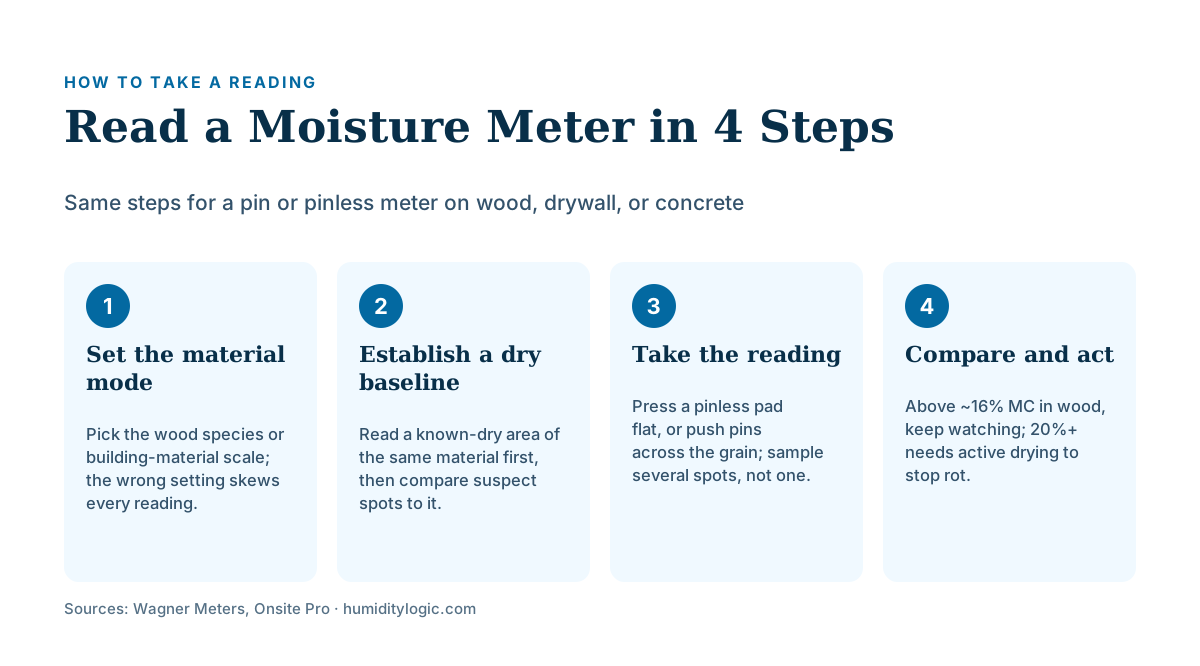
First, set the material mode. Pin meters use a wood-species setting because a species’ chemistry shifts the resistance, and pinless meters use a specific-gravity (density) setting; a building-material or reference scale is used for drywall and masonry. Second, establish a dry baseline by reading a spot of the same material you know is dry — an interior wall away from any leak, or a board from the same stack. That control tells you what “normal” looks like in your home. Third, take the reading: press a pinless pad flat against the surface, or insert pins across the wood grain, and sample several spots rather than trusting one. Fourth, compare and act — a reading well above your dry baseline points to a moisture source you need to trace and fix.
What do the moisture readings mean for wood, drywall, and concrete?
Each material has its own safe and risky range, so the same 15% reading means different things on wood, drywall, and concrete. The table earlier compares the tools; the numbers below tell you when to worry.
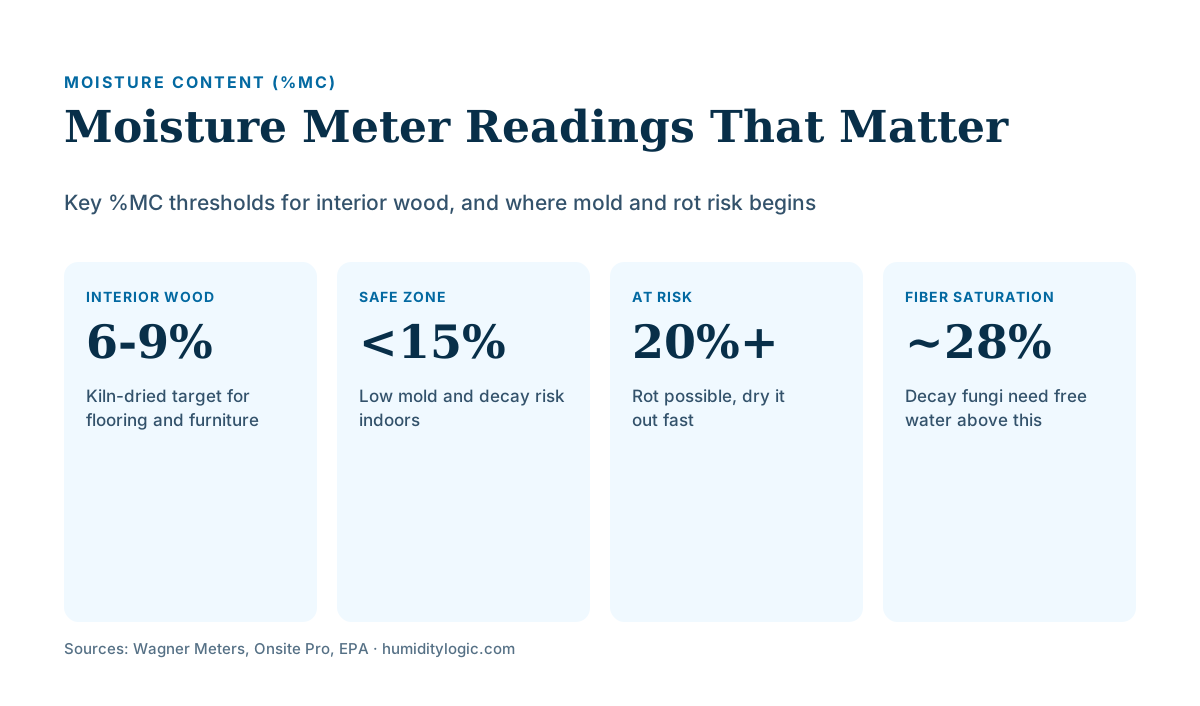
Wood is the material meters read most reliably. Kiln-dried flooring and furniture stock land around 6 to 9% MC, and construction lumber settles in a 9 to 14% equilibrium range depending on climate. Below about 15% the wood is in a safe zone. Readings of 16 to 19% deserve monitoring, and 20% or higher calls for aggressive drying, because that is where decay risk climbs. Wood only reaches its fiber saturation point around 28%, and that matters because active wood-decay fungi need the liquid (“free”) water that exists only above that point. Keeping structural wood under 20% leaves a comfortable safety margin.
Drywall should read near your meter’s dry baseline on the reference scale. Gypsum board is meant to be essentially dry, so a reading that climbs meaningfully above a known-dry section of the same wall is a red flag for water intrusion behind it, even with no visible stain. Use a pin meter here to confirm whether the core, not just a damp paper face, holds water.
Concrete is the trickiest. A handheld meter gives only a relative, surface-level indication — helpful for comparing a suspect spot to a dry area, but not a defensible pass/fail figure. When the answer actually matters, such as before installing flooring, the industry standard is ASTM F2170, which places in-situ probes at 40% of the slab depth to measure relative humidity inside the concrete. Glue-down wood flooring typically needs the slab at 75% RH or less, though you should always follow the flooring manufacturer’s spec. If your slab sits in a damp basement, our basement humidity guide covers the moisture control that keeps those readings down.
How is a moisture meter different from a hygrometer?
A moisture meter measures water inside a material; a hygrometer measures water vapor in the air. They answer related but separate questions, and you often want both.
A hygrometer reports relative humidity, the percentage of moisture the air holds versus its maximum at that temperature. It tells you whether the room sits in the EPA’s recommended range and never sees the water locked inside a subfloor or stud. A moisture meter ignores the air entirely and reports the %MC of the solid it touches. In practice, the hygrometer flags a room that is too humid — the condition that, left alone, pushes moisture into materials — while the meter confirms whether that has already happened. The EPA’s advice is to keep indoor relative humidity below 60%, ideally 30 to 50%, which a hygrometer monitors; our guide to ideal indoor humidity levels explains those targets.
When does a moisture reading mean you have a mold problem?
A high, persistent reading paired with any musty smell or visible growth means you have a moisture problem to fix — and mold can follow within 24 to 48 hours of materials getting wet. The reading itself does not diagnose mold; it tells you the conditions that feed mold are present.
The EPA is direct that “the key to mold control is moisture control”: clean visible mold, but if you do not fix the water source, it comes back. For cleanup scale, the EPA’s rule is that a moldy area larger than about 10 square feet (roughly a 3-by-3-foot patch), or damage from sewage or major flooding, should go to a professional, while smaller spots on hard surfaces can be handled by a homeowner who fixes the leak and dries the area fast. A meter is how you confirm that drying actually worked — the material should return to its dry baseline and stay there. For the equipment side of pulling that moisture back out, see using a dehumidifier for mold. Never treat large-scale remediation, or any electrical or HVAC repair the water damage caused, as casual DIY.
The bottom line
A moisture meter is the difference between guessing and knowing. Match the tool to the job — pins for wood and drywall, pinless for concrete and quick sweeps — set the material mode, and always read against a dry baseline. Keep interior wood in the 6 to 9% range, watch anything over 16%, dry out 20%-plus fast, and remember that a low reading on the meter plus low humidity on the hygrometer is what keeps a house dry, sound, and mold-free.
Frequently asked questions
What is a good moisture meter reading?
For interior wood, aim for 6 to 9% moisture content, the kiln-dried target for flooring and furniture. Anything below about 15% is a safe zone with low mold and decay risk. Readings above 16% call for monitoring, and 20% or higher needs active drying.
What is the difference between a moisture meter and a hygrometer?
A moisture meter measures water inside a solid material such as wood, drywall, or concrete, reported as percent moisture content. A hygrometer measures humidity in the air. A hygrometer cannot detect water trapped inside a wall or subfloor, which is exactly what a moisture meter finds.
Should I get a pin or pinless moisture meter?
Pin meters push two probes into the material and read moisture at that exact depth, which is best for wood and drywall. Pinless meters scan through a flat pad without leaving holes and cover a large area fast, which suits concrete and wide surface sweeps. Many pros own both.
What moisture level in wood causes mold or rot?
Surface mold can appear when wood stays damp and air humidity is high, but active wood-decay fungi need liquid water, which only becomes available above the fiber saturation point of roughly 28% moisture content. As a practical rule, keep structural wood below 20% to stay safe.
Can a moisture meter test concrete accurately?
A handheld meter only gives a relative, surface-level reading on concrete, useful for comparing spots but not for a pass/fail number. The quantitative standard is ASTM F2170, which uses in-situ probes to measure relative humidity deep in the slab before flooring goes down.
Sources & references
Every figure on this page is checked against these published sources. Last reviewed July 21, 2026.
- Wagner Meters — Pin vs. Pinless Moisture Meters
- Wagner Meters — Wood Moisture Meter Buying Guide (EMC ranges)
- Wagner Meters — ASTM F2170 Concrete Moisture Testing
- EPA — A Brief Guide to Mold, Moisture and Your Home
- Onsite Pro — How to Read Moisture Meter Readings
- Fiber Saturation Point (wood science reference)