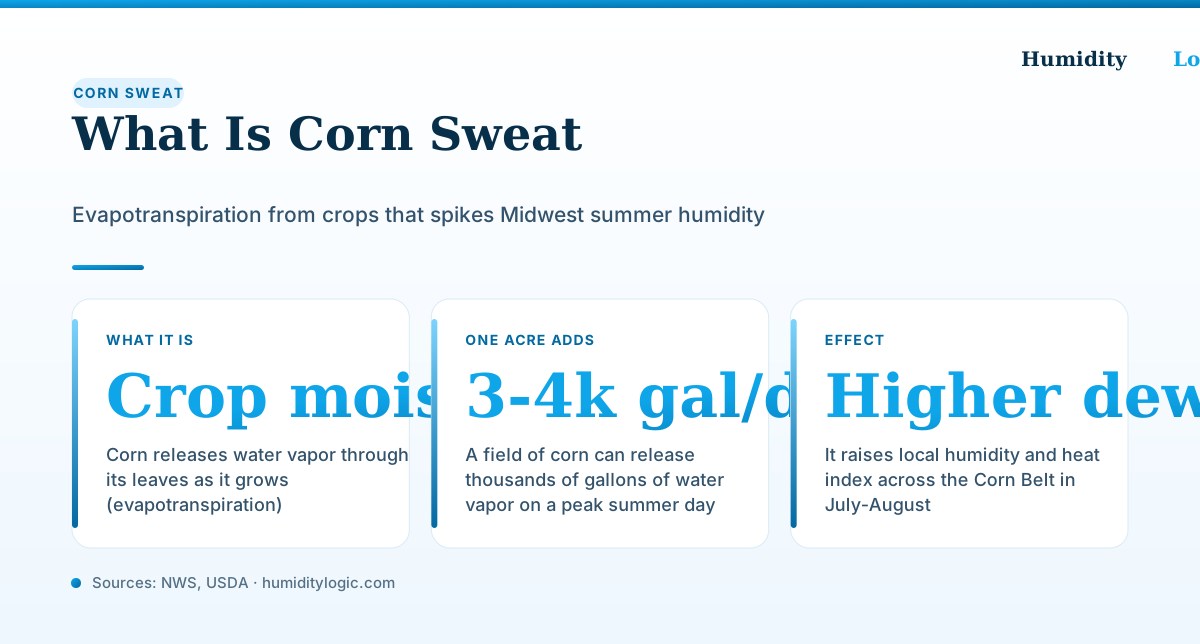
Corn sweat is the nickname for evapotranspiration from crops — the water vapor that corn (and soybeans and other plants) release through their leaves as they grow. Across the Midwest Corn Belt in mid-to-late summer, millions of acres of maturing corn pump so much moisture into the air that they measurably raise the local dew point, humidity, and heat index, making already-hot days feel even more oppressive.
If you have ever driven through Iowa in August and felt like the air got thicker the moment you were surrounded by cornfields, you were not imagining it. Here is what is actually happening, how big the effect is, and what it means for the air you breathe both outside and indoors.
What exactly is corn sweat?
Corn sweat is a folksy label for a real, well-understood plant process: evapotranspiration. It combines two things happening at once — evaporation of water from the soil and plant surfaces, and transpiration, where the plant draws water up through its roots and releases it as vapor through tiny pores in its leaves called stomata.
Plants do this partly to cool themselves, much the way people sweat. As Illinois Extension explains, corn pulls water from the ground and gives it off through its leaves, and at the height of the growing season a field acts like a giant, low, leafy humidifier. The moisture does not stay put — it evaporates off the leaves and mixes into the air just above the crop, where it adds directly to the humidity you feel.
The term is a little misleading in one way: corn is not the only crop that does this, and it is not “sweating” in the animal sense. But because the Corn Belt is planted so densely with corn, the crop gets the credit — and the blame.
How much water does corn actually release?
A lot. According to the National Weather Service, cited by The Weather Channel, a single acre of corn can give off roughly 3,000 to 4,000 gallons of water per day during peak summer growth. Illinois Extension puts the figure at up to 4,000 gallons per acre per day at the crop’s peak.
Those are estimates, and they vary. The rate depends on temperature, sunshine, wind, soil moisture, and how mature the crop is — Iowa State University Extension notes evapotranspiration can spike to as much as 0.4 inches of water per day under hot, windy, dry-air conditions. In a drought, plants roll their leaves to conserve water and release less.
Now multiply. The U.S. plants roughly 90 million acres of corn, most of it concentrated in a handful of Midwest states — Illinois Extension noted nearly 93 million acres planted nationally in 2021. Even at the low end of the per-acre range, the aggregate moisture returned to the atmosphere across the Corn Belt on a hot day is enormous — which is exactly why the effect shows up in regional weather rather than staying a curiosity of one field.
To picture the scale, 4,000 gallons is about what a typical suburban household uses in ten days, released from a single acre in a single afternoon. A one-square-mile section of farmland holds 640 acres, so an ordinary block of corn country can breathe out well over two million gallons of water vapor on a hot day. That moisture rises into the boundary layer of air near the ground — precisely the air you walk through and that your home draws in — rather than dispersing high into the atmosphere, which is why a phenomenon happening at ground level in a farm field ends up on the evening forecast.
Which states and months are affected?
Corn sweat is a Corn Belt phenomenon. The states where it matters most are the big corn producers — Iowa, Illinois, Nebraska, Indiana, Minnesota, Missouri, Kansas, and the Dakotas — which is part of why these are consistently among the most humid states in summer despite being far from any ocean.
Timing matters as much as geography. The effect peaks from mid-July through mid-August, when two things line up: the corn is tasseling and near full height (its leaf area, and therefore its water release, is at maximum) and the sun and heat are at their strongest. It takes heat and sunshine — generally days above about 85°F — to drive evapotranspiration hard, so the muggiest corn-sweat days are also the hottest ones.
Why does corn sweat make heat waves feel worse?
Because it raises the dew point — and the dew point, not the humidity percentage, is what governs how oppressive the air feels. The dew point is the temperature at which air becomes saturated; the higher it is, the more actual moisture is in the air. (For the full explanation of why meteorologists trust dew point over relative humidity, see dew point vs humidity.)
All that crop moisture pushes dew points up. The Weather Channel notes that corn sweat has helped shove dew points above 80°F in the Midwest, and Fox Weather has documented cornfield dew points climbing into the sweltering range. For reference, a dew point above 70°F is already considered oppressive by most people, and that threshold is a good gut check for what counts as high humidity.
A higher dew point does two uncomfortable things during a heat wave. First, it drives up the heat index — the “feels like” temperature — because humid air slows the evaporation of sweat, so your body cannot cool itself efficiently. Second, humid air holds onto heat overnight, so muggy corn-sweat nights don’t cool down the way dry nights do, robbing you of the overnight relief that makes a heat wave bearable. As Scientific American has reported, that combination — extra crop humidity layered on top of a warming climate — can turn an ordinary hot spell into a genuinely dangerous one.
Is corn sweat dangerous?
The corn is not the problem — the heat-plus-humidity combination is. When the heat index climbs into the triple digits, heat-related illness becomes a real risk, especially for outdoor workers, older adults, and anyone without air conditioning. Corn sweat does not create heat waves, but by loading the air with moisture it can make an existing one measurably more dangerous, particularly at night.
It is worth keeping this in perspective: corn sweat is a seasonal, regional amplifier, not the main driver of Midwest humidity. The underlying moisture usually arrives on winds from the Gulf. Crops add to that base rather than creating it from nothing. But at peak growth, in the right heat, that added contribution is enough to tip a merely uncomfortable day into an oppressive one.
What does corn sweat mean for indoor comfort?
This is a weather story, but it does not stop at your front door. Corn sweat raises the outdoor dew point, and outdoor moisture is constantly trying to get inside — through open doors, leaky windows, and ventilation. The higher the outdoor dew point, the harder your home has to work to stay comfortable, and the more likely you are to notice sticky air, clammy surfaces, and a general mugginess indoors.
The response is the same one that works in any humid climate, and it has nothing to do with the corn. Keep your home sealed on the muggiest days, run your air conditioner (which removes moisture as it cools), and add a dehumidifier if the AC alone can’t keep up. The target is an indoor relative humidity of 30–50%, which is comfortable, discourages mold and dust mites, and takes the edge off even the worst corn-sweat afternoon. If you are not sure where your own home lands, our humidity comfort checker turns a temperature and humidity reading into a plain comfort verdict.
If your indoor air feels swampy every summer regardless of the crops outside, the cause is usually closer to home — see why your house is so humid for the common culprits and fixes. Corn sweat is a good reminder that humidity is something you manage indoors, no matter what the fields outside are doing.
Frequently asked questions
What is corn sweat?
Corn sweat is the everyday name for evapotranspiration — the water vapor that corn and other crops release through pores in their leaves as they grow. On a hot summer day a mature cornfield pumps large amounts of moisture into the air, which raises the local dew point and makes the humidity feel worse across the Corn Belt.
How much water does an acre of corn release per day?
The National Weather Service estimates a single acre of corn can give off roughly 3,000 to 4,000 gallons of water per day at peak growth, and Illinois Extension puts the figure at up to 4,000 gallons per acre per day. Estimates vary with heat, sunshine, soil moisture, and crop stage.
Which states and months does corn sweat affect most?
It matters most across the Corn Belt — Iowa, Illinois, Nebraska, Indiana, Minnesota, Missouri, Kansas, and the Dakotas — during mid-July through mid-August, when the crop is tasseling and heat is at its highest. That is when corn releases the most moisture.
Does corn sweat make heat waves feel worse?
Yes. The extra moisture pushes the dew point higher, and a higher dew point raises the heat index — the "feels like" temperature. It also keeps nights warmer and muggier, because humid air holds onto heat, so there is less overnight relief during a heat wave.
Can corn sweat affect the humidity inside my house?
Only indirectly. Corn sweat raises outdoor dew points, and every time humid outdoor air leaks in or you open a door, that moisture comes with it. Indoors, the fix is the same as for any humid climate: run air conditioning and a dehumidifier to hold relative humidity in the 30–50% comfort range.
Sources & references
Every figure on this page is checked against these published sources. Last reviewed August 3, 2026.
- Illinois Extension — How does corn affect Midwest weather?
- The Weather Channel (weather.com) — How 'Corn Sweat' Can Add To Midwest Humidity
- Scientific American — 'Corn Sweat' and Climate Change Bring Sweltering Weather to the Midwest
- Fox Weather — 'Corn sweat' in the Midwest can cause some of the most oppressive humidity in the US