Humidity is the amount of water vapor — water in gas form — held in the air. It is measured three ways: relative humidity, a percentage of the maximum the air can hold at its current temperature; absolute humidity, in grams per cubic meter; and specific humidity, in grams per kilogram. Indoors, the EPA target is 30-50% relative humidity.
What Is Humidity, Exactly?
Humidity is water vapor mixed invisibly into the air around you. Air is not just oxygen and nitrogen — it also carries a variable amount of water in gas form, and humidity is simply a measure of how much. Warm ocean air might be thick with it; cold desert air holds almost none.
That water vapor gets into the air by evaporation — from oceans, lakes, soil, plants, and inside your home from cooking, showering, and even breathing. It leaves again by condensation, turning back into liquid on any surface cold enough to force it out, which is why a glass of ice water sweats and a cold window fogs. Everything humidity does, indoors and out, comes back to that constant tug between evaporation adding vapor and condensation removing it.
The reason humidity gets confusing is that there is no single “amount of moisture” number everyone uses. The same parcel of air can be described as dry or damp depending on which of the three measures you pick, and each one answers a slightly different question.
What’s the Difference Between Relative, Absolute, and Specific Humidity?
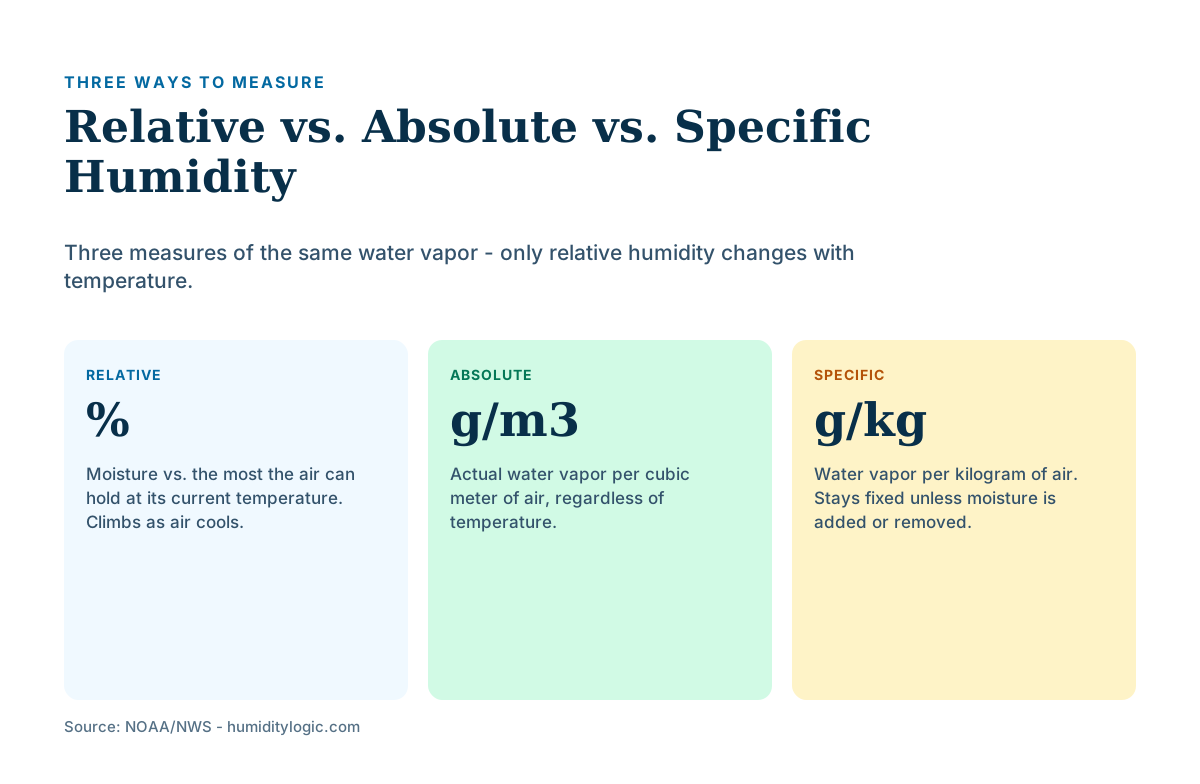
All three measure the same water vapor, but only relative humidity changes when the temperature changes. Absolute and specific humidity track the actual quantity of moisture; relative humidity compares that moisture to a moving target.
- Relative humidity (%) is the one on your weather app and thermostat. The National Weather Service defines it as water vapor measured relative to the temperature of the air — the percentage of the maximum amount the air could hold before it saturates. At 100% the air is full and dew or fog forms.
- Absolute humidity (g/m³) is, in NWS terms, “the actual amount of water vapor (moisture) in the air, regardless of the air’s temperature.” It counts grams of vapor in each cubic meter and ignores how warm the air is.
- Specific humidity (g/kg) is the weight of water vapor in a given weight of air, expressed as grams per kilogram. It stays constant as air moves and warms, as long as no moisture is actually added or removed, which makes it a favorite of meteorologists.
For daily life at home, relative humidity is the number that matters, because comfort, condensation, and mold all respond to how close the air is to saturation — not to the raw gram count.
Why Does Relative Humidity Change With Temperature?
Relative humidity rises as air cools and falls as air warms, even when the actual moisture never changes, because warm air can hold more water vapor than cold air. The NWS puts it plainly: with the same absolute humidity, air has a higher relative humidity when it is cooler and a lower relative humidity when it is warmer.
Picture a room at 70°F reading 50% relative humidity. That air has a fixed dew point of about 50.5°F — the temperature at which it would become saturated. Nothing about the water content changes, but cool that same air toward 50°F and its relative humidity climbs toward 100%, because colder air has less room to spare. This is exactly why relative humidity is highest in the cool early morning and lowest in the warm afternoon, and why warm indoor air deposits water on cold window glass in winter.
It is also why relative humidity alone can mislead you. As the NWS notes, 30°F air at 100% humidity feels comfortable, while 80°F air at only 50% feels muggy — the warmer air is holding far more actual water. To judge real moisture, forecasters lean on the dew point instead: at or below 55°F it feels comfortable, 55-65°F turns sticky, and 65°F or higher feels oppressive. Our explainer on dew point vs. humidity unpacks that distinction in full.
Why Does Humidity Matter in Your Home?
Indoor humidity matters because it drives comfort, health, and the physical condition of your house all at once — and both extremes cause real problems. The EPA’s guidance is built around one principle: moisture control is the key to mold control.
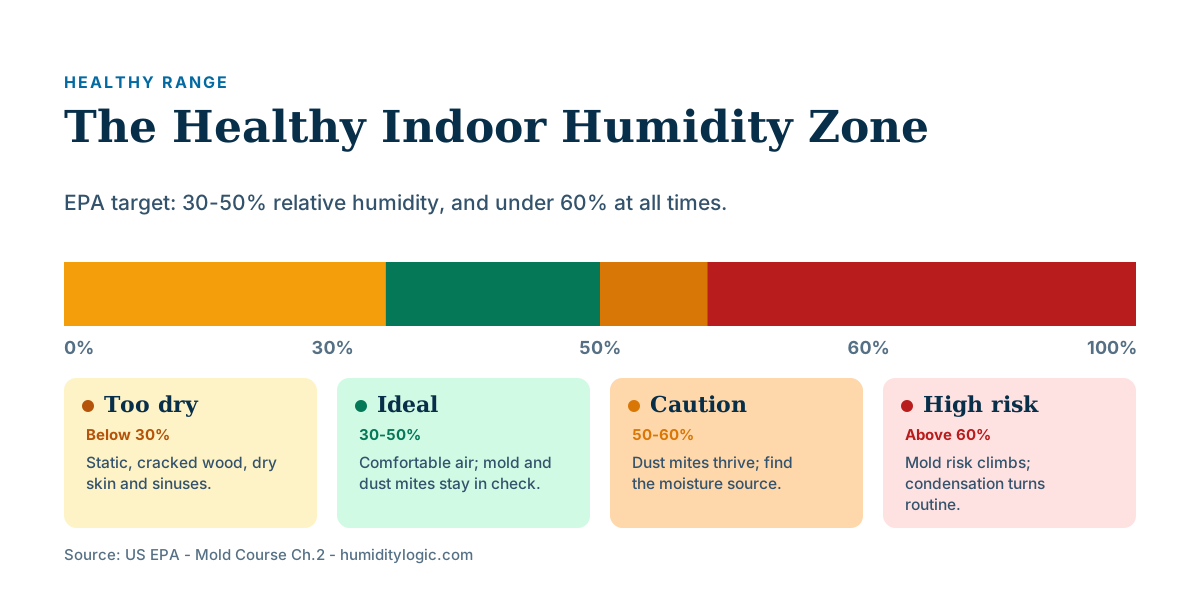
When indoor humidity runs too high, water vapor condenses on cold surfaces and keeps porous materials damp. Above 50% relative humidity, dust mites — which absorb moisture straight from the air — begin to thrive, and the American Lung Association notes they struggle to survive in drier conditions. Push past 60% and mold enters the picture: bathroom ceilings spot, closets smell musty, and wood doors swell and stick. Condensation on windows and cold pipes becomes routine. For the full breakdown of upper thresholds, see what is considered high humidity.
Too little humidity brings the opposite set of troubles. Below 30%, the air pulls moisture out of everything it touches — skin, sinuses, wood floors, trim, and furniture joints. You get static shocks, chapped lips, cracked woodwork, and that scratchy morning throat common in heated homes. It is rarely a structural emergency, but it is genuinely uncomfortable and hard on natural materials. The goal is to live between those two failure modes, which is precisely what the EPA range is designed to do.
What Is a Healthy Indoor Humidity Level?
Keep indoor relative humidity between 30% and 50%, and under 60% at all times. That is the EPA’s explicit recommendation — “below 60 percent (ideally between 30 and 50 percent)” — and nearly every credible guideline traces back to it. The lower edge keeps the air moist enough to be comfortable and protect woodwork; the upper edge keeps it dry enough to starve mold and dust mites.
The target shifts a little with the season. In winter, when it is freezing outside, aim for the drier end, 30-40%, so warm indoor air does not condense on cold window glass. In humid summers, air conditioning does much of the drying and a comfortable 45-50% is normal. The one rule that never changes is the 60% ceiling — sustained readings above it are the reliable signal that something needs fixing. Our guide to ideal indoor humidity levels covers the season-by-season targets in detail, and the humidity comfort checker turns your current temperature and humidity into a plain comfort verdict.
How Do You Measure Humidity at Home?
Measure indoor humidity with a digital hygrometer, a small device that costs about $10-15 and reads relative humidity directly. It is the single best first purchase for anyone serious about their home’s air, because you cannot manage moisture you have never actually seen.
Placement matters. Keep the hygrometer away from bathrooms, kitchens, and exterior doors, which read artificially high right after a shower or a pot of pasta. Check it morning and evening for a few days rather than trusting one snapshot — humidity swings with temperature through the day, so a pattern tells you far more than a single number. Many hygrometers also show the dew point, a steadier reading of true moisture that does not bounce around with the thermostat.
Once you know your baseline, you can close the gap. If readings sit above 50-60%, remove moisture at the source: run exhaust fans while cooking and showering, use air conditioning or a dehumidifier in humid months, and address foundation drainage and dryer venting. Our guide to how to lower humidity in your house ranks every method by cost and impact. If the air is below 30% and static-dry, a humidifier and slightly gentler heating bring it back up. The numbers worth memorizing are short: 30-50% year-round, 30-40% in freezing weather, and 60% as the ceiling you never sustain.
Frequently asked questions
What is humidity in simple terms?
Humidity is the amount of water vapor — water in gas form — held in the air. You cannot see it, but you feel it as the muggy heaviness of a summer afternoon or the dry crackle of a heated winter room. The everyday number people quote is relative humidity, a percentage.
What is the difference between humidity and relative humidity?
"Humidity" is the general idea of moisture in the air; relative humidity is one specific way to measure it. Relative humidity is the percentage of the maximum water vapor the air can hold at its current temperature, so the same air can read 40% when warm and 90% when cooled.
What is a comfortable humidity level indoors?
The EPA recommends keeping indoor relative humidity between 30% and 50%, and under 60% at all times. That range feels comfortable while staying dry enough to discourage mold, dust mites, and condensation on windows.
Is high humidity or low humidity worse?
Both cause problems, but sustained high humidity is generally more damaging to a home. Above 60% you risk mold, musty odors, and warped wood; below 30% you get dry skin, static, and cracked trim. High humidity threatens the structure, while low humidity is mostly a comfort and materials issue.
Why does humidity make it feel hotter?
Your body cools itself by evaporating sweat, and humid air is already near saturation, so sweat evaporates slowly. Less evaporation means less cooling, so a humid 85°F feels far hotter than a dry 85°F even though the thermometer reads the same.
Sources & references
Every figure on this page is checked against these published sources. Last reviewed July 21, 2026.