To lower apartment humidity as a renter, target the EPA’s 30–50% relative humidity range (and stay under 60%) using only reversible fixes: run exhaust fans, stop drying laundry indoors, run a portable dehumidifier, and use your AC properly. These need no renovation or landlord approval. Persistent leaks and mold over ~10 square feet are the landlord’s responsibility, not yours.
What Counts as High Humidity in an Apartment?
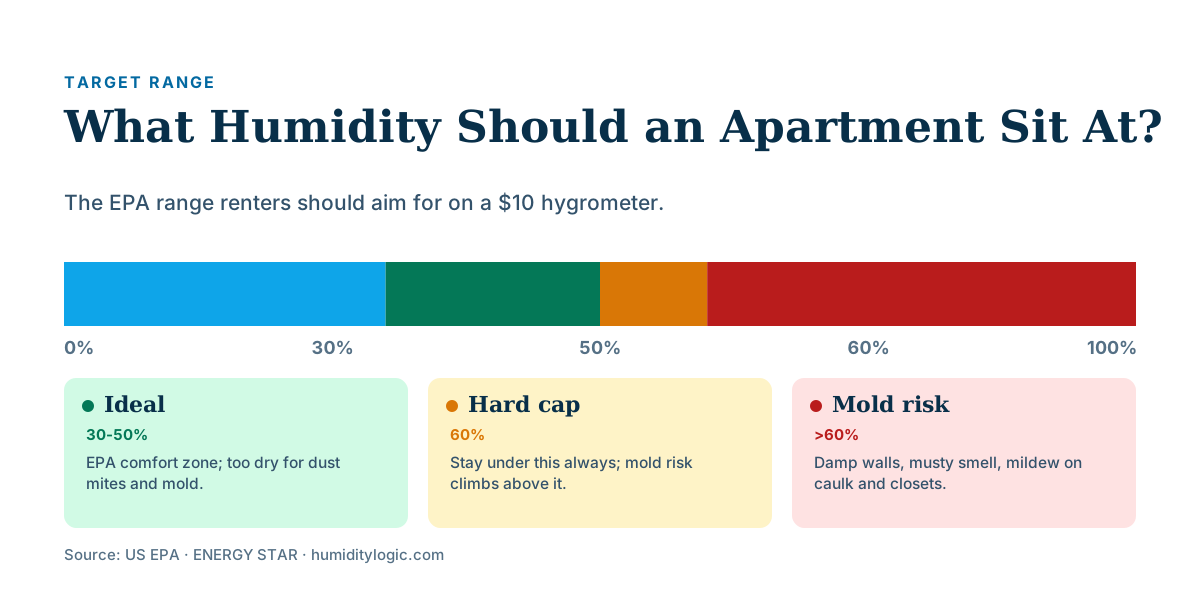
Anything above 60% relative humidity is too high, and the sweet spot is 30–50%. The EPA states indoor relative humidity “should be kept below 60 percent — ideally between 30 percent and 50 percent, if possible.” Above that ceiling, moisture starts condensing on cool walls and windows, dust mites multiply, and mold gets the damp surfaces it needs to grow.
You don’t have to guess. A cheap digital hygrometer (about $10–$15) reads the room’s humidity the way a thermometer reads temperature. Put one in the room that feels worst — usually a bedroom against an exterior wall, or a windowless bathroom — and check it morning and evening. If it reads in the 60s or 70s, you have a moisture load to remove. If it sits in the 40s, the clammy feeling is probably just heat, and cooling the air will fix it.
Why Is My Apartment So Humid?
Most apartment humidity is generated inside the unit by everyday living, then trapped by tight, poorly ventilated rooms. Cooking, showering, and even breathing release water vapor into the air; a modern, well-sealed apartment holds onto it. Apartments make this worse than houses because they’re often compact, share walls, and may have only one or two windows for cross-ventilation.
The usual sources, roughly in order of how much moisture they add:
- Showers and baths — a single hot shower can push a small bathroom to near-saturation.
- Cooking — boiling, steaming, and simmering release steam directly into the air.
- Drying laundry indoors — a full load of wet clothes on a rack releases liters of water as it dries.
- Too many houseplants clustered together, which transpire moisture all day.
- Furniture pushed flat against cool exterior walls, which traps damp air and blocks circulation.
There’s also a second category you can’t cook or fan your way out of: water coming into the apartment. A slow plumbing leak, a failing roof above a top-floor unit, or rising damp in a basement apartment adds moisture continuously, and no amount of ventilation keeps up. That distinction — moisture you generate versus moisture leaking in — is what decides whether this is your job or the landlord’s. If you’re not sure which you’re dealing with, our guide to why your house is so humid walks through diagnosing the source.
How Can Renters Lower Humidity Without Renovating?
Every effective fix for a rental is reversible — you can do it today and undo it when you move out. Work through them cheapest-first, the same order our full guide to lowering humidity in a house recommends.
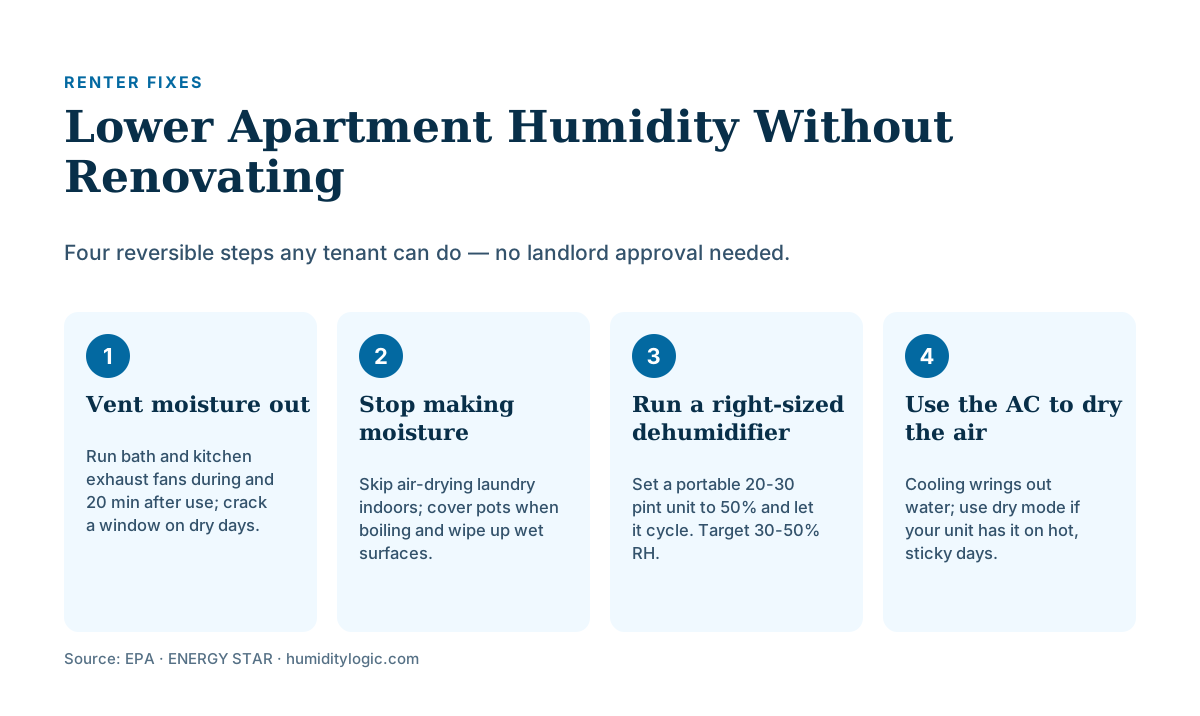
1. Ventilate at the source. Run the bathroom exhaust fan during every shower and for 20 minutes after, and run the kitchen fan or range hood whenever you cook. Rent.com and other renter guides put ventilation first for good reason: it removes moist air before it spreads. On dry days, cracking two windows on opposite sides of the apartment creates cross-flow that carries damp air out. If your bathroom has no fan, keep the door open after showering and point a portable fan at the room to move the air. (Bathrooms are their own problem — see our bathroom dehumidifier guide if that’s your worst room.)
2. Stop adding moisture you don’t have to. The biggest self-inflicted source in most rentals is air-drying laundry indoors. Every drying rack dumps the water from the wash into your air. Use the building’s dryer, hang clothes on a balcony or by an open window, and cover pots when boiling. Wipe down wet shower walls and countertops instead of letting them evaporate into the room.
3. Run a portable dehumidifier. When ventilation isn’t enough — humid climate, ground-floor unit, no cross-breeze — a plug-in dehumidifier is the renter’s most powerful tool. More on sizing below.
4. Use your air conditioner as a dehumidifier. Cooling air forces water vapor to condense on the AC’s coils and drain away, so running the AC on a hot, sticky day lowers humidity as a side effect. ENERGY STAR recommends the same 30–50% range for comfort. If your unit has a “dry” or “dehumidify” mode, use it: it runs the compressor to pull moisture while barely cooling, which is ideal for a room that’s damp but not hot.
Will a Portable Dehumidifier Fix Apartment Humidity?
Yes — a right-sized portable dehumidifier is the most reliable renter-safe way to hold an apartment in range. For a small-to-medium apartment or a single problem room, a 20–30 pint unit (post-2019 label) set to 50% will cycle on its own and keep humidity in check. ENERGY STAR suggests 20–30 pints for small-to-medium spaces that are moderately damp, and stepping up toward 40+ pints only for larger or very damp areas.
Size it to the space, not to the biggest number on the shelf. An oversized unit costs more and doesn’t help; an undersized one runs constantly and never catches up. Our dehumidifier size calculator matches pint capacity to your square footage and dampness level in a few seconds.
Running cost is modest. A typical portable dehumidifier draws a few hundred watts, so daily use lands around $15–$25 a month at the US average electricity rate. Two renter-specific tips: choose a model with a built-in humidistat and auto-shutoff so it manages itself, and if the unit sits near a sink or floor drain, use a gravity drain hose so you’re not emptying a tank twice a day. Keep the dehumidifier away from walls and furniture so air can reach it, and it will quietly do the work of the ventilation your apartment lacks.
When Is Apartment Humidity the Landlord’s Responsibility?
Everyday condensation is yours to manage; structural moisture and significant mold are the landlord’s. The dividing line is the source. Moisture you generate by cooking, showering, and drying laundry is something a tenant is expected to ventilate and dehumidify. But water entering the unit through a roof, plumbing, or building envelope failure — and the damage it causes — generally falls on the landlord under the implied warranty of habitability, the legal rule in most states that a rental must stay fit to live in.
Signs it has crossed into landlord territory:
- A persistent or recurring leak — staining that returns, a pipe that drips, water in a basement unit after rain.
- Mold that keeps coming back after you clean it, or that’s spreading inside walls, ceilings, or the HVAC system.
- A large mold patch. The EPA says an area “less than about 10 square feet (less than roughly a 3 ft. by 3 ft. patch)” is usually reasonable to clean yourself; anything bigger, or mold following major water damage, calls for a professional — which is the landlord’s cost, not yours.
For small mold spots you can address, the EPA’s cleanup guidance covers scrubbing hard surfaces and drying the area fully; our dehumidifier for mold guide explains how drying the air stops regrowth. But drying the air never fixes an active leak. When you see the structural signs above, report the problem to your landlord in writing (email or a dated letter, so there’s a record) and ask for the source to be repaired. Keeping the request in writing protects you if the moisture damages your belongings or the issue drags on — exactly the situation the warranty of habitability exists to cover.
Frequently asked questions
What is a good humidity level for an apartment?
Aim for 30–50% relative humidity, and keep it under 60% at all times. The EPA sets 30–50% as the ideal indoor range because it is too dry for dust mites and mold while staying comfortable to breathe. A $10 hygrometer tells you where you actually stand.
How do I lower humidity in my apartment as a renter?
Stick to reversible fixes: run bathroom and kitchen exhaust fans, stop air-drying laundry indoors, run a portable dehumidifier set to 50%, and use your AC (or its dry mode) on hot days. None of these require touching the structure or asking the landlord.
Is high humidity in my apartment my landlord's problem?
Day-to-day condensation from cooking and showering is yours to manage. But a persistent leak, roof or plumbing failure, or mold larger than about 10 square feet points to a structural problem the landlord is generally responsible for under the implied warranty of habitability. Report it in writing.
Will a dehumidifier lower my apartment humidity?
Yes, for the whole unit or a problem room. A 20–30 pint portable dehumidifier set to 50% will hold a small-to-medium apartment in range, running roughly $15–$25 a month in electricity. It is the single most effective renter-safe tool when ventilation alone is not enough.
Why is my apartment so humid even with the AC on?
An oversized or short-cycling AC cools the air fast without running long enough to wring out moisture, so the room feels cold and clammy. Using the "dry" mode, a lower fan speed, or a standalone dehumidifier fixes the humidity the AC is leaving behind.
Sources & references
Every figure on this page is checked against these published sources. Last reviewed July 23, 2026.