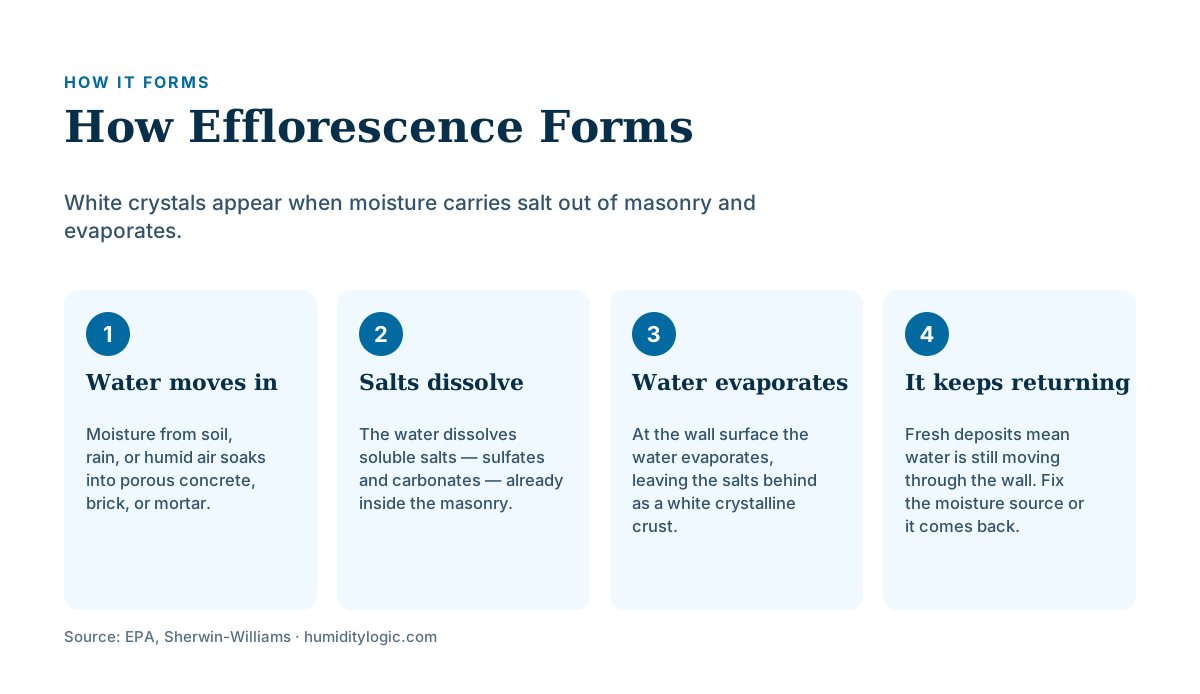
Efflorescence is a white or gray crystalline powder that forms on concrete, brick, and mortar when water dissolves natural salts inside the masonry, carries them to the surface, and then evaporates — leaving the salt behind. It is not mold and not a health hazard by itself, but it is a reliable sign that liquid water is moving through the wall, which is the real problem to solve.
What causes efflorescence on masonry?
Efflorescence needs two things at once: soluble salts inside the masonry and moisture to move them. Take away either one and it stops. Concrete, mortar, and brick all contain natural salts — calcium, sodium, and potassium sulfates and carbonates — left over from the raw materials and the curing process. When water travels through those porous materials, it dissolves the salts, wicks them to the surface, and evaporates into the room, depositing the salt as a fluffy crust.
The moisture doing the carrying usually comes from one of a few places. In a basement it is most often groundwater and vapor migrating in through below-grade walls, exactly the way ordinary basement humidity builds up. Above grade it can be wind-driven rain soaking into brick, a roof or gutter leak, or interior humidity escaping through the wall. New construction is a special case: fresh concrete and mortar carry their own mixing water for months, so a bright bloom of efflorescence on a first-year foundation is common and often fades once the wall finishes drying.
That is why the location of the deposit is a useful clue. Efflorescence concentrated low on a foundation wall points to groundwater rising through the footing or slab. A band at one spot on an exterior brick wall often traces back to a leaking gutter or flashing directly above. Widespread, even blooming across a young wall usually just means the masonry is still shedding its construction moisture. Reading where the salt lands tells you where the water is getting in.
Is efflorescence a sign of a serious problem?
On its own, efflorescence is cosmetic — but treat it as a moisture alarm, not just a stain. The deposit is harmless salt, yet its presence proves water is passing through the masonry, and that has two downstream consequences worth taking seriously.
First, the same moisture that carries salt can support mold on any nearby organic material — framing, drywall paper, stored cardboard, carpet. Efflorescence itself will not grow mold, but the wet conditions behind it can. Second, when salts crystallize inside the pores rather than on the surface (a related process called subflorescence), the expansion pressure can flake or spall the masonry face over time. Masonry references put that crystallization pressure in the range of 2,000 to 3,000 psi, enough to damage the concrete surface on a long timeline. Neither outcome is an emergency, but both are reasons to find and fix the water rather than just wiping the wall.
Efflorescence vs. mold: how do you tell them apart?
Do one quick test: wet the deposit. Efflorescence is salt, so it dissolves and vanishes when you spray it with water; mold is a living organism and does not dissolve. That single check settles most cases.
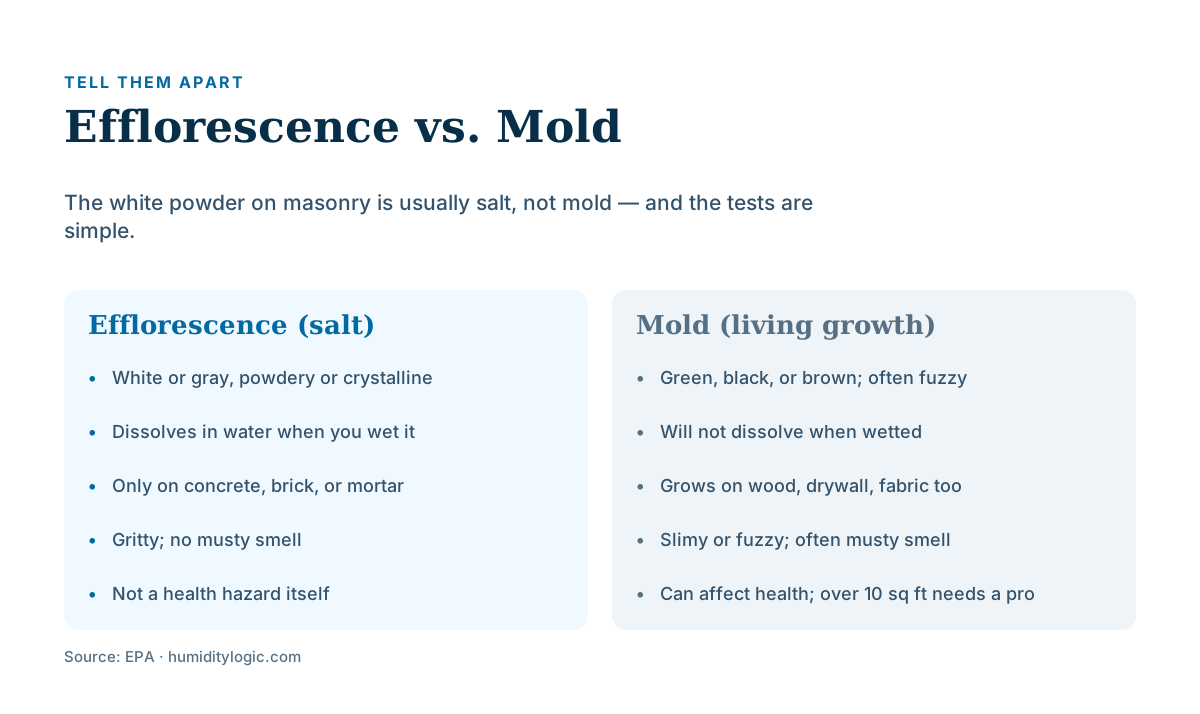
Beyond the water test, appearance and location give it away. Efflorescence is white to gray, powdery or crystalline, gritty to the touch, and shows up only on concrete, brick, or mortar. Mold is usually green, black, or brown, often fuzzy or slimy, frequently carries a musty smell, and readily colonizes wood, drywall, and fabric — not just masonry. If the growth is dark, spreading onto organic surfaces, and smells earthy, treat it as mold. The EPA advises that mold covering more than about 10 square feet (roughly a 3-by-3-foot patch) or following major water damage is a job for a professional; smaller patches on hard surfaces can be scrubbed with detergent and water and dried completely. Our guide to running a dehumidifier for mold covers the humidity side of prevention.
How do you remove efflorescence?
Start dry, escalate only as needed, and never lead with acid or a pressure washer. Most efflorescence comes off with a stiff brush and a mild solution. Work on a dry wall, wear eye protection and gloves, and ventilate the space.
| Method | How to do it | Best for |
|---|---|---|
| Dry brushing | Stiff nylon or natural-fiber brush (not wire) to knock crystals loose | Light, fresh deposits |
| Diluted white vinegar | Apply, let sit briefly, scrub, then rinse with clean water | Moderate deposits |
| Masonry cleaner | Commercial efflorescence remover per label directions | Stubborn or repeated buildup |
| Low-pressure rinse | Wide-angle, low-pressure water; keep pressure gentle | Broad exterior areas |
Avoid a wire brush, which scratches concrete and leaves metal fragments that later rust and stain, and skip standard high-pressure washing, which drives more water into the wall — the opposite of what you want. Strongly alkaline surfaces sometimes need a dilute acidic masonry etch or muriatic acid, but that is a careful, well-ventilated job with proper protection, and any acid must be neutralized and fully rinsed. Whatever method you use, let the wall dry completely afterward, because leftover moisture just restarts the cycle.
How do you prevent efflorescence from coming back?
Cleaning treats the symptom; controlling water is the cure. If new crystals appear weeks after you scrub, the moisture path is still open. Prevention is the same moisture-management work that keeps a basement dry in general, tackled roughly in cost order:
- Move roof water away. Clean the gutters, and extend downspouts so they discharge at least 10 feet from the foundation. This is the cheapest fix and often the most effective.
- Regrade the soil. Ground should slope away from the house so rain drains off rather than pooling against the wall.
- Seal cracks and gaps. Fill obvious masonry cracks and seal around penetrations with quality caulk to cut off easy water entry.
- Lower interior humidity. In a damp basement, a right-sized dehumidifier reduces the vapor load driving moisture through the wall. Keep indoor relative humidity below 60%, ideally 30–50%, which is also the EPA’s range for discouraging mold.
- Apply a masonry sealer once the wall is clean and dry. A breathable, water-repellent coating slows water entry, but only after the source is addressed — sealing a wet wall traps moisture and can push efflorescence behind the coating.
For a full walkthrough of the drainage-first approach, see how to lower humidity in your house and our basement dehumidifier guide.
Does a dehumidifier help with efflorescence?
A dehumidifier helps indirectly by drying the air, which lowers the vapor pressure pushing moisture through basement masonry — but it cannot stop bulk water. If efflorescence is driven by seepage, poor grading, or a downspout dumping at the foundation, no amount of dehumidification fixes it; you have to correct the drainage first. Where the source is genuine vapor migration and high humidity, holding the space in the EPA’s 30–50% band noticeably slows new deposits and protects nearby materials from mold.
Size the unit to the space and the dampness level so it can actually hold that target without short-cycling. Our dehumidifier sizing calculator applies a below-grade adjustment automatically once you enter the floor area and how damp the basement runs, so you buy enough capacity the first time.
Frequently asked questions
Is efflorescence dangerous?
The salt deposit itself is not a health hazard, and it wipes or brushes off. The concern is what it points to: liquid water is moving through the masonry. That same moisture can feed mold on nearby organic materials and, over time, damage the wall as salts crystallize inside the pores.
Is the white stuff on my basement wall mold or efflorescence?
Wet a small patch with water. Efflorescence dissolves and disappears because it is salt; mold does not dissolve. Efflorescence is white or gray and appears only on concrete, brick, or mortar. Mold is usually green, black, or brown, often fuzzy, and grows on wood and drywall as well.
Does vinegar remove efflorescence?
Yes. Diluted white vinegar dissolves most light efflorescence. Dry-brush the loose crystals off first with a stiff non-wire brush, apply the vinegar, let it sit briefly, then scrub and rinse with clean water. Heavy or repeated deposits may need a masonry-specific cleaner.
Will efflorescence go away on its own?
You can clean off what is there, but it returns as long as water keeps moving through the wall. New crystals after cleaning are the signal that the underlying moisture source — drainage, seepage, or high humidity — has not been fixed yet.
Does efflorescence mean my basement is going to flood?
Not necessarily. It confirms moisture is passing through the masonry, but that can be slow vapor migration rather than bulk water. Persistent, heavy efflorescence low on a wall alongside damp spots is a stronger warning sign and worth investigating before finishing the space.
Sources & references
Every figure on this page is checked against these published sources. Last reviewed July 21, 2026.