A garage door “sweats” when warm, humid air meets a cold metal (or thin single-skin) surface whose temperature has dropped below the dew point, so water vapor condenses straight out of the air onto the door. It shows up most on cold mornings, after a sharp temperature swing, or in an attached garage holding damp air, because an uninsulated steel door has almost no thermal resistance and its inside face sits within a few degrees of the outdoor temperature. The fix follows directly from the cause: insulate the door so its interior surface stays warmer than the dew point, and lower the garage’s humidity so the air reaches the dew point less easily. Do both and the drips stop.
Why Is My Garage Door Sweating?
A garage door sweats because its cold surface is chilling the humid air right against it past the point where that air can hold its moisture. The EPA states the mechanism plainly: when warm, humid air contacts a cold surface, condensation may form. Metal makes it worse than most surfaces because steel conducts heat readily and has essentially no insulating value, so a single-skin door loses warmth fast and its inside face runs nearly as cold as the outdoor air.
That is why the timing is so predictable. Overnight the door cools to the outdoor temperature, and when warmer, moister air — from an attached house, a warm car, or a mild, damp morning — drifts against that cold panel, the air chills below its dew point and beads out. A garage door company describes the same chain of events: “when the relatively warm, moist air inside your garage hits that ice-cold steel surface, the air can no longer hold its moisture”. If the relationship between temperature and moisture is new to you, our dew point vs. humidity explainer covers why the dew point — not the humidity reading alone — is the number that predicts a wet surface.
Is It Condensation or a Leak?
Condensation and a genuine seal or drainage leak look different once you know what to watch for. Condensation forms as an even film or a spread of fine beads across the whole cold metal surface, is worst on cold mornings, and clears as the day warms — it is the same process that fogs a cold drink. A leak, by contrast, shows up as drips or streaks you can trace to a single spot, usually a cracked bottom weatherseal, a gap at the frame, or a worn side seal, and it follows rainfall or snowmelt rather than the temperature.
The distinction matters because the fixes differ. A leak is solved by replacing the seal or closing the gap; harmless morning condensation is solved by insulation and drier air. A worn bottom seal can also make condensation worse by letting cold outdoor air wash across the panel and keep the steel frigid, so it is worth checking either way. If moisture is showing up on the garage walls too, our guide to condensation on walls walks through the same warm-air-meets-cold-surface logic for a larger area.
How Do I Stop Condensation on a Garage Door?
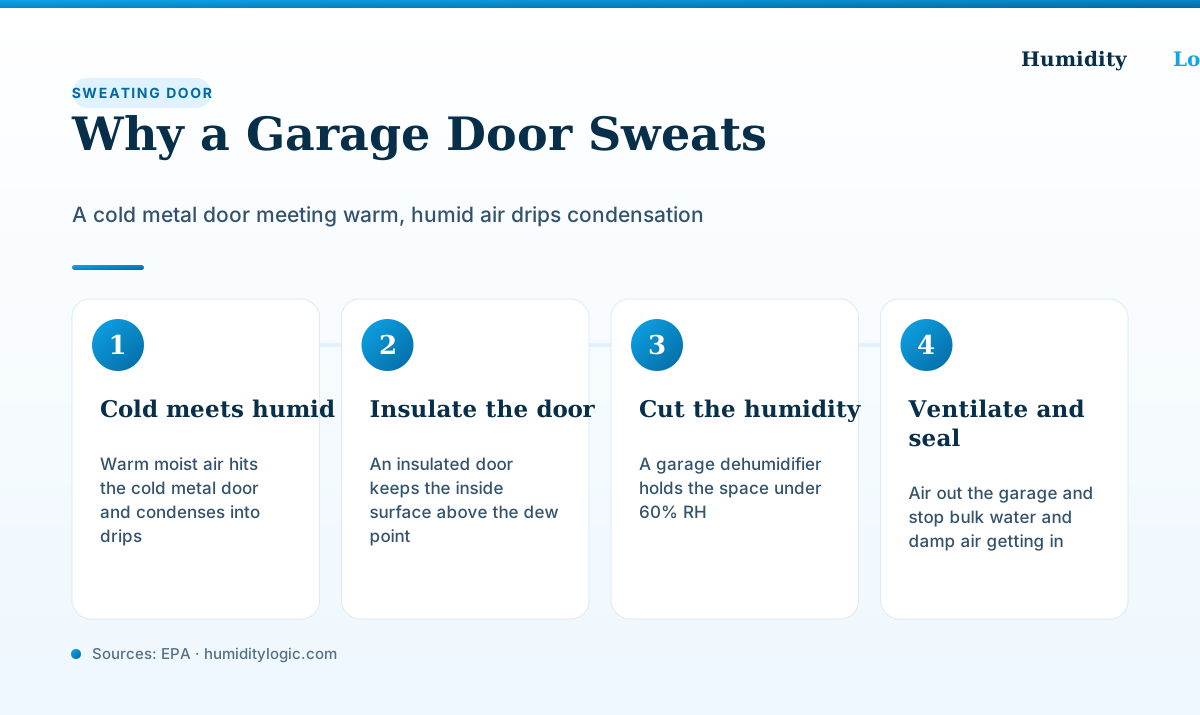
You stop the sweating by attacking either side of the dew-point gap: raise the door’s surface temperature, or lower the moisture in the air — and ideally both. There are four practical moves.
Insulate the door. This is the most effective single step and gets its own section below. Warming the interior skin keeps it above the dew point so vapor never condenses on it.
Lower the garage humidity. Run a dehumidifier sized for the space and hold the garage under 60% relative humidity; the EPA recommends indoor RH stay below 60 percent, ideally between 30 and 50 percent. As the air dries, its dew point drops below the cold door and condensation stops. Because unheated garages get cold, choose a unit rated for low temperatures — our garage dehumidifier guide covers sizing and the cold-weather limits that trip up standard models.
Ventilate and move the air. Gently circulating air breaks up the thin, still layer of humid air that condensation needs against the metal. Cracking a door on a dry day or running a fan both help. Avoid unvented propane or kerosene heaters in the garage — burning that fuel dumps a large amount of water vapor into the air and feeds the very problem you are trying to fix.
Seal gaps and remove bulk water. Replace a cracked bottom seal and close gaps around the frame so cold, humid outdoor air is not constantly washing over the panel. Then cut the moisture sources inside: wipe up standing water, avoid parking a snow- or rain-covered car in a closed garage overnight, and keep wet gear out. You can check how much margin you have between the air and the door with our condensation-risk calculator, which compares a surface temperature to the dew point.
Does Insulating the Garage Door Actually Work?
Insulation works because it keeps the door’s inside surface warmer than the garage air’s dew point, which is exactly the condition that prevents condensation. A non-insulated door is a single thin sheet of steel, so its interior face nearly matches the outdoor temperature; an insulated door sandwiches a foam or polystyrene core between two skins, and that core, as the garage door source puts it, “acts as a barrier that prevents the outdoor cold from reaching the indoor steel skin”. The interior surface then stays close to the garage temperature instead of the outdoor one, and warm air touching it no longer hits the dew point.
The same principle drives building-science guidance for cold surfaces generally. The DOE’s Building America program notes that during warm, humid conditions, humid air can condense on cooler surfaces, and its remedy — a continuous layer of insulation so interior surfaces stay warm — is the reason an insulated door, or a rated insulation kit added to a suitable existing door, is the durable fix. Sealing and insulating also pays off on the energy side; ENERGY STAR notes that sealing air leaks and adding insulation improves comfort and efficiency, which in an attached garage means a steadier temperature and less swing to trigger sweat.
How Do I Lower the Humidity in a Garage?
Lowering garage humidity comes down to removing moisture sources, drying the air, and keeping damp outdoor air out. The biggest hidden sources are usually a wet vehicle, damp firewood or storage, a running unvented heater, and moisture rising from the slab. A cool concrete floor can sweat and add moisture to the same air that then condenses on the door; our guide to condensation on a concrete floor explains how to confirm and fix that.
Once the sources are handled, a dehumidifier is the workhorse for holding the space in the 30–50% range, backed by a hygrometer so you are measuring rather than guessing. Keep the door closed on muggy days so humid outdoor air is not constantly refilling the space, and give the air a little movement with a fan. In an attached garage, damp air from the house can also drift in through a shared wall or door, so drying the connected living space helps.
Can a Sweating Garage Door Cause Mold or Rust?
A door that stays wet can absolutely cause both, which is why persistent sweat is worth fixing rather than ignoring. Standing moisture on metal invites rust on the panels, hinges, springs, and track hardware, and the same dampness feeds mold and mildew on nearby drywall, stored cardboard, and wood. The EPA’s core message is that controlling moisture controls mold, and holding the garage under 60% RH does exactly that.
The good news is that the harmless version — a light film on a cold morning that dries off as the day warms — is not the dangerous one. The problem case is metal that stays wet for hours, water pooling at the bottom panel, or visible rust and staining. Those are the signs that humidity is too high or the door needs insulation, and both are fixable with the steps above.
The Bottom Line
A garage door sweats when its cold metal surface drops below the dew point of the humid air around it — normal physics on a cold morning, but a real problem when the metal stays wet. Rule out a seal leak first: a leak drips from one spot and tracks the rain, while condensation films the whole cold surface and tracks the temperature. For condensation, insulate the door so its inside face stays warm, hold the garage under 60% relative humidity with a dehumidifier, ventilate the space, and seal gaps and mop up bulk water. Warm the surface and dry the air, and the drips stop for good.
Frequently asked questions
Why is my garage door sweating?
Your door is sweating because warm, humid garage air is touching cold metal whose surface has dropped below the dew point, so water vapor condenses out onto it. A thin, uninsulated steel door tracks the outdoor temperature closely, so on a cold morning its inside face runs cold enough to bead up with moisture.
Is garage door condensation normal or a sign of a problem?
A light film on a cold morning that clears as the day warms is normal physics, not a defect. It becomes a problem when the metal stays wet for hours, water pools at the bottom panel, or the frame and hardware start to rust. Persistent moisture is a signal that garage humidity is too high or the door needs insulation.
Will insulating the garage door stop the sweating?
Usually yes, because insulation keeps the inside surface of the door warmer, above the dew point of the garage air, so vapor no longer condenses on it. An insulated sandwich-style door or a rated insulation kit is the single most effective fix. Pair it with lower humidity for the most reliable result in a cold, damp garage.
What humidity level stops a garage door from sweating?
Hold the garage under 60% relative humidity, and ideally between 30% and 50%, which is the range the EPA recommends for indoor spaces. Lower humidity lowers the air's dew point, so the cold door surface no longer reaches it. A hygrometer plus a dehumidifier rated for a cold garage keeps you in that range.
How do I tell condensation from a garage door leak?
Condensation appears as an even film or beads across the whole cold metal surface, worst on cold mornings, and it forms on the inside face. A leak shows up as drips or streaks traced to one spot, often near a worn bottom seal or a gap, and it tracks rainfall rather than temperature. Sealing gaps fixes a leak; insulation and drying fix condensation.
Sources & references
Every figure on this page is checked against these published sources. Last reviewed August 3, 2026.