Condensation on walls happens when the wall surface drops below the dew point of your indoor air — the temperature at which water vapor must turn back into liquid. It is the same physics as a foggy window, just on a bigger surface. The two ways to stop it: lower indoor humidity to 30–50%, or warm the wall with insulation and better air circulation.
Why Are My Walls Sweating in the First Place?
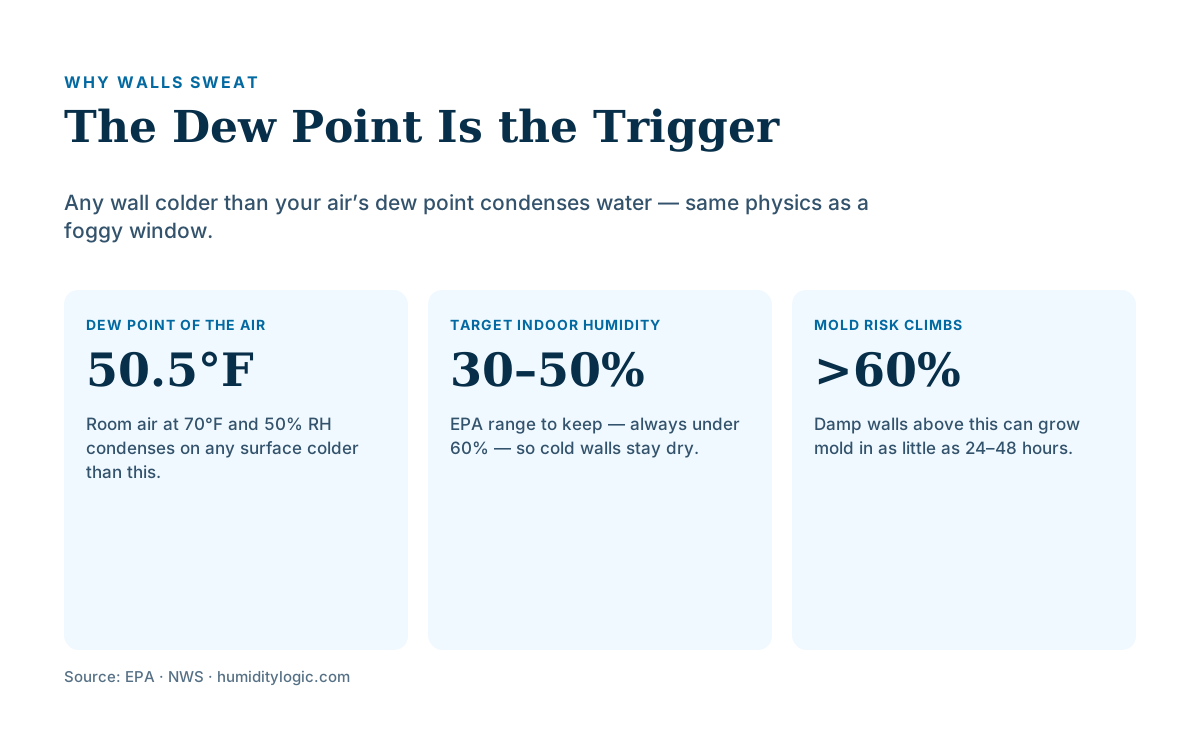
A sweating wall is not leaking from the outside — it is condensing moisture out of the inside air, because that section of wall is the coldest surface the air can reach. Air holds less water vapor as it cools, and for every temperature-and-humidity combination there is a dew point where the air becomes saturated and moisture must condense out.
Room air at 70°F and 50% relative humidity has a dew point of about 50.5°F (calculated with the Magnus formula, the same math behind our condensation risk calculator). Put that air against any wall surface colder than 50.5°F and the excess moisture has nowhere to go but onto the wall. The EPA describes the mechanism plainly: “When warm, humid air contacts a cold surface, condensation may form.”
That is why exterior walls sweat and interior partition walls usually do not. An outside wall loses heat to the cold outdoors, so its inner face runs several degrees colder than a wall between two heated rooms. North-facing walls that never see sun, uninsulated corners, and thermal bridges where framing or concrete conducts cold straight through the wall are the coldest spots of all — and the first to reach the dew point. If the gap between dew point and surface temperature is new to you, our dew point vs. humidity explainer breaks down why dew point is the number that actually predicts a wet wall.
Is This the Same Problem as Condensation on Windows?
The physics is identical, but the diagnosis is different. In both cases a surface has fallen below the dew point of the room air. Glass, though, is supposed to be the coldest surface in the room — a cold, foggy window is normal on a winter night. A sweating wall is a louder warning: either your indoor humidity is unusually high, or a section of wall is far colder than it should be because it is poorly insulated.
So treat wet windows and wet walls as readings from the same instrument. If your windows fog and your walls stay dry, the humidity is borderline and the glass is simply the coldest surface. If the walls themselves are wet, moisture load and cold surfaces have both crossed the line. Our companion guide to condensation on windows covers the glass-specific fixes; this page is about the wall behind it.
How Do I Diagnose Where the Condensation Is Coming From?
Three quick checks tell you whether you have a humidity problem, an insulation problem, or both. Do them before spending money on any fix.
Check which walls are wet. Map the damp patches. If only exterior walls, north walls, corners, or spots behind furniture are affected, the walls are running cold and insulation or airflow is the weak link. If interior walls, ceilings, and windows are all streaming, indoor humidity is simply too high across the board.
Measure your indoor humidity. Put a hygrometer in the affected room — the EPA notes that meters reading both temperature and humidity are widely available for under $50. Compare the reading against the EPA target of 30–50% RH, and always under 60%. Readings north of 55–60% mean the air is carrying more moisture than cold walls can tolerate.
Rule out a leak. Condensation shows up as a broad film of tiny droplets across a cold surface and comes and goes with the weather. A plumbing or roof leak produces a localized stain that spreads, worsens after rain, and often appears in one concentrated spot. If a patch keeps growing regardless of indoor humidity, you are chasing water intrusion, not condensation.
How Do I Stop Condensation on Walls?
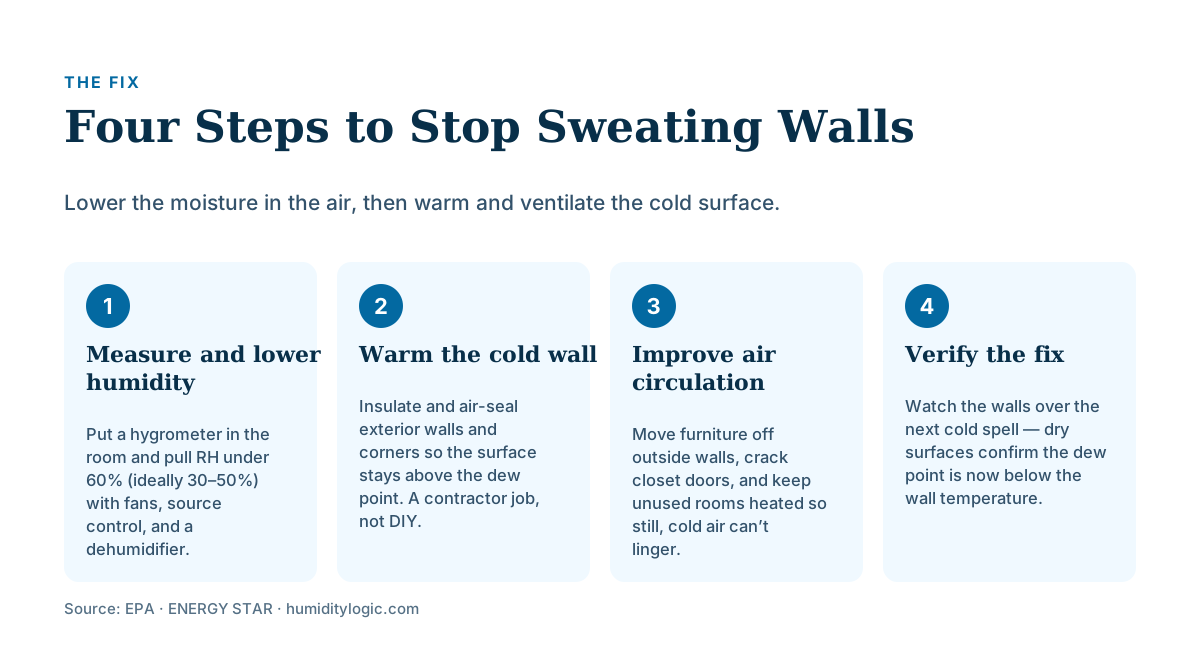
You can attack the problem from either side of the dew-point equation: lower the moisture in the air, or raise the temperature of the wall. Most homes need a bit of both. Start with the cheapest fixes and escalate only if the walls stay wet.
Lower indoor humidity. This is the fastest lever. Run bathroom and kitchen exhaust fans during and after showers and cooking, cover pots, vent the clothes dryer outdoors, and avoid drying laundry on indoor racks. If ventilation alone does not hold you under 50%, add a dehumidifier sized to the room and let it pull the air’s dew point down until the walls stay dry. Our guide to lowering humidity in the house lays out the full sequence of source-control habits.
Warm and insulate the cold wall. If specific exterior walls or corners are the culprit, the surface is too cold and needs to be warmed. Adding wall insulation or air sealing raises the interior surface temperature above the dew point so condensation cannot form — ENERGY STAR notes that sealing and insulating a home makes it “more comfortable and energy efficient” and directly targets the cold-surface complaints behind wall condensation. Wall insulation retrofits and any work involving the building envelope are jobs for a qualified contractor, not a weekend project.
Improve air circulation. Still air against a cold wall gets colder. Pull large furniture a few inches off exterior walls so room heat can reach the surface, keep closet doors on outside walls cracked open, and use a fan or your HVAC system to keep air moving in problem rooms. Even heating helps too: rooms that are shut off and unheated run colder and condense faster, which is why spare bedrooms and basements are common trouble spots. Below-grade rooms have their own moisture dynamics — see our basement humidity guide if that is where your walls are wet.
What If the Wall Already Has Mold?
Where condensation lingers, mold usually follows — often within 24 to 48 hours on a persistently damp surface. Address the moisture first, because cleaning mold without fixing the condensation just resets the clock.
For the cleanup itself, follow the EPA’s size rule. The agency says that if the moldy area is less than about 10 square feet — roughly a 3-foot by 3-foot patch — “in most cases, you can handle the job yourself” with detergent and water on a hard surface. Anything larger, mold that keeps returning, or mold on drywall soaked by water damage calls for a professional remediator and possibly replacing the affected material. Do not sand, dry-brush, or paint over active mold, and never treat large-scale remediation as a casual DIY task.
Once the wall is clean and dry, keep it that way by holding indoor humidity in the EPA’s 30–50% range and keeping cold walls warm and ventilated. Dew point is also your comfort gauge here: the National Weather Service considers a dew point at or below 55°F “dry and comfortable,” 55–65°F sticky, and 65°F or higher oppressive — and the lower you keep it, the further your walls stay from the point where they sweat.
Frequently asked questions
Why is only one wall in my house sweating?
Almost always because that wall is the coldest surface in the room. Exterior walls, north-facing walls, and uninsulated corners run several degrees colder than interior partitions, so they reach your air’s dew point first. The wall is not defective — it is simply the place where high indoor humidity becomes visible.
Is condensation on walls the same as condensation on windows?
The physics is identical — a surface drops below the dew point of the indoor air and moisture condenses out. The difference is that glass is expected to be cold, while a sweating wall usually signals either very high indoor humidity or a poorly insulated, cold wall section that needs attention.
Will a dehumidifier stop condensation on walls?
Often, yes. Lowering indoor relative humidity lowers your air’s dew point, so the wall surface no longer falls below it. The EPA advises keeping indoor RH below 60%, ideally 30–50%. Pair a dehumidifier with a hygrometer and watch whether the wet patches disappear.
Can condensation on walls cause mold?
Yes. Persistent moisture on a wall surface is exactly the condition mold needs to grow, often within 24–48 hours. The EPA says areas of mold under about 10 square feet can usually be cleaned yourself; larger areas or water-damaged drywall call for a professional.
Why do my walls sweat more behind furniture?
A sofa or wardrobe pushed flat against an exterior wall traps a pocket of still, cold air and blocks room heat from reaching the surface. That patch runs colder than the rest of the wall and condenses moisture first — which is why hidden mold is common behind large furniture on outside walls.
Sources & references
Every figure on this page is checked against these published sources. Last reviewed July 23, 2026.