Bleach can kill surface mold on hard, non-porous surfaces like tile, glass, and sealed metal — but the EPA does not recommend it as a routine practice, and it does not work on porous materials like drywall or wood. Bleach is mostly water, so on those surfaces it leaves the roots alive and adds the very moisture mold feeds on. The real fix is drying the source: keep indoor humidity below 60%, ideally 30–50%.
Does Bleach Actually Kill Mold?
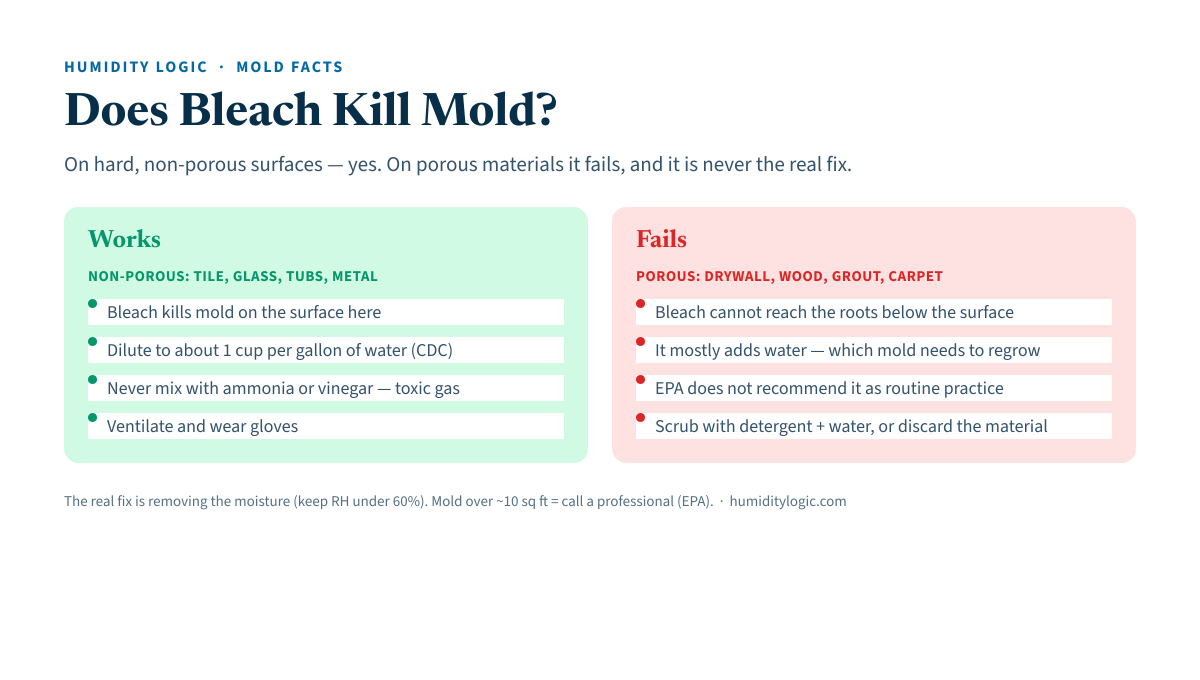
Bleach can kill mold, but only where the mold has nowhere to hide. On a hard, non-porous surface the colony sits on top, so bleach reaches it; on anything the mold has grown into, bleach mostly fades the stain while the living organism survives below.
The distinction that decides everything is porous versus non-porous. Mold anchors itself with root-like filaments called hyphae. On glazed tile, glass, or sealed metal those roots have nowhere to burrow, so a bleach solution — or plain detergent and water — reaches them. On drywall paper, wood, carpet, or ceiling tile, the roots grow down into microscopic pores where liquid bleach simply cannot follow. You wipe the surface, the stain lightens, and the colony underneath is untouched.
There is a second problem specific to bleach. Household chlorine bleach is mostly water. The chlorine stays on the surface and evaporates, but the water can soak into porous material — and a moisture-fed organism is the last thing you want to give more water. That is why bleaching moldy drywall often makes the return faster, not slower.
Where Does Bleach Work — and Where Does It Fail?
Bleach is a reasonable option only on hard, non-porous surfaces with no major water damage behind them. Everywhere mold can grow into the material, it is the wrong tool — and the EPA’s answer for badly moldy porous items is removal, not a stronger cleaner.
Bleach can work on glazed bathroom tile, a glass shower door, a sealed countertop, a metal fixture, or the plastic-lined inside of an appliance. These are the same surfaces where the CDC lists a diluted bleach solution as one acceptable option — alongside soap and water, which does the same job without the fumes.
Bleach fails on drywall, unsealed or painted wood, carpet, upholstery, insulation, and ceiling tiles. As the EPA puts it, “mold can grow on or fill in the empty spaces and crevices of porous materials, so the mold may be difficult or impossible to remove completely.” No surface spray changes that. When mold has taken hold in absorbent building materials, the material comes out — which is often the moment a small job becomes a professional one. Our guide to a dehumidifier for mold covers the moisture side of that recovery.
Why Doesn’t Bleach Work on Drywall, Wood, or Carpet?
Because those materials are porous, mold grows down inside them, and bleach only treats the surface while leaving the roots alive — then soaks the material with water that feeds regrowth.
Think of moldy drywall like an iceberg. The stain you see on the paper face is a fraction of the colony; the hyphae extend into the gypsum and paper backing behind it. Chlorine bleach oxidizes pigment on contact, so the visible mark can vanish within minutes and look solved. But the bleaching action stayed on the surface. Days or weeks later the colony blooms back through the same spot, sometimes worse, because the water carried in with the bleach lingered in the material.
This is why the EPA skips cleaning altogether for heavily affected absorbent items, noting that “absorbent or porous materials, such as ceiling tiles and carpet, may have to be thrown away if they become moldy.” The CDC draws a similar line for soft materials: fabric, carpet, and similar items that cannot be cleaned and fully dried within 24 to 48 hours should be removed and discarded. If your mold is in the walls or the flooring, no amount of bleach is the answer — and a persistently damp room is usually the real culprit. Our basement humidity guide addresses that source directly.
Does the EPA Recommend Bleach for Mold?
No. The EPA does not recommend bleach as a standard part of mold cleanup — for any surface — and its official guidance for hard surfaces is detergent, water, and thorough drying.
It is worth quoting the source, because this surprises people. The EPA states plainly that “the use of a chemical or biocide that kills organisms such as mold (chlorine bleach, for example) is not recommended as a routine practice during mold cleanup.” Its instruction for hard surfaces is refreshingly simple: “scrub mold off hard surfaces with detergent and water, and dry completely.”
Bleach is not dangerous when used correctly on the right surface — the CDC still lists a diluted solution of no more than one cup of household bleach per gallon of water as an option for hard surfaces. It is simply not superior to detergent for the average job, and it carries a real safety rule the agencies both stress: never mix chlorine bleach with ammonia or other cleaners — the EPA warns this can produce toxic fumes, and mixing bleach with acids like vinegar releases chlorine gas. Pick one cleaner, ventilate the room, and stick with it.
How Do You Safely Clean a Small Mold Patch?
Confirm the patch is small and on a hard surface, choose one cleaner, ventilate, then scrub and dry completely. The EPA considers an area under about 10 square feet — roughly a 3 ft by 3 ft patch — a job most people can handle themselves.
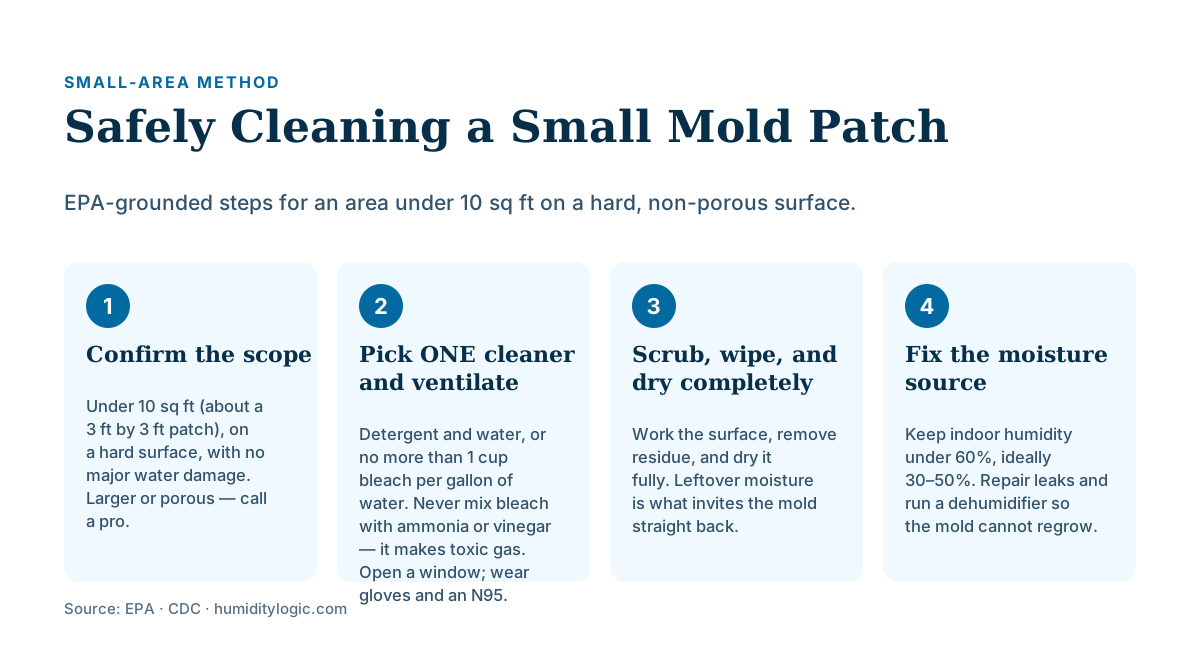
For a qualifying non-porous surface, the method is short:
- Confirm the scope. The growth should be under 10 square feet, on a hard surface, with no history of major water damage. If any of those fail, skip to the next section.
- Pick one cleaner and ventilate. Detergent and water is the EPA’s first choice; if you use bleach, mix no more than one cup per gallon of water. Never combine it with ammonia or vinegar. Open a window, wear gloves, and an N95 respirator is reasonable if mold or dust bothers you.
- Scrub, wipe, and dry completely. Work the surface, remove the residue, and dry it fully. Drying is the step people skip and the reason mold returns.
- Fix the moisture. Repair the leak or dampness that fed the growth. Cleaning without drying the source guarantees a repeat.
Whichever cleaner you choose, none of them substitute for controlling the water — the surface only stays clean if the air around it stays dry enough.
When Do You Need a Professional Instead of Bleach?
Call a professional when mold covers more than about 10 square feet, follows significant water damage, or lives inside porous building materials. These are the EPA’s own thresholds, not a sales pitch.
The federal guidance is explicit: if “there has been a lot of water damage, and/or mold growth covers more than 10 square feet,” you should consult the EPA’s remediation guidance and, in practice, bring in someone experienced. Large colonies release far more spores when disturbed, hidden mold behind walls needs containment so cleaning does not spread it through the house, and flood-damaged materials usually need removal rather than a wipe-down. None of that is a spray-bottle project.
Be especially careful when anyone in the home has asthma, allergies, or a weakened immune system — the CDC advises keeping sensitive individuals away from the work area entirely. The 10-square-foot line exists because bigger jobs genuinely require the containment, equipment, and disposal a homeowner cannot improvise.
What Actually Keeps Mold From Coming Back?
Controlling moisture — not the cleaner you reach for — is what keeps mold gone. The EPA’s core message is blunt: “the key to mold control is moisture control,” and cleaning a surface without fixing the water problem means the mold most likely comes back.
That comes down to a number you can measure. Keep indoor relative humidity below 60%, ideally between 30 and 50%, the range the EPA specifies; the CDC sets an even tighter ceiling of no higher than 50% all day long. A $15 hygrometer tells you where you stand, and our humidity comfort checker turns a temperature-and-humidity reading into whether your air sits in the mold-risk zone.
Getting there is ordinary maintenance: fix plumbing and roof leaks promptly, run bathroom and kitchen exhaust fans, improve airflow in closed-off rooms, and add a dehumidifier or air conditioner where damp air lingers. Our walkthrough on how to lower humidity in your house lays out the sequence, and the ideal indoor humidity levels guide maps targets to the season. Do that, and the bleach question becomes almost academic — because mold cannot grow on a surface that never gets wet enough to feed it.
Frequently asked questions
Does bleach actually kill mold or just remove the stain?
On hard, non-porous surfaces like tile and glass, bleach can kill the surface mold. On porous materials such as drywall and wood it often just lightens the visible stain while living mold survives in the pores underneath, because bleach cannot reach the roots.
Does the EPA recommend bleach for mold?
No. The EPA states that using a biocide such as chlorine bleach is not recommended as a routine practice during mold cleanup. For hard surfaces it recommends scrubbing with detergent and water and drying completely instead.
How much bleach do I mix to clean mold?
The CDC says to use no more than 1 cup of household laundry bleach per 1 gallon of water on hard surfaces. Never mix bleach with ammonia or other cleaners — the combination produces poisonous gas.
Why does mold come back after I bleach it?
Because bleach does not fix the moisture that feeds the mold, and on porous surfaces it leaves the roots alive while adding water. The EPA calls moisture control the key to mold control — keep indoor humidity below 60%, ideally 30–50%.
When is mold too big to clean with bleach myself?
The EPA sets the threshold at about 10 square feet — roughly a 3 ft by 3 ft patch. Above that, or after major water damage, or when mold is inside porous building materials, hire a professional rather than cleaning it yourself.
Sources & references
Every figure on this page is checked against these published sources. Last reviewed July 23, 2026.