A dehumidifier’s real job is simple: it pulls water vapor out of the air so your indoor relative humidity stays in the 30-50% range the EPA recommends, and always under 60%. That one change is where every benefit comes from. Holding the air in that band stops mold and mildew from getting the moisture they need, discourages dust mites, clears the musty damp smell at its source, protects wood and electronics and stored belongings, and makes a sticky room feel noticeably more comfortable.
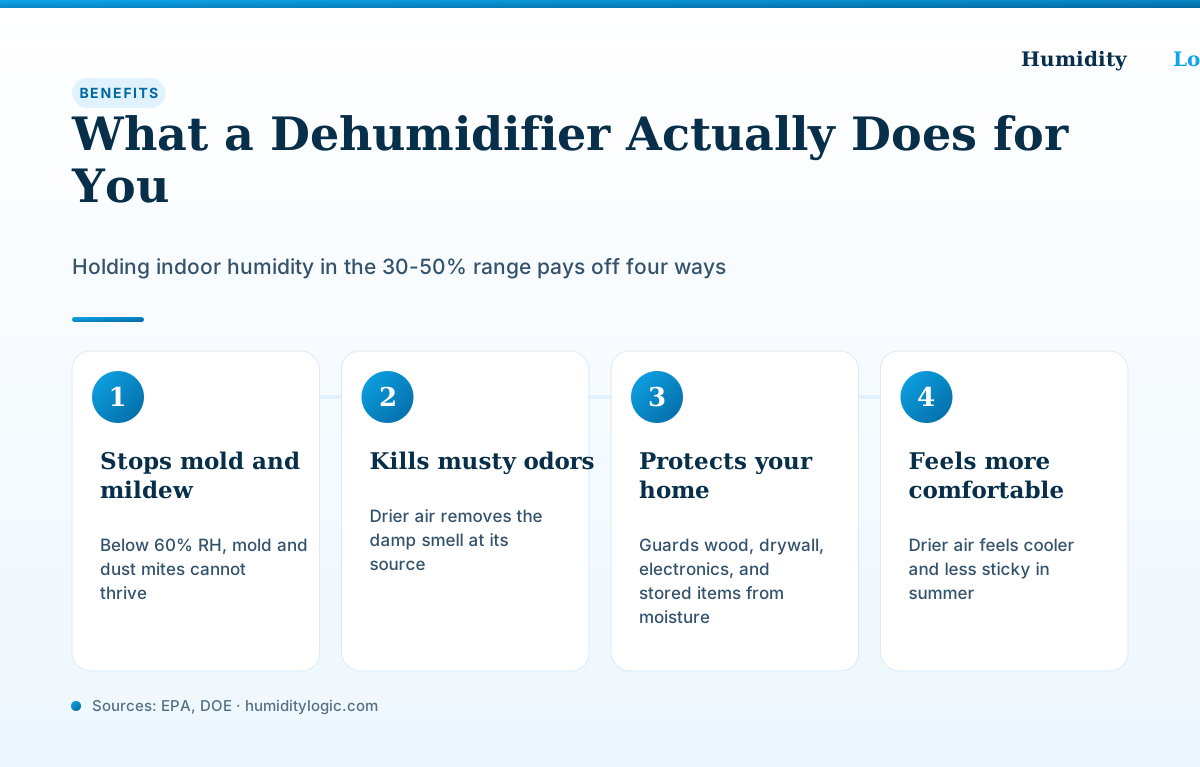
That is the honest short version. A dehumidifier is a moisture-control tool, not a magic box. Below is each benefit, what the authoritative sources actually say, and where the limits are.
What is the main benefit of a dehumidifier?
The single benefit that drives all the others is control over indoor humidity. Everything else on this page is a downstream effect of holding the air in the right range.
Here is the anchor number to remember: the EPA advises keeping indoor relative humidity “below 60 percent – ideally between 30 percent and 50 percent, if possible.” A dehumidifier is the appliance built to do exactly that. It draws humid air across a cold coil, condenses the water vapor into a tank or drain line, and returns drier air to the room. Run it in a damp space with a built-in humidistat and it will hold that 30-50% band automatically.
Why does that range matter so much? Because moisture is the one ingredient almost every indoor problem shares. As the EPA puts it, “controlling indoor moisture will control the growth of indoor mold.” Dust mites absorb water straight from the air, musty smells are the scent of damp material, and warped wood and rusted tools are moisture doing slow damage. Take humidity out of the equation and you starve all of those problems at once.
For the full picture of what your home should read season by season, see our guide to ideal indoor humidity levels.
Does a dehumidifier prevent mold and mildew?
Yes — preventing mold and mildew is the benefit most people buy a dehumidifier for, and it is the one with the strongest evidence behind it.
Mold needs three things to grow: a food source (drywall, wood, dust, and fabric all qualify), spores (always present in indoor air), and moisture. You cannot remove the first two, so moisture is the leg you attack. Keep relative humidity below 60%, and ideally in the 30-50% band, and airborne spores cannot germinate on your surfaces. The EPA is blunt about it: “The key to mold control is moisture control.” A right-sized dehumidifier holding the air in range is the most reliable way to deny mold the water it needs.
One important limit, worth saying plainly: a dehumidifier prevents new mold, but it does not kill or remove mold that already exists. Established growth has to be cleaned off hard surfaces, and moldy porous materials often have to be thrown out. If you already see or smell mold, read our dedicated guide to using a dehumidifier for mold for the honest playbook on what the appliance can and cannot do.
Can a dehumidifier get rid of a musty smell?
In most cases, yes. That damp, earthy, basement-y smell is one of the most satisfying benefits to fix, because it usually disappears once the air dries out.
A musty odor is not really a smell of dirt — it is the smell of microbial growth (mold and mildew) feeding on damp material, plus the dampness itself. ENERGY STAR describes a “musty odor that may be intermittent” as one of the first signs of a space that is slightly to moderately damp. Because the smell tracks the moisture, holding humidity in the 30-50% range removes the conditions the odor grows from, and the space stops smelling like a wet basement.
The limit here matters too. If the source is a specific soaked item, a hidden plumbing leak, or standing water, drying the air alone will not finish the job — you have to find and fix that source and dry the material directly. A dehumidifier handles the ambient dampness; it is not a substitute for repairing a leak.
Does a dehumidifier help with dust mites, allergies, or asthma?
It can help indirectly, by making your home inhospitable to two common allergy and asthma triggers: dust mites and mold. This is the benefit to be most careful and honest about, because a dehumidifier controls the environment, not the medical condition.
Dust mites are the clearest case. The American Lung Association explains that dust mites “thrive in warm, humid settings” and that they “do not drink water like we do; they absorb moisture from the air.” Its recommendation is direct: “Keep your home below 50 percent humidity. In humid areas, air conditioning and dehumidifiers can help to draw moisture out of the air.” Take away the humidity and dust mites cannot survive, which is why the drier 30-50% band works against them. The EPA likewise notes that lower humidity “may also discourage pests” and dust mites.
Here is the boundary. A dehumidifier does not cure allergies or treat asthma. What it can do is reduce two of the triggers those conditions react to, by holding humidity where mold and dust mites struggle. If you or someone in your home has allergy or asthma symptoms, treat a dehumidifier as one part of a trigger-reduction plan and follow your doctor’s guidance — this article is general home-maintenance information, not medical advice.
What does a dehumidifier protect in my home?
Beyond health and comfort, a dehumidifier protects the physical things in your house — the structure, the finishes, and your belongings — from the slow damage that excess moisture causes.
Persistently damp air works on a home quietly. Wood absorbs moisture and can swell, warp, or cup — hardwood floors, trim, furniture, and instruments. Metal tools, firearms, and hardware corrode. Paper, books, and photos stored in a basement or closet grow spotty and brittle. Electronics and their connectors are vulnerable to condensation and corrosion. Holding the air in the 30-50% range keeps all of it dry enough to last.
This is why moisture-prone storage spots — basements, closets, and crawl spaces — are where a dehumidifier earns its keep. If your problem area is below grade, our guide to basement humidity covers the specifics of keeping that space in range year-round.
Does a dehumidifier make a room more comfortable?
Yes, though not in the way people sometimes expect. A dehumidifier improves comfort by removing the stickiness from humid air, not by lowering the temperature.
The physics is straightforward: your body cools itself by evaporating sweat, and sweat evaporates far more readily into dry air than into humid air. When a room sits at 75°F but 70% humidity, it feels muggy and warmer than the thermostat says. Pull that humidity down into the 30-50% range and the same 75°F air feels cooler, drier, and less oppressive — real comfort that can let you lean on the air conditioner a little less in summer.
The honest caveat: a dehumidifier does not actually lower the air temperature, and it gives off a small amount of heat as it runs, so it is not a substitute for an air conditioner when you need genuine cooling. It changes how the existing air feels. We cover this distinction in depth in does a dehumidifier cool a room.
Is a dehumidifier worth the energy it uses?
For a genuinely damp space, most homeowners find the benefits worth the running cost — and the cost is smaller than many expect, especially with an efficient unit.
Dehumidifiers do use electricity continuously while they run, which is a real trade-off worth naming. The good news is that efficiency has improved: an ENERGY STAR certified dehumidifier uses “more efficient refrigeration coils, compressors, and fans to remove the same amount of moisture as a similarly sized conventional unit but uses 20% less energy.” ENERGY STAR also confirms the target you are running toward, noting the “optimum RH level for a building is generally considered to be between 30% and 50%,” with anything above that range promoting mold growth.
Two things keep the cost reasonable. First, right-size the unit: one that is too small runs constantly and never reaches its setpoint, while a properly matched unit pulls the room into range and then cycles off. Use the dehumidifier size calculator to match capacity to your room, or read what size dehumidifier do I need for the full AHAM method. Second, only run it where you actually have a moisture problem — a room already sitting at 45% needs nothing. To know whether you have a problem at all, check what is considered high humidity.
The bottom line
The benefits of a dehumidifier all trace back to one thing: it holds your indoor humidity in the 30-50% range, under 60%, that keeps a home healthy and durable. In that band, mold and mildew cannot establish, dust mites cannot thrive, musty odors fade, wood and electronics and stored belongings stay protected, and sticky air feels cooler and more comfortable.
It is not a cure-all, and the honest limits are part of the value: a dehumidifier prevents mold rather than removing it, reduces allergy triggers rather than treating allergies, and makes air feel cooler without actually cooling it. Buy one for a space that is genuinely damp, size it correctly, and set it to hold around 50%. Do that and it earns its keep every day it runs.
Frequently asked questions
What is the main benefit of a dehumidifier?
The core benefit is moisture control: a dehumidifier holds indoor relative humidity in the 30-50% range (and always under 60%) that the EPA recommends. That single change is what stops mold and mildew from growing, discourages dust mites, clears musty odors, and makes damp air feel more comfortable.
Does a dehumidifier help with allergies or asthma?
It can help indirectly by reducing two common triggers. Dust mites and mold both need humid air, and the American Lung Association advises keeping your home below 50% humidity because dehumidifiers and air conditioning draw the moisture they depend on out of the air. A dehumidifier does not treat allergies or asthma itself, so anyone with symptoms should follow medical advice.
Will a dehumidifier get rid of a musty smell?
Usually, yes, if the smell comes from damp air and the mold or mildew feeding on it. Musty odors are a sign of excess moisture, and holding humidity in the 30-50% band removes the dampness the smell grows from. If the source is soaked material or a hidden leak, you still have to fix and dry that directly.
What humidity level should I set a dehumidifier to?
Aim for 50% relative humidity as a target and treat 60% as the line you do not want to cross for long, per EPA guidance. The 30-50% band is comfortable for people and hostile to mold and dust mites. Going below 30% gives no extra benefit and dries out skin, sinuses, and wood.
Does a dehumidifier cool a room?
Not really. A dehumidifier does not lower the actual temperature, and it gives off a little heat as it runs. What it does is make existing air feel cooler and less sticky by removing humidity, because drier air lets sweat evaporate more easily. For real temperature drops you still need an air conditioner.
Sources & references
Every figure on this page is checked against these published sources. Last reviewed July 28, 2026.