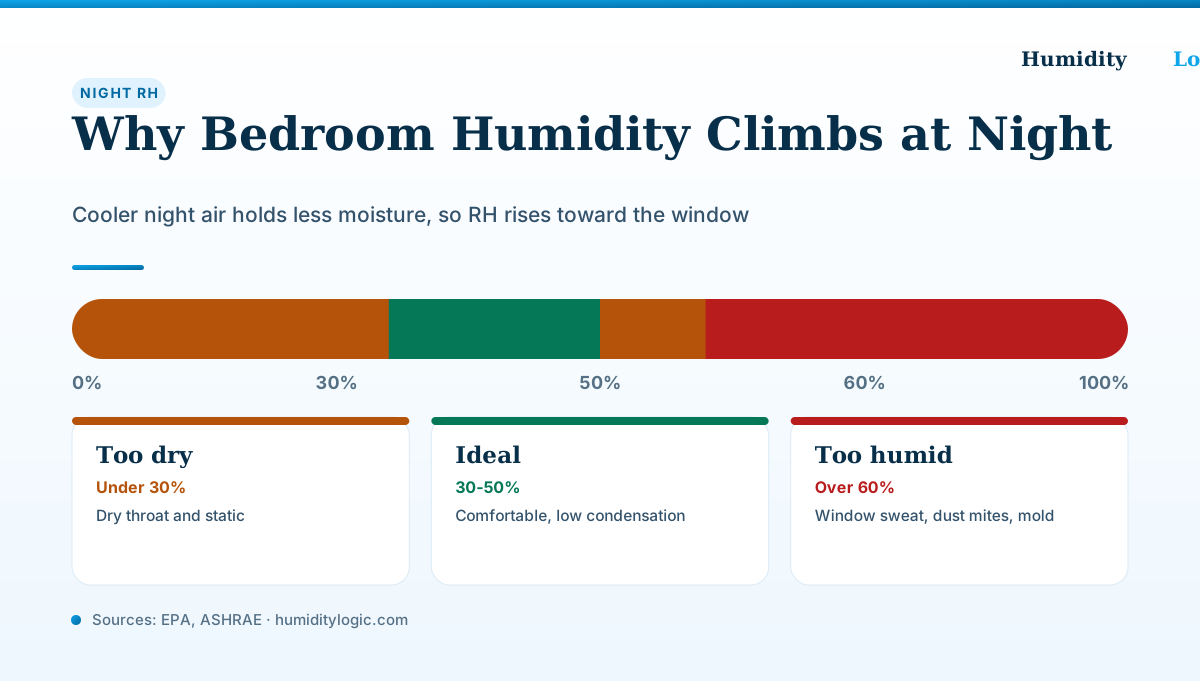
Bedroom humidity at night should sit between 30% and 50% relative humidity and stay under 60%, the same healthy band the EPA recommends for the whole house. It often climbs after dark for a simple physical reason: as the room cools overnight, the air holds less moisture, so the same water vapor reads as a higher relative humidity. Add your own breathing, a closed door that traps the air, and any plants in the room, and a bedroom that felt fine at bedtime can read damp by morning. The fix is a mix of better airflow, fewer moisture sources, and, when needed, a dehumidifier.
Why does bedroom humidity rise at night?
The biggest driver is temperature. Relative humidity is not a fixed amount of water in the air; it is a percentage of how much the air could hold at its current temperature. Cool the air down and its capacity shrinks, so the same moisture fills a larger share of it. The National Weather Service explains that a temperature of 80°F with a dew point of 60°F reads as 50% relative humidity, but as that air cools toward the dew point, the relative humidity climbs toward 100%. Your bedroom does exactly this every night: the thermostat setback, the sun gone, and the room drifting a few degrees cooler all push the percentage up even though the actual moisture has barely changed.
On top of the temperature effect, a few things quietly add moisture. You exhale water vapor with every breath and perspire lightly through the night, and a person releases a meaningful amount of water over eight hours of sleep. A closed door seals that moisture in, and houseplants transpire moisture into the air too. None of these alone is dramatic, but stacked inside a small, still room they nudge the reading higher. Daytime hides the effect because doors open, people move around, and air circulates; at night the room goes still and the moisture simply accumulates. The result is that morning is usually the dampest part of the day for a bedroom, which is also why window condensation tends to show up as you wake rather than when you go to bed.
What is the right bedroom humidity at night?
Target 30-50% relative humidity and keep it under 60%. The EPA advises keeping indoor humidity “below 60 percent (ideally between 30 and 50 percent),” and that guidance applies to where you sleep just as it does to the rest of the house. There is no separate “sleep number” — the Sleep Foundation points to the same range for comfortable rest. A practical middle target most of the year is around 40-45%.
Because the reading naturally drifts up overnight, it is worth checking at the time it matters. A room measuring 45% at bedtime can read in the mid-50s by 5 a.m. simply from cooling. That is still within range, but it explains why a bedroom can feel fine when you turn in and clammy before dawn. For the full reasoning behind the numbers season by season, see our guide to ideal indoor humidity levels, and for how the range affects rest specifically, our explainer on humidity and sleep goes deeper.
Why do my bedroom windows sweat at night?
Window condensation is the classic sign of high nighttime humidity, and it comes straight from the physics above. Warm, moist room air touches the cold glass, the glass chills that thin layer of air below its dew point, and the moisture condenses into droplets. The EPA’s mold course puts it plainly: when warm, humid air contacts a cold surface, condensation may form. Windows are usually the first place it shows because glass is the coldest surface in the room, but exterior walls, cold corners, and the wall behind a bed pushed against an outside wall can collect it too.
The EPA also treats that moisture as a warning, not just a nuisance: condensation on windows can be a sign of high humidity, and it advises you dry the surface and reduce the moisture source quickly. Wiping the glass each morning handles the water you can see, but the real fix is lowering the room’s humidity so it stops forming. Our guide to condensation on windows walks through the specific causes and fixes for glass that sweats overnight.
Is high humidity in the bedroom at night harmful?
Sustained high humidity is more of a comfort-and-maintenance problem than an immediate health one, but it is worth correcting. Above 60%, sweat evaporates poorly, so you may wake up feeling warm and sticky even when the thermostat reads a reasonable number. Damp bedding and a room that stays moist night after night also favor dust mites, which absorb water vapor from the air, and give mold the one thing it needs to grow. The EPA’s core principle is blunt: “the key to mold control is moisture control,” and a bedroom that lingers in the high 50s and 60s keeps porous surfaces damp enough for it.
This is comfort and environmental guidance, not medical advice, and individual responses vary. But the pattern is consistent enough that keeping the room in range removes an avoidable irritant. If your bedroom regularly reads past 60% overnight, treat it as a signal rather than a curiosity, and check the reading over several nights before deciding how far to correct it. A single humid night after a rainy day is normal; a room that sits above the ceiling week after week is telling you a moisture source needs attention.
How do you lower bedroom humidity at night?
Start with airflow, because a still room is a damp room. Cracking the bedroom door, running a ceiling fan, or opening a window when the outdoor air is drier all let trapped moisture escape instead of building up against the windows. The EPA’s indoor air quality guidance stresses that good ventilation is central to keeping humidity at acceptable levels. In humid months, air conditioning helps twice over, because it both cools and dries the air.
Next, cut the moisture you are adding. Do not dry laundry in the bedroom, run the bathroom exhaust fan after a shower so that steam does not drift down the hall, and move a cluster of thirsty houseplants elsewhere if the room already runs damp. When those steps are not enough — a basement bedroom, a humid climate, or a room that reads 60% night after night — a right-sized bedroom dehumidifier is the most direct fix, and our guide to lowering humidity in the house ranks every method by cost and impact.
How do I check my bedroom humidity overnight?
Buy a small digital hygrometer — they run about $10-15 — and set it on the nightstand, away from the door, window, and any vent, so it reads the air you actually sleep in. Because humidity swings with the weather and the season, check it over several nights rather than trusting a single number, and note the reading last thing at night and first thing in the morning to capture the range your body experiences. Morning is usually the dampest reading because the room has cooled.
Since the reading depends on temperature, it helps to see how your two numbers combine. Our humidity comfort checker lets you plug in the bedroom’s temperature and humidity to see whether the pair lands in the comfortable zone or drifts toward sticky or dry. Once you know your baseline, the numbers to remember are short: 30-50% is the target, 40-45% is a comfortable middle, and 60% is the ceiling you do not want to sit above overnight. If the room already lives in that band, there is nothing to fix — it is doing its job so you can rest.
Frequently asked questions
Why does bedroom humidity go up at night?
Mostly because the room cools down. Relative humidity is a percentage of what the air can hold at its current temperature, and cooler air holds less, so the same moisture reads as a higher percentage. Your own breathing, a closed door, and any plants add a little more moisture on top of that.
What is a good bedroom humidity level overnight?
Aim for 30 to 50 percent relative humidity and keep it under 60 percent, the same band the EPA recommends for the whole home. A comfortable middle target for most of the year is around 40 to 45 percent.
Why do my bedroom windows sweat at night?
Warm, moist room air meets the cold glass and the moisture condenses out as water. The EPA notes that condensation on windows can be a sign of high indoor humidity. Lowering the room's humidity and improving airflow near the window usually stops it.
Does breathing at night really raise humidity?
A little. People give off water vapor through breathing and perspiration all night, and in a small closed bedroom with the door shut and no fresh air, that moisture has nowhere to go, so the reading creeps up by morning.
How do I lower humidity in my bedroom at night?
Improve airflow first: crack the door, run a ceiling fan, or open a window when the outside air is drier. Remove moisture sources like drying laundry indoors, and if the room still reads 60 percent or higher night after night, run a right-sized dehumidifier.
Sources & references
Every figure on this page is checked against these published sources. Last reviewed July 28, 2026.