Humidity is the amount of water vapor in the air. The everyday number you see on a weather app or hygrometer is relative humidity — the percentage of the maximum moisture the air can hold at its current temperature, so 100% means the air is saturated. Higher humidity slows sweat from evaporating, which is why muggy days feel hotter than the thermometer reads.
What Is the Definition of Humidity?
Humidity is water vapor held in the air — moisture in its invisible, gaseous form. The National Weather Service treats “water vapor” and “moisture” as the same thing, and humidity is simply how much of it the air is carrying at a given moment. Warm air can hold far more vapor than cold air, which is why humidity behaves so differently across seasons and rooms.
That single idea splits into three measurements depending on what you want to know. In casual use, “humidity” almost always means relative humidity, because that is the figure your thermostat, weather forecast, and $12 hygrometer all report. For a complete tour of the science and the household consequences, see the pillar guide on what is humidity.
What Are the Three Types of Humidity?
The three types are relative, absolute, and specific humidity. Each describes the same moisture in the air but answers a different question — one is a percentage, the other two are actual quantities of water vapor.
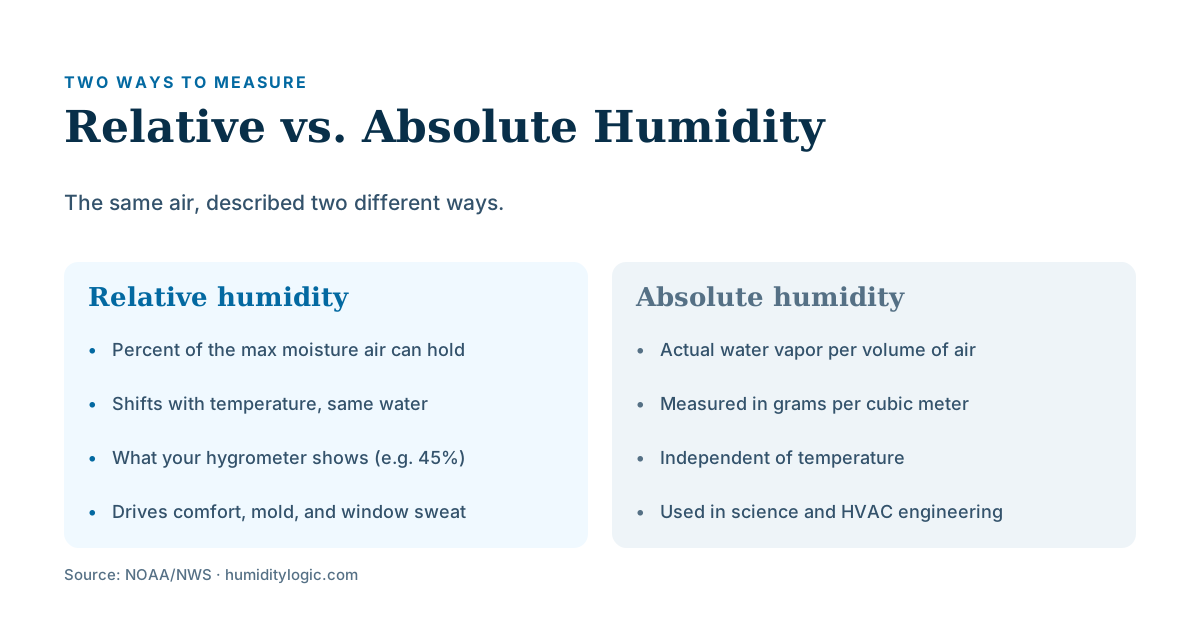
Relative humidity is the amount of water vapor in the air compared with the most it could hold at its current temperature, expressed as a percent. It is the household number that matters, because it drives comfort, mold, and window condensation. Its quirk is that it changes with temperature even when the actual moisture does not: cool a room down and its relative humidity rises, which is why cold glass sweats. The dedicated explainer on what is relative humidity covers that behavior in depth.
Absolute humidity is the actual mass of water vapor in a given volume of air, expressed in grams per cubic meter (g/m³). It ignores temperature entirely and reports the real quantity of moisture present. Scientists and HVAC engineers use it when they need a fixed figure rather than a percentage that drifts with the thermostat.
Specific humidity is the mass of water vapor per unit mass of air, expressed as grams of water vapor per kilogram of air. Its useful property is stability: specific humidity stays constant as long as no moisture is added or removed, even as temperature and pressure change. That makes it the meteorologist’s tool for tracking a parcel of air as it moves and cools.
What Does Humidity Mean in Everyday Life?
In everyday terms, humidity is why the air feels sticky, muggy, or dry — it governs how quickly moisture leaves your skin. Your body cools itself by evaporating sweat, and evaporation slows when the surrounding air is already crowded with vapor. High humidity makes an 85°F afternoon feel oppressive; low humidity makes the same temperature feel pleasant and can leave your lips chapped by evening.
Meteorologists argue that dew point is the more honest comfort gauge, because relative humidity swings with temperature through the day. The NWS rule of thumb: a dew point at or below 55°F feels dry and comfortable, 55–65°F turns noticeably sticky, and 65°F or higher becomes oppressive. Relative humidity can read a misleading 100% on a cold 30°F morning that feels nothing like a muggy summer night. For the full comparison, see dew point vs. humidity.
Indoors, humidity is the lever behind comfort and home damage alike. Too little and wood floors gap, trim cracks, and sinuses dry out. Too much and dust mites multiply, windows fog, and mold gains a foothold. The humidity comfort checker translates a temperature and humidity reading into how the air will actually feel.
Why Does Summer Humidity Feel Worse Than Winter?
Summer feels muggier because warm air physically holds much more water vapor than cold air, so a humid July day carries far more actual moisture than a cold winter one — even when both read the same relative humidity percentage. This is exactly where the difference between relative and absolute humidity stops being academic.
Consider a winter morning at 30°F showing 100% relative humidity. The air is fully saturated, yet its absolute humidity is tiny, because cold air simply cannot hold much vapor. Now take a summer evening at 80°F with 60% relative humidity: the percentage is lower, but the absolute amount of moisture is several times greater, and the dew point is high enough to feel sticky. Your comfort tracks the real quantity of vapor — the absolute figure — far more closely than the percentage does.
This is also why relative humidity climbs indoors on a cold night without any new moisture entering the room. As the air near a window cools, its capacity to hold vapor shrinks, so the same water pushes the relative humidity toward 100% and eventually condenses on the glass. Understanding that one behavior explains most winter condensation problems and why the ideal indoor target drops in freezing weather.
What Is a Healthy Humidity Level Indoors?
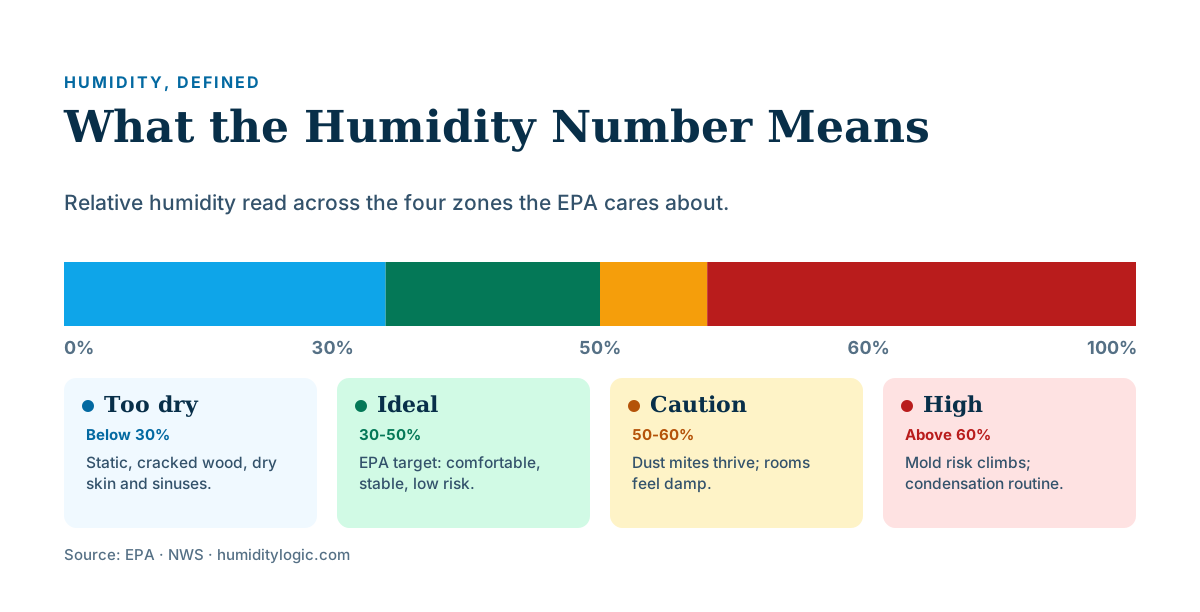
The EPA recommends keeping indoor relative humidity between 30% and 50%, and below 60% at all times. That range is comfortable for people while staying hostile to the things that damage a house. The zones are worth memorizing.
Below 30%, the air turns aggressively dry — static shocks, cracked woodwork, and scratchy sinuses. Between 30% and 50% sits the ideal band: neutral-feeling air, stable furnishings, and suppressed allergens. From 50% to 60% is a caution zone where dust mites thrive, since they absorb water vapor straight from the air and struggle once it dries out. Push past 60% and mold enters the picture, because the EPA’s core principle — moisture control is the key to mold control — no longer holds. Damp air keeps drywall, framing, and closet contents wet enough to grow it, and condensation on cold surfaces follows.
For the reasoning behind each threshold, see what is considered high humidity, and the full seasonal targets in ideal indoor humidity levels.
How Is Humidity Measured?
Humidity is measured with a hygrometer, an inexpensive device that reports relative humidity as a percentage. A digital model costs about $10–15 and is the single most useful first purchase for anyone tracking indoor air. Place it away from bathrooms, kitchens, and exterior doors — those spots read artificially high — and check it morning and evening for several days before drawing conclusions, since one reading after a hot shower tells you nothing.
Weather stations and laboratories go further, deriving absolute and specific humidity from temperature, pressure, and dew-point measurements. But for a home, the relative humidity on a hygrometer is all you need. Keep it in the 30–50% band, treat 60% as the ceiling you never sustain, and the rest — comfort, protected woodwork, and the absence of mold — follows from that one number.
Frequently asked questions
What is the simple definition of humidity?
Humidity is the amount of water vapor present in the air. When people say it feels humid, they mean the air holds a lot of invisible moisture, which slows how fast sweat evaporates and makes warm days feel muggy.
What is the difference between humidity and relative humidity?
Humidity is the general term for moisture in the air. Relative humidity is the specific, measured version: the percentage of the maximum moisture the air can hold at its current temperature. When you read 45% on a hygrometer, that is relative humidity.
What are the three types of humidity?
Relative, absolute, and specific. Relative humidity is a percentage of saturation and changes with temperature. Absolute humidity is the actual mass of water vapor per volume of air. Specific humidity is the mass of water vapor per mass of air, and it stays fixed unless moisture is added or removed.
Is humidity the same as moisture?
Roughly, yes. Humidity is the water vapor in the air, and vapor is moisture in its gas form. The difference is that moisture can also describe liquid water on surfaces, while humidity specifically means the water suspended in the air.
What humidity level is comfortable indoors?
The EPA recommends keeping indoor relative humidity between 30% and 50%, and always below 60%. That range feels comfortable and discourages mold, dust mites, and condensation.
Sources & references
Every figure on this page is checked against these published sources. Last reviewed July 21, 2026.