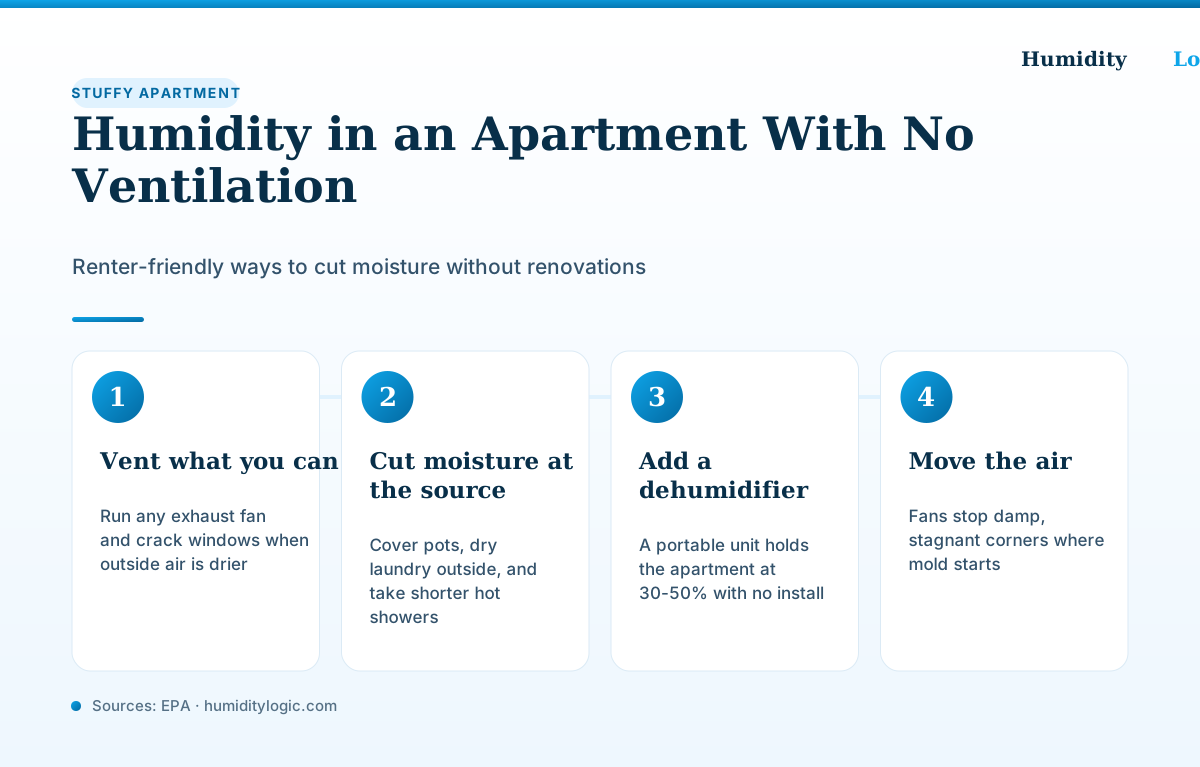
In a poorly ventilated apartment, the way to control humidity is to cut moisture at the source, vent what you can, and run a portable dehumidifier to hold the air between 30 and 50 percent relative humidity. You cannot knock out a wall, add ductwork, or install a bathroom fan in a rental, but you do not need to. Every effective fix here is something a tenant can do without tools, permission, or a security deposit on the line. The goal, in the EPA’s words, is to keep indoor humidity “below 60 percent (ideally between 30 and 50 percent),” because moisture control is the whole game when it comes to preventing condensation and mold.
Why Does a Poorly Ventilated Apartment Get So Humid?
Ordinary daily life pumps a surprising amount of water into indoor air. Boiling pasta, taking a hot shower, drying a load of laundry on a rack, watering houseplants, and simply breathing all release water vapor. In a house with good airflow, some of that moisture leaves on its own. In a sealed apartment with a weak exhaust fan, painted-shut windows, or interior rooms with no windows at all, the vapor has nowhere to go.
So it accumulates. As the EPA explains, “when warm, humid air contacts a cold surface, condensation may form” — which is why you see water beading on single-pane windows, damp patches in closet corners, and a clammy feel that never quite lifts. Left alone, those wet surfaces feed mold. The EPA’s rule of thumb is stark: materials that stay damp longer than 24 to 48 hours will, in most cases, start to grow mold. An apartment that stays saturated day after day blows past that limit constantly.
If you want to understand where the healthy numbers come from and what starts happening above them, see what is considered high humidity.
How Do I Vent an Apartment I Cannot Renovate?
Use every exit you already have, even the modest ones.
Run any exhaust fan you have. A lot of apartments have a bathroom or over-the-stove fan that tenants rarely switch on. ENERGY STAR notes that adequate ventilation “helps to alleviate many common household problems” by controlling moisture and removing odors. Turn the bathroom fan on during and for about 20 minutes after every shower, and run the kitchen fan whenever you cook. If your kitchen fan only recirculates air rather than venting outside, it will not remove much moisture — but the bathroom fan usually does.
Crack a window when the outdoor air is drier. Opening a window helps only when the air coming in is drier than the air inside. On a cool, low-humidity day, a cracked window flushes damp indoor air out fast. On a hot, muggy day it does the opposite and makes things worse, so timing matters. This is exactly the trade-off our air changes per hour calculator is built to make concrete: enter your room’s dimensions and a fan’s airflow rating, and it shows how quickly you are actually swapping out the stale, moist air.
Keep interior doors open. Moisture pools in still, closed-off rooms. Leaving bedroom and bathroom doors open lets damp air disperse toward wherever your ventilation and dehumidifier are working, instead of concentrating in one clammy corner.
What Are the Best Renter-Friendly Ways to Cut Moisture at the Source?
The cheapest humidity you can remove is the humidity you never release. Small habit changes add up fast:
- Cover pots and pans while cooking. A lid keeps steam in the pot instead of releasing it into the kitchen air.
- Dry laundry elsewhere. A single load of wet clothes drying on an indoor rack can release several pints of water into the apartment. Use a building laundry room, a dryer, or a balcony instead. If you must dry indoors, do it in one room with the door closed and a fan or dehumidifier running.
- Take shorter, cooler showers, and leave the bathroom fan running afterward. Hotter and longer means more steam.
- Put lids on aquariums and cover any standing water. An open tank quietly evaporates into the room around the clock.
- Wipe down condensation on windows and sills in the morning so that water does not sit and feed mildew.
For a broader menu of source-control tactics that apply throughout a home, see how to lower humidity in the house.
Will a Portable Dehumidifier Fix Apartment Humidity Without an Install?
For most renters, this is the single highest-value move. A portable dehumidifier plugs into a standard outlet, needs no ductwork or drilling, and moves with you when you go. It pulls water vapor straight out of the air and collects it in a tank you empty, holding the apartment in the target range regardless of what the weather is doing outside.
ENERGY STAR points out that certified dehumidifiers include a built-in humidistat that automatically cycles the unit on and off to hold your chosen level, and that the optimal range to set is 30 to 50 percent — the same window the EPA recommends for mold control. Set it, empty the tank (or run a drain hose to a sink or tub if the unit supports it), and the machine does the rest.
Sizing matters. A unit that is too small for the space will run constantly and never catch up. Match the dehumidifier’s pint rating to your square footage and how damp the apartment is — our guide to what size dehumidifier you need walks through the numbers. If the damp is concentrated in one room, a compact unit for a bedroom or a windowless bathroom is often enough.
Does Moving the Air With Fans Actually Help?
Yes — not by removing moisture, but by preventing the stagnant pockets where mold gets a foothold. A box fan or oscillating fan keeps air circulating so that no closet, corner, or spot behind furniture stays still and damp long enough for condensation to settle. Pull furniture a few inches off exterior walls so air can move behind it, and aim a fan toward the spots that feel clammy. Fans also help a dehumidifier by mixing the whole room’s air rather than letting it dry only its immediate surroundings.
It also helps to know your numbers. An inexpensive hygrometer — a small digital humidity gauge you can leave on a shelf — turns “the place feels muggy” into a reading you can act on. Watch it for a few days and you will quickly see which fixes move the needle: when the dehumidifier kicks in, when a closed door lets a room creep up, and whether cracking a window on a given afternoon actually dries the air or makes it worse. That feedback is what keeps a renter’s low-cost toolkit reliably inside the 30 to 50 percent target instead of guessing.
When Is High Humidity the Landlord’s Problem, Not Yours?
Draw a clear line between moisture you generate and moisture the building generates. Everyday humidity from cooking, showering, and laundry is yours to manage with the fixes above. But real leaks and structural moisture are the landlord’s responsibility — a dripping pipe, a roof or window that leaks in the rain, failing gutters that dump water against the foundation, or rising damp in a ground-floor wall.
The tell is simple: if mold and condensation keep coming back even after you have controlled your own moisture with fans, source control, and a dehumidifier, something structural is feeding it. Report leaks and persistent damp to your landlord in writing, keep a copy, and include photos. Controlling indoor moisture, as the EPA puts it, is what “will control the growth of indoor mold” — and part of that control is making sure the building itself is not the leak you cannot out-dehumidify.
Frequently asked questions
How do I lower humidity in an apartment with no ventilation?
Attack it from three sides. Cut the moisture you add to the air by covering pots while cooking, taking shorter and cooler showers, and drying laundry somewhere other than a rack in the living room. Vent what you can by running any bathroom or kitchen exhaust fan and cracking a window when the outdoor air is drier than the indoor air. Then run a portable dehumidifier to hold the apartment between 30 and 50 percent relative humidity, which needs no installation and no landlord approval.
Why is my apartment so humid with the windows closed?
Everyday living constantly adds water to the air. Cooking, showering, drying clothes, houseplants, and even breathing release moisture, and a sealed apartment with weak or no ventilation has no way to let it out. The vapor builds up until it condenses on the coldest surfaces, which is why you see fogged windows and damp corners. Moving air out or pulling moisture back down is the only way to break the cycle.
Can a dehumidifier replace ventilation in an apartment?
For humidity control, largely yes. A portable dehumidifier pulls water vapor out of the air and collects it, holding the apartment in the 30 to 50 percent range that the EPA recommends, all without any install. What it cannot do is remove cooking odors, carbon monoxide, or other pollutants, so you still want to run exhaust fans and open a window periodically for fresh air even if the dehumidifier handles the moisture.
Is my landlord responsible for humidity and mold in my apartment?
It depends on the cause. Real structural problems such as roof leaks, plumbing leaks, failing gutters, or rising damp are the landlord's responsibility, and you should report them in writing right away. Humidity from everyday living that you can manage with fans, source control, and a dehumidifier is generally on the tenant. If mold keeps returning after you have controlled your own moisture, that is a strong sign of a hidden leak the landlord needs to fix.
What humidity level should I keep my apartment at?
Aim for the EPA range of 30 to 50 percent relative humidity, and never let it sit above 60 percent for long. Below 60 percent, mold struggles to grow; in the 30 to 50 percent band the air feels comfortable and your windows are far less likely to fog. A cheap hygrometer, which costs about the price of a couple of coffees, tells you exactly where you stand and whether your fixes are working.
Sources & references
Every figure on this page is checked against these published sources. Last reviewed August 14, 2026.