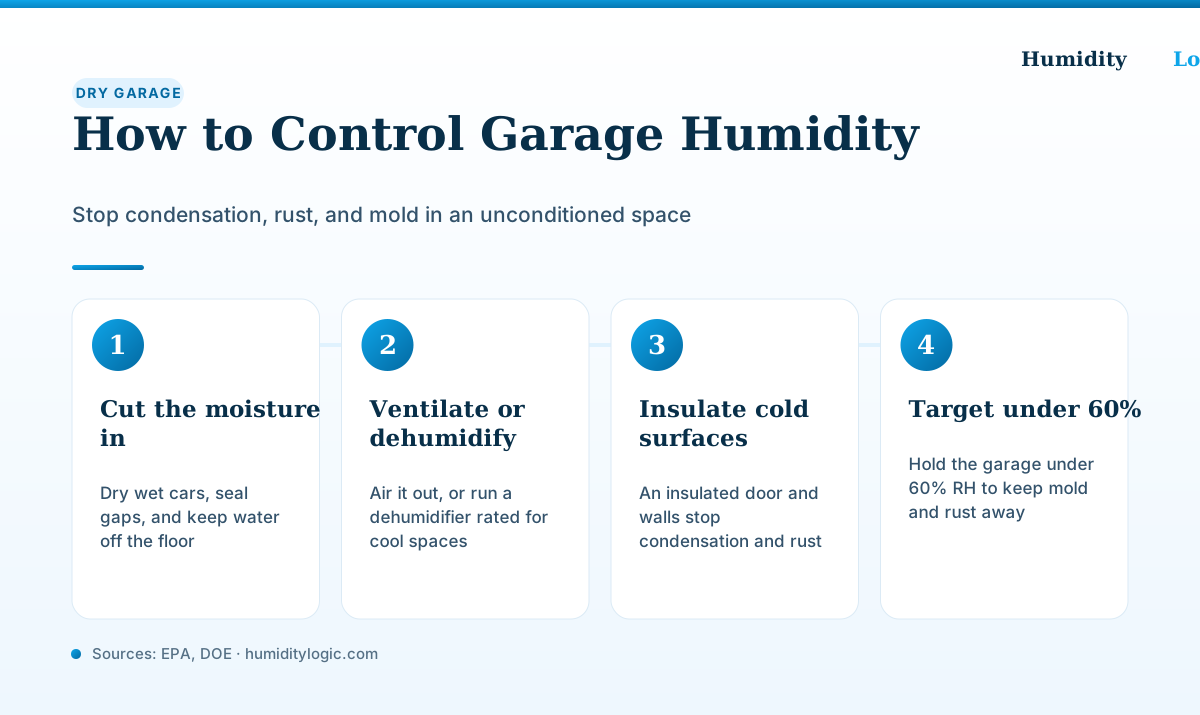
A garage collects moisture that a finished room never has to deal with, and the fix comes down to three moves. Control garage humidity by cutting the moisture coming in, ventilating or dehumidifying the air, and insulating cold surfaces so nothing sweats — with the goal of holding the space under 60% relative humidity. Do those together and you stop the rust on your tools, the mold on the drywall, and the puddles under the car.
Why is my garage so humid?
Because a garage is barely conditioned space. It usually has no heat or air conditioning, an uninsulated concrete slab in direct contact with the ground, and a large door that leaks air at every edge. Each of those is a moisture source.
The slab wicks water up out of the soil and lets it evaporate into the air. The door and gaps let humid outdoor air pour in on a muggy day. And vehicles are the biggest single event — a car covered in rain or melting snow can drop a gallon or more of water onto the floor, and a warm engine bay steams for a while after you park. All of that moisture then meets the coldest surfaces in the room: the slab, the steel door, and any exposed metal. The EPA puts the mechanism plainly — “when warm, humid air contacts a cold surface, condensation may form” (EPA Mold Course, Chapter 2). That film of water is what feeds rust and mold.
What humidity level should a garage be?
Under 60%. The EPA recommends keeping indoor relative humidity below 60 percent, and ideally between 30 and 50 percent, because moisture is the one thing you can actually control that limits mold growth (EPA — A Brief Guide to Mold, Moisture and Your Home). Sixty percent is the ceiling; the 30–50% band is the comfortable target.
If your garage is a workshop full of bare steel — hand tools, table-saw tops, cast-iron surfaces — or you keep a car you care about in it, aim tighter, under about 55%. Corrosion on unprotected steel picks up speed once the air climbs past roughly 60% RH, so a little headroom buys you cleaner tools. A cheap hygrometer (the $10–$50 meters the EPA mentions) tells you where you actually stand. If you want the wider context on which numbers cross the line, see what is considered high humidity.
How do I cut the moisture coming in?
This is the step most people skip, and it is the cheapest. Every gallon you keep out of the garage is a gallon you do not have to ventilate or dehumidify away.
- Dry vehicles off. Wipe down or towel a soaking car before you close the door, or park it outside until the worst of the melt runs off. A drip tray or a rubber containment mat under the car keeps meltwater from spreading across the slab.
- Keep standing water off the floor. Squeegee puddles toward the door, and fix the grading or add a channel drain if water runs in from the driveway. Poor drainage outside the door is a constant top-up.
- Seal the gaps. Replace a cracked bottom door seal and worn perimeter weatherstripping. On humid days, sealed gaps stop the exchange of muggy outdoor air; this is the same air-sealing logic the ENERGY STAR program applies to the whole house.
- Vent the dryer outside. If a clothes dryer lives in the garage, make sure it vents to the exterior. The EPA specifically advises venting moisture-producing appliances like dryers outdoors rather than into the space.
These moves are the garage version of the whole-house playbook in how to lower humidity in your house — reduce sources first, then remove what is left.
Should I ventilate or run a dehumidifier?
Both are valid; which one wins depends on your climate and the season.
Ventilation is free and works when the outdoor air is drier than the garage air — a breezy, low-humidity day. Cracking the door, adding a wall or gable vent, or running an exhaust fan flushes damp air out. But ventilation backfires in humid weather: pulling in 85% outdoor air only makes things worse, so ventilate on dry days and keep the door shut when it is muggy out.
A dehumidifier is the reliable option when outdoor air is often humid, or when you want a set-it-and-forget-it target. Here the garage’s temperature is the catch. A standard compressor (refrigerant) dehumidifier pulls water onto a cold coil, and in a cold garage that coil frosts over — below about 50°F these units “spend more and more of their time defrosting themselves rather than dehumidifying” (Meaco), and by the low 40s icing is near-certain. A desiccant dehumidifier uses a moisture-absorbing wheel instead of a cold surface, so it holds its capacity regardless of temperature and is the right tool for an unheated garage. If your garage stays warm year-round, a compressor unit with auto defrost is fine. The full breakdown of that choice — and sizing for a cold space — is in our garage dehumidifier guide.
Whichever you pick, set it to a humidistat target of 55–60% and let it cycle. ENERGY STAR notes that all its certified dehumidifiers include a built-in humidistat for exactly this, so you are not running the unit around the clock in dry weather. One useful side benefit of desiccant units in winter: they give off a little warmth as they run, which nudges the coldest surfaces up away from their dew point. And a cheap oscillating fan helps either type — moving the air keeps a still, damp layer from settling on the floor and tools where condensation starts.
How much dehumidifier do I need for a garage?
Treat a garage as a damp-to-wet space, not a spare bedroom. ENERGY STAR’s moisture bands run from “damp” (musty smell, 20–30 pints/day for a moderate room) up to “wet” (walls or floor sweat, 30–50 pints/day). A typical two-car garage that sees wet cars and a bare slab lands in the very-damp-to-wet range, so plan on roughly 30–50 pints of daily capacity — and buy the higher end, because an unsealed, cold garage leaks air and runs the unit inefficiently.
Rather than guess, plug your square footage and dampness into our dehumidifier size calculator, which uses the same AHAM moisture-condition method. For the reasoning behind the numbers, see what size dehumidifier do I need.
How do I stop condensation on cold surfaces?
Drying the air only gets you halfway. The other half is warming the surfaces so they stop being colder than the air’s dew point. The EPA’s own condensation fix — insulating cold surfaces so warm, humid air no longer meets a cold face — is the model here.
The two biggest cold surfaces in a garage are the door and the walls. An uninsulated steel door is a giant condensing plate; an insulated door (or an add-on insulation kit) keeps its interior face closer to room temperature so it stops sweating. Insulating the walls, and the ceiling if there is living space above, does the same for the rest of the shell. If your door is the specific problem — beads of water or frost on the panels each morning — work through condensation on a garage door for the targeted fix.
Put the three moves together and the garage stops fighting you. Cut the moisture at the source, dry or vent whatever is left to stay under 60%, and insulate the cold surfaces so nothing has a place to condense. That is the whole job — and it is a lot cheaper than a new set of tools.
See it in 3D. The garage is one of the rooms you can explore in The Humidity House, our interactive 3D home — click the car to see why a wet vehicle makes a closed garage damp, and what to do about it.
Frequently asked questions
What humidity level should a garage be?
Keep it under 60% relative humidity. The EPA recommends indoor spaces stay below 60% (ideally 30–50%) because condensation and mold become likely above that. If you store bare-steel tools, a car, or cast-iron surfaces, aim lower — under about 55% — since rust on unprotected steel accelerates as RH climbs past 60%.
Why is my garage so humid and damp?
A garage is essentially unconditioned: an uninsulated slab wicks ground moisture, a big door leaks humid outdoor air, and wet vehicles carry water in — a snow-covered car can shed a gallon or more as it melts. That moisture then meets cold concrete and metal and condenses.
Will a dehumidifier work in a cold, unheated garage?
A desiccant dehumidifier will, because it uses a moisture-absorbing wheel instead of a cold coil and holds performance regardless of temperature. A standard compressor unit ices up and spends more time defrosting than drying once the space drops below about 50°F, so pick a desiccant model or a compressor with auto defrost for a garage that sees real cold.
Does insulating a garage reduce humidity?
Insulation does not remove moisture, but it stops the condensation that damp air causes. An uninsulated door and walls stay cold enough for warm, humid air to condense on them; insulating those surfaces keeps them closer to air temperature so water vapor no longer sweats out on the metal and concrete.
How do I stop condensation on my garage floor and door?
Attack it from both sides: lower the air moisture (dry cars off, seal gaps, run a dehumidifier) and warm the cold surface (insulate the door and walls). Condensation forms when humid air touches a surface below its dew point, so you either dry the air or stop the surface from being the coldest thing in the room.
Sources & references
Every figure on this page is checked against these published sources. Last reviewed August 8, 2026.