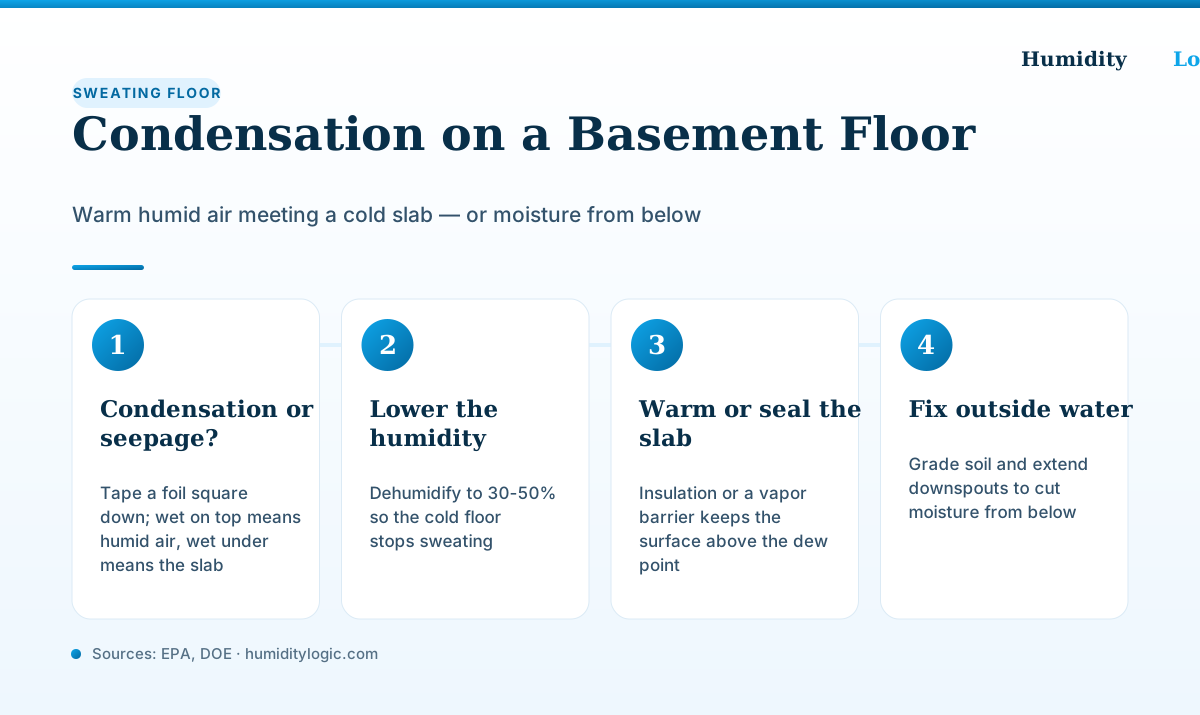
A basement floor that “sweats” is almost always condensation: warm, humid air meeting a cold slab whose surface sits below the air’s dew point, so water vapor beads out onto the concrete — most often in summer. The slab stays cold because the ground beneath it does, and when moist air drifts across it, the air chills, hits its dew point, and drops its water onto the floor. The other cause is moisture wicking up through the concrete from wet soil below. Before you fix anything, a simple foil test tells you which one you have: wet on top means humid air, wet underneath means the slab. Once you know, the plan is the same shape — dehumidify to 30–50%, warm or seal the slab, and fix outside water — with the emphasis shifted to whichever cause the test revealed.
Why Is My Basement Floor Sweating?
Soil a few feet down stays cool all year, so a basement slab holds a temperature well below summer air. When warm outdoor air — carrying a lot of moisture — reaches that cold concrete, the air right at the surface cools fast. Air holds less water vapor as it cools, and at the dew point it becomes saturated, so the extra moisture has to condense onto whatever cold surface it is touching. The EPA puts the mechanism plainly: when warm, humid air contacts a cold surface, condensation may form.
The DOE’s Building America program describes the same thing happening below grade: during warm seasons in humid climates, humid air can leak into a basement and condense on cooler surfaces such as floor joists or below-grade wall surfaces. The slab floor is one of the coldest surfaces in the whole house, so it is often the first place condensation shows up. If the link between temperature and moisture is new to you, our dew point vs. humidity explainer walks through why the dew point — not the humidity reading alone — is the number that predicts a wet surface.
This is why a sweating basement floor is seasonal. In winter, outdoor air is cold and dry, its dew point is low, and even a cold slab stays above it. In summer, outdoor dew points climb into the 60s and 70s °F while the slab sits in the low-to-mid 60s, and the gap flips. The concrete suddenly runs below the dew point of the air above it, and it beads up. A basement floor sweating in July that is bone dry in January is a textbook condensation problem.
Is It Condensation or Moisture Coming Up Through the Slab?
This is the single most important question, because the two causes have completely different fixes. Condensation pulls moisture out of the room air onto the cold top of the slab. The other problem is ground moisture wicking up through the concrete from wet soil below and surfacing on top — the DOE notes that capillary suction enables porous materials like concrete to wick water in any direction, including upwards against gravity, for surprisingly long distances. Treating one as the other wastes money and leaves the floor wet.
The foil test settles it cheaply. Tape a one-foot square of aluminum foil or clear plastic sheeting tightly to the slab, sealing all four edges, and leave it 24 to 48 hours. Then peel it back:
- Moisture on top of the foil (the room-facing side) means humid basement air is condensing on the cold concrete. This is a humidity problem, and the fixes below solve it.
- The top stays dry but the underside against the concrete is damp means water is migrating up through the slab from the ground. That is a capillary and drainage issue.
Both can happen at once in a humid basement, but the test tells you which one dominates so you spend your effort in the right place. The same physics drive a bare garage or utility slab, which we cover in condensation on a concrete floor. For the broader picture of what makes below-grade rooms damp, see our basement humidity guide.
How Do I Stop a Basement Floor From Sweating?
Once the foil test confirms condensation, you have two levers: lower the dew point of the air, or raise the temperature of the slab surface. Doing either — ideally both — keeps the concrete above the dew point so vapor stops condensing.
Lower the humidity first. This is the fastest and most reliable fix. Run a dehumidifier and hold the basement under 55% relative humidity; the EPA recommends indoor RH stay below 60 percent – ideally between 30 percent and 50 percent. As the air dries, its dew point drops below the slab temperature and the sweating stops. Keep a hygrometer on the floor to confirm the number, and keep basement doors and windows closed while the unit works — letting humid outdoor air back in defeats it. Matching the unit to the room matters, so our guide on what size dehumidifier you need helps you avoid buying one too small to keep up. You can also check how much margin you have between your air and your slab with our condensation-risk calculator, which compares the surface temperature to the dew point.
Warm or seal the slab. Anything that keeps the concrete surface above the dew point helps. Insulating the slab — rigid foam under a subfloor, or an insulated floor assembly — keeps the walking surface warmer so it never reaches the dew point, and a penetrating concrete sealer reduces how readily the surface takes on moisture. The DOE recommends the basement be insulated and brought into the conditioned space rather than left cold, noting that a conditioned basement will usually be drier than an unconditioned basement.
What If the Moisture Is Coming From Below?
If the foil test came back dry on top but wet against the concrete, the problem is water in the ground, not humid air — and dehumidifying alone will not fix it. Under a new slab the DOE’s answer is a capillary break: at least 6-mil polyethylene sheeting over aggregate, seams lapped and sealed, to block ground moisture from wicking up into the concrete. You cannot retrofit that under an existing floor, so on an older slab the work moves outside, to keep the soil around the foundation from staying saturated in the first place.
Fix outside water. Start where the water starts. The DOE advises you install gutters and downspouts to direct rainwater down and away from the home, to reduce the chances of saturating the soil around the foundation, discharging that water to a grade at least 5 feet from the foundation. Then regrade the soil so it slopes away from the house for the first several feet, rather than trapping runoff against the wall. Cutting the water load in the ground lowers the moisture pushing up through the slab, and it is the same first move behind our broader damp basement solutions.
When a Wet Floor Is a Leak, Not Condensation
Not every wet basement floor is a humidity story. A leak shows up as a defined puddle you can trace to one source — a foundation crack, a leaking pipe or water heater, a failing window well, or water tracking in along the base of a wall — and it tends to appear or grow right after rain. Condensation instead coats a broad stretch of slab in a thin, even film of beads and follows humid weather rather than a specific storm. If the foil test shows dry concrete and a bone-dry underside yet the floor still floods after downpours, you are chasing a leak or a drainage failure that needs to be found and sealed, not a dehumidifier. When in doubt, watch whether the wetness tracks the weather’s humidity or the rainfall — that timing is often the fastest tell of all.
Frequently asked questions
Why is my basement floor wet or sweating?
In most homes a sweating basement floor is condensation: warm, humid summer air drifts down into the cool basement, touches the cold slab, drops below its dew point, and beads out as water on the surface. The slab stays cold because the soil beneath it is cool year-round. The other possibility is ground moisture wicking up through the concrete from wet soil below. The foil test tells the two apart before you spend a dollar on a fix.
How do I tell condensation from moisture coming up through the slab?
Run the foil test. Tape a one-foot square of aluminum foil or plastic sheeting flat to the slab, sealing all four edges, and leave it 24 to 48 hours. If moisture collects on top of the foil, humid room air is condensing on the cold concrete and you have a humidity problem. If the top stays dry but the underside against the concrete is damp, ground moisture is wicking up through the slab and you have a drainage and capillary problem instead.
What humidity keeps a basement floor from sweating?
Hold the basement under 55% relative humidity, and never above 60%. The EPA advises keeping indoor RH below 60 percent, ideally between 30 and 50 percent. Lower humidity lowers the air's dew point, so the cold slab no longer reaches it and condensation stops forming. Keep a hygrometer on the floor to confirm the number.
Is a wet basement floor a leak or condensation?
A leak usually shows up as a defined puddle traced to one spot, such as a crack, a pipe, a window well, or the base of a wall, and it tracks rainfall. Condensation coats a broad area of the slab in a thin, even film of beads and follows humid weather rather than storms. The foil test separates surface condensation from moisture through the slab, but a fast-growing or localized puddle after rain points to a leak or drainage failure that needs to be traced and sealed.
Will a dehumidifier stop a sweating basement floor?
Usually yes, when the problem is condensation rather than ground moisture. A dehumidifier lowers the air's dew point so the cold slab stays above it and stops beading up. Confirm with the foil test first, size the unit to the space, keep basement doors and windows closed while it runs, and use a hygrometer to verify the room holds under 55%.
Sources & references
Every figure on this page is checked against these published sources. Last reviewed August 7, 2026.
- EPA — Mold Course, Chapter 2 (Why and Where Mold Grows)
- DOE Building America Solution Center — Air Sealed, Insulated Basements
- DOE Building America Solution Center — Capillary Break Beneath Slab (Polyethylene Sheeting or Rigid Insulation over Aggregate)
- DOE Building America Solution Center — Gutters and Downspouts