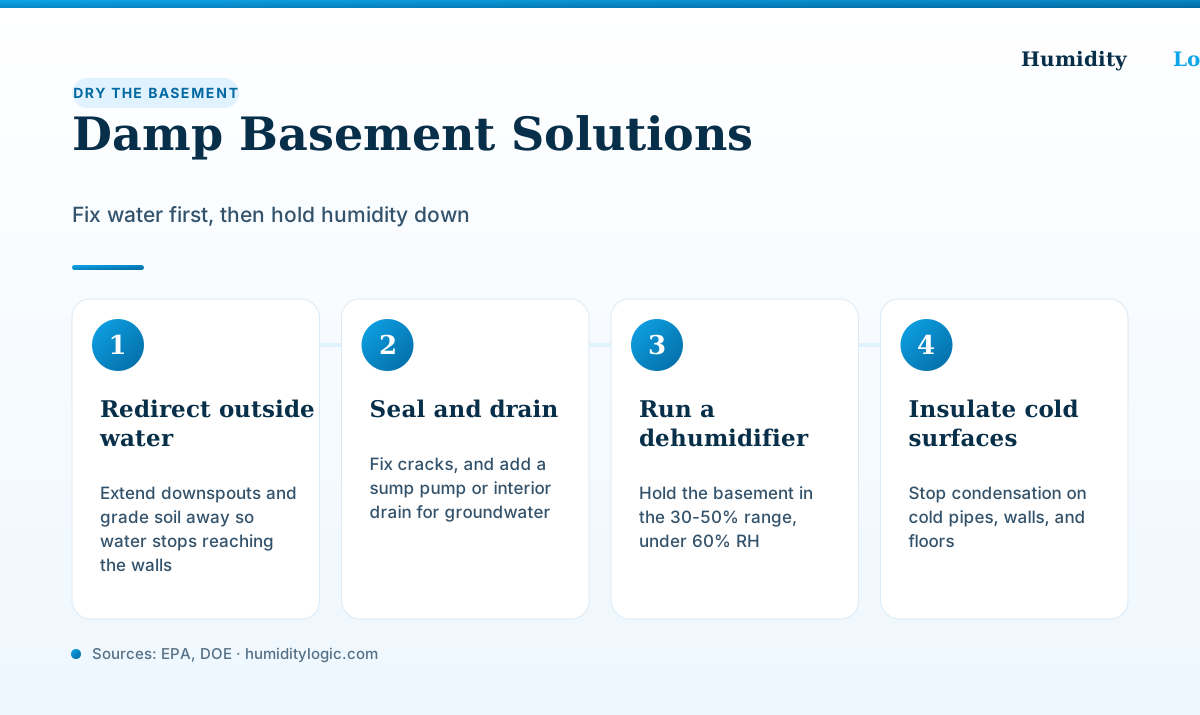
To fix a damp basement, redirect the outside water first, seal cracks and manage groundwater, then hold the air at 30-50% relative humidity with a right-sized dehumidifier — a dehumidifier alone will not stop bulk water. Basement dampness comes from three sources that need three different fixes, and doing them out of order wastes money: rain and groundwater soaking in from outside, ground moisture rising through the floor, and humid air condensing on cool concrete. Chase the water in the order it reaches the room, and the dehumidifier only has to finish the job.
What actually makes a basement damp?
A damp basement is a moisture-balance problem: more water is entering the space than leaving it. The University of Minnesota Extension traces basement moisture to three sources — rain and groundwater forced in through cracks and joints, moisture rising from the soil through the slab, and humid indoor or outdoor air condensing on cool surfaces. Most damp basements have some mix of all three.
That matters because the EPA is blunt that “the key to mold control is moisture control,” and materials left wet for 24 to 48 hours will usually start to grow mold. A dehumidifier is one tool in that fight, but it only touches the air. If water is still wicking through the walls or floor, the machine runs nonstop against a source it can never reach. So the first job is not buying a dehumidifier — it is figuring out which of the three sources you actually have.
How do I tell condensation from seepage or a leak?
Watch the basement during a heavy rainstorm and note where and when moisture appears. Water that shows up at a specific crack or along the floor-wall seam during rain is seepage under pressure. A steady trickle from one spot, even in dry weather, is a leak from a pipe or window well. General dampness and beads on cold pipes and walls in humid weather, with no rain, is condensation.
For the ambiguous cases, the foil test settles it for free. Tape a 12-inch square of aluminum foil tightly to the wall, sealing all four edges, and leave it 24 to 48 hours:
- Moisture on the room-facing side means humid indoor air is condensing on the cool wall — a ventilation, insulation, and dehumidifier problem.
- Moisture trapped behind the foil means water is pushing through the wall from the soil — that points to exterior water management and sealing, not just a dehumidifier.
If you can see water running in or pooling after rain, skip the test — you already have a bulk-water problem, and no dehumidifier will keep up until that water is diverted. Our guide to condensation on a concrete floor walks through the same test for slab dampness.
Step 1: Redirect the outside water
Start outside, because rain reaches the wall before it reaches the crack. DOE Building America is explicit that moisture management must be addressed before anything else, beginning with grading and gutters so the soil against the foundation stops staying wet after a storm.
Three fixes solve most rain-driven dampness for a few hundred dollars or less:
- Clean the gutters. Overflowing gutters dump roof water straight down the foundation. A single inch of rain drops more than 1,200 gallons on a 2,000-square-foot roof, so clogged gutters concentrate an enormous amount of water at the wall.
- Extend the downspouts. Discharge every downspout at least 4 feet from the house — farther is better. A downspout emptying at the foundation defeats everything downstream of it.
- Grade the soil away. Build the ground up so it slopes away from the foundation, roughly 1 inch per foot for the first 6 feet. Level or reverse grading steers water straight into the basement.
These are the highest-leverage steps there are, and DOE lists them ahead of any drainage system or sealing work. A sump pump cannot out-run a downspout emptying at the wall.
Step 2: Seal cracks and manage the groundwater
With the outside water redirected, deal with what still gets through. Patch visible wall and slab cracks and the cove joint — the seam where the wall meets the floor — with hydraulic cement or a masonry sealant. DOE’s basement floor guide notes that ground moisture transfer “can be reduced by patching any cracks in the slab, sealing the seam between the slab and the foundation wall, and sealing the slab surface with epoxy paint.”
DOE also adds an important caveat: sealing “alone will not prevent dampness if poor site grading, lack of gutters, high water table, or other factors are causing serious water intrusion.” That is why Step 1 comes first. When a high water table or persistent hydrostatic pressure keeps pushing water in after sealing, the engineered answer is a sump pump in a pit, fed by an interior perimeter drain — the same drainage strategy used in a full wet basement fix. That is professional work, but it is what finally beats groundwater the surface fixes cannot.
Step 3: Stop moisture rising and condensing inside
Two interior sources remain once the outside water is handled: ground moisture rising through an exposed floor, and humid air condensing on cool surfaces.
- Cover exposed earth. A dirt-floor basement or crawl space can release gallons of water vapor into the air every day. A sealed slab or a taped-down vapor barrier over bare soil cuts that off at the source — DOE treats covering and sealing the floor as a core moisture-control step.
- Insulate cold surfaces. The EPA advises to “cover cold surfaces, such as cold water pipes, with insulation” so warm, humid air stops condensing on them. Insulating cold pipes, and the cool foundation walls themselves, raises their surface temperature above the dew point and stops the beading that keeps a basement damp. DOE recommends non-fibrous rigid or spray foam placed in direct contact with the concrete, with no air gap behind it, so moisture cannot condense against the wall.
Handle these and you remove the last moisture sources a dehumidifier would otherwise have to fight forever.
Step 4: Run a right-sized dehumidifier to 30-50% RH
Only now does the dehumidifier earn its keep. With bulk water diverted, sealed, and the floor covered, the machine’s job is simply to hold the air in a safe range. The EPA recommends keeping indoor humidity below 60 percent, ideally between 30 and 50 percent relative humidity — a target a below-grade basement can hold once the water sources are closed off.
Size it for the space and conditions rather than guessing; an undersized unit runs constantly and still loses. Use the dehumidifier sizing calculator or our guide to what size dehumidifier you need, and add capacity because a basement is cool and below grade. Set it to drain continuously to a floor drain or the sump you may have installed in Step 2, so you never empty a bucket, and put a hygrometer nearby to confirm you are actually holding the low 50s or below.
That order — outside water, sealing and drainage, interior sources, then humidity — is the whole method. If your basement is damp rather than visibly wet, most of the work is in Steps 1 through 3, and the dehumidifier is the easy finish. For the broader picture on holding a below-grade space dry, see our basement humidity guide, and for whole-home strategy, how to lower humidity in a house.
Frequently asked questions
What is the fastest way to fix a damp basement?
Work in the order water reaches the basement, not the order that is easiest. Clean the gutters, extend every downspout at least 4 feet from the wall, and grade the soil to slope away from the foundation. The University of Minnesota Extension and DOE both put this outside water management first because a dehumidifier cannot keep up with water still soaking into the walls.
Will a dehumidifier fix a damp basement?
A dehumidifier holds the air in the 30-50% relative humidity range and stops condensation and musty smells, but it does not fix bulk water. If water is seeping through cracks or the floor-wall joint, the dehumidifier just runs constantly against a source it cannot reach. Divert and seal the water first, then let the dehumidifier manage what is left.
How do I tell condensation from seepage in a basement?
Tape a 12-inch square of aluminum foil tightly to the wall for 24 to 48 hours. Moisture on the room-facing side means humid indoor air is condensing on the cool wall, which a dehumidifier and insulation solve. Moisture trapped behind the foil means water is pushing through from the soil, which needs drainage and sealing instead.
What humidity should a basement be kept at?
The EPA recommends keeping indoor humidity below 60 percent, ideally between 30 and 50 percent relative humidity. In a below-grade basement a reading in the low 50s or below keeps mold, musty odors, and condensation in check. A hygrometer and a right-sized dehumidifier draining to a floor drain or sump make that easy to hold year-round.
Why is my basement damp when there is no visible leak?
Damp with no puddle usually means one of two things: humid summer air condensing on cool concrete, or ground moisture wicking up through an uncovered slab or crawl floor. The foil test tells them apart. DOE notes that sealing the slab and covering exposed earth cuts ground moisture, while insulating cold surfaces and running a dehumidifier handles condensation.
Sources & references
Every figure on this page is checked against these published sources. Last reviewed August 3, 2026.