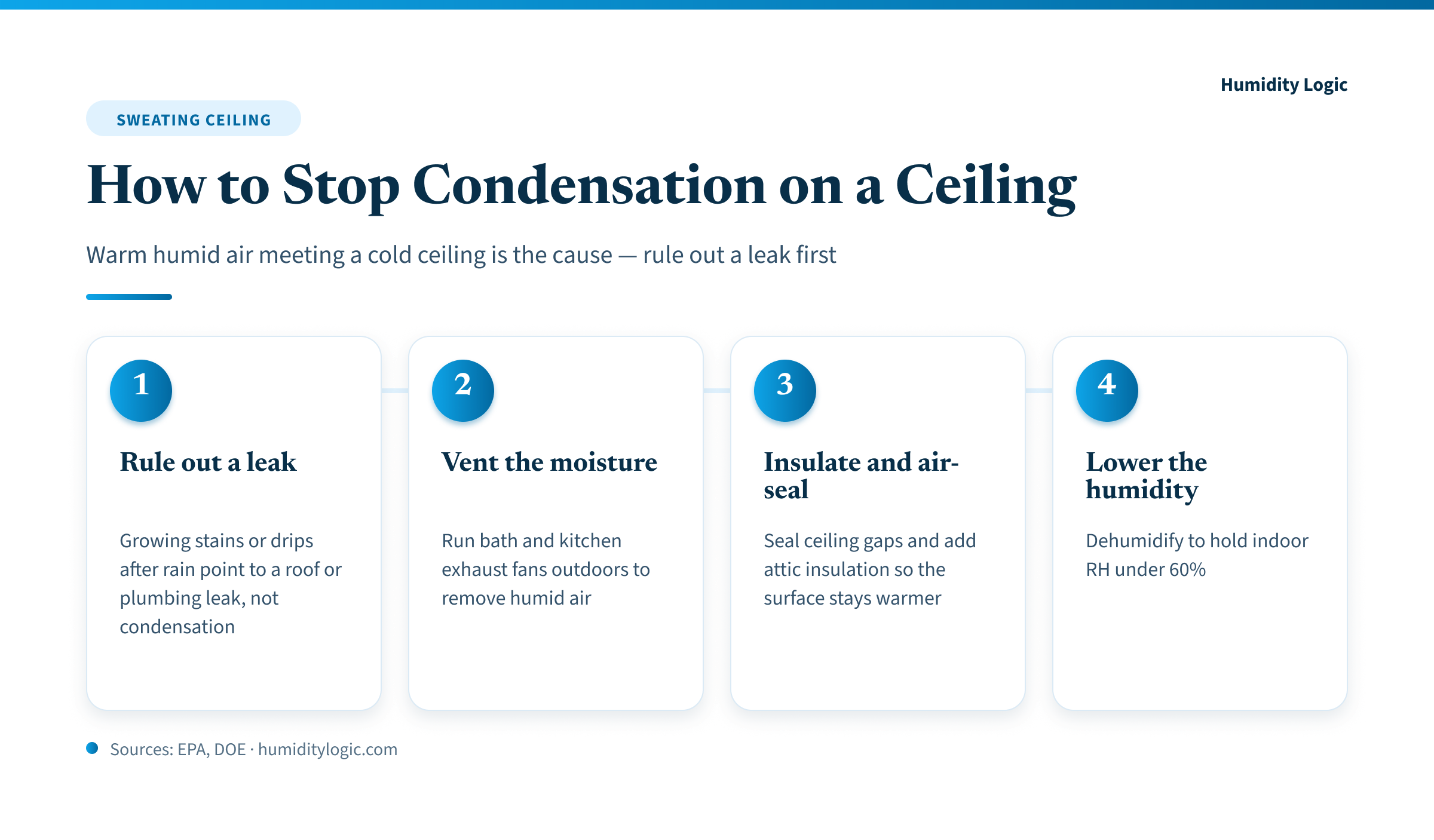
Condensation on a ceiling forms when warm, humid indoor air touches a ceiling surface that has dropped below the air’s dew point — the temperature at which water vapor turns back into liquid. It is the same physics as a foggy window, just overhead, and it is most common on top-floor ceilings under a cold attic and in steamy bathrooms and kitchens. Before you chase it, rule out an actual roof or plumbing leak; once you confirm it is condensation, the fix is to vent the moisture, insulate and air-seal the ceiling, and lower your indoor humidity.
Why Is My Ceiling Sweating?
A sweating ceiling is condensing water out of your indoor air because the ceiling surface is the coldest thing that warm, humid air can reach. Air holds less moisture as it cools, and for every temperature-and-humidity combination there is a dew point where the air becomes saturated and vapor must condense out. The EPA puts the mechanism plainly: “When warm, humid air contacts a cold surface, condensation may form.”
Ceilings become that cold surface for two main reasons. On the top floor, the ceiling sits directly below the attic, which runs close to outdoor temperature in winter — so the drywall can be many degrees colder than the room below it. In bathrooms and kitchens, a burst of steam from a shower or a boiling pot briefly spikes the room’s humidity so high that even a normal-temperature ceiling falls below the new, higher dew point. Either way, the moisture already in your home is simply becoming visible where the surface is coldest. If the gap between air temperature and dew point is new to you, our dew point vs. humidity explainer breaks down why dew point is the number that predicts a wet surface.
Is It Condensation or an Actual Roof Leak?
The single most important step is telling condensation apart from water intrusion, because the two problems have completely different fixes. Condensation is a moisture-in-the-air problem; a leak is a hole-in-the-building problem.
Look at the pattern and the timing. Condensation appears as a broad film of tiny droplets or a damp, even haze across a cold area of ceiling, and it comes and goes with indoor humidity — worse after showers, cooking, or a run of humid days, and gone once the air dries out. A roof or plumbing leak behaves differently: it produces a concentrated stain that grows outward over time, often with a brown or yellow ring at the edge, and it gets worse during or right after rain rather than tracking your indoor humidity. If a wet spot keeps spreading no matter how dry you keep the house, or drips only when it rains, stop treating it as condensation and find the water source — a failed flashing, a cracked pipe, or a roof penetration. When the moisture really is condensing inside a cold attic above the ceiling, our attic condensation guide covers what is happening in that space.
How Do I Diagnose Where the Moisture Is Coming From?
Two quick checks tell you whether you have a humidity problem, a cold-ceiling problem, or both — do them before spending money on any fix.
Measure your indoor humidity. Put a hygrometer in the affected room. The EPA notes that meters reading both temperature and humidity are widely available for under $50. Compare the reading against the EPA target of 30 to 50 percent, and always under 60 percent. Readings north of 55 to 60 percent mean the air is carrying more moisture than a cold ceiling can tolerate. You can also drop your numbers into our condensation risk calculator to see the exact dew point your indoor air is running at.
Map where it is wet. If only the top-floor ceiling, the area around a bathroom, or a spot under an uninsulated attic hatch is damp, the ceiling is running cold and the fix leans toward insulation and air sealing. If ceilings, walls, and windows are all streaming, indoor humidity is simply too high across the whole house and moisture control comes first. The EPA’s moisture control guidance frames the goal the same way — keep surfaces warm and keep humidity down so surfaces stay above the dew point.
How Do I Stop Condensation on a Ceiling?
You can attack the problem from either side of the dew-point equation: take moisture out of the air, or warm the ceiling surface so it stays above the dew point. Most homes need a bit of both, so start with the cheapest fixes and escalate only if the ceiling stays wet.
Vent the moisture at the source. This is the fastest lever, especially in bathrooms and kitchens. Run the exhaust fan during every shower and for 20 to 30 minutes afterward, and use the range hood when you cook — and make sure both fans actually vent outdoors, not into the attic. Vent the clothes dryer outside, cover pots while boiling, and crack a window when you run a lot of steam.
Lower your whole-house humidity. If the whole home reads high, ventilation habits alone may not hold you under 50 percent. Add a dehumidifier sized to the space and let it pull the air’s dew point down until the ceiling stays dry. As the DOE’s Building America program notes, reducing indoor humidity lowers the dew point, which “makes condensation less likely” and reduces how much moisture is deposited if it does form. Our guide to lowering humidity in the house lays out the full sequence of source-control habits.
Air-seal and insulate the ceiling. When a top-floor ceiling stays cold, the surface itself needs to be warmed. Sealing the air-leak paths where warm indoor air escapes into the attic — around recessed lights, the attic hatch, plumbing and wiring penetrations — and adding attic insulation raises the interior ceiling temperature so it stays above the dew point. The DOE identifies the core recipe for ceiling and attic condensation as cold surfaces below the dew point, air leakage through gaps, high indoor humidity, and a lack of ventilation, so sealing and insulating removes two of those four ingredients at once. ENERGY STAR notes that sealing air leaks and adding insulation makes a home “more comfortable and energy efficient” — and it directly targets the cold-ceiling complaint. Insulation retrofits and any work inside the attic envelope are jobs for a qualified contractor.
Improve attic ventilation. A well-vented attic dries out instead of letting moist air stall against the cold roof and ceiling. The DOE guide recommends keeping soffit and ridge vents clear with baffles and insulation dams so air can move freely. This works alongside air sealing, not instead of it: sealing keeps indoor moisture out of the attic, and ventilation carries away whatever gets in.
What If the Ceiling Already Has Mold or Stains?
Where condensation lingers, mold usually follows — often within 24 to 48 hours on a persistently damp surface. Fix the moisture first, because cleaning mold without stopping the condensation just resets the clock.
For the cleanup, follow the EPA’s size rule. The agency says that if the moldy area is less than about 10 square feet — roughly a 3-foot by 3-foot patch — “in most cases, you can handle the job yourself” with detergent and water on a hard surface. Anything larger, mold that keeps returning, or drywall that has been soaked and sagged calls for a professional and usually replacing the affected material. Do not paint over active mold or a water stain before the surface is clean and dry, because the moisture problem will bleed right back through. Ceilings are not the only cold surface that condenses, either — the same physics drives condensation on walls and condensation on pipes, and the same three fixes apply.
How Do I Keep It From Coming Back?
Once the ceiling is clean and dry, keeping it that way is a matter of holding humidity down and surfaces warm. Keep a hygrometer in the problem room and aim for the EPA’s 30 to 50 percent range, never letting it ride above 60 percent. Run exhaust fans as a habit rather than an afterthought, keep any dehumidifier maintained through humid stretches, and make sure attic insulation and ventilation stay intact after any roof or attic work. Get those two levers — dry air and a warm surface — on your side, and the ceiling stays well clear of the point where it sweats.
Frequently asked questions
How do I tell condensation on my ceiling from a roof leak?
Condensation shows up as a broad film of fine droplets or a damp haze that comes and goes with humidity and cooking or showering. A leak makes a localized stain that grows over time, darkens at the edges, and worsens during or after rain. If a wet spot keeps spreading regardless of indoor humidity, treat it as water intrusion, not condensation.
Why does my bathroom ceiling drip after a hot shower?
A hot shower floods the room with warm, moisture-laden air that quickly reaches the ceiling, usually the coldest surface up there. When that surface sits below the air's dew point, vapor condenses into droplets. Running the exhaust fan during the shower and for 20 to 30 minutes afterward vents the humid air before it can collect on the ceiling.
Will a dehumidifier stop ceiling condensation?
Often, yes. Lowering indoor relative humidity lowers your air's dew point, so the ceiling surface no longer falls below it. The EPA advises keeping indoor humidity below 60 percent, ideally 30 to 50 percent. Pair a dehumidifier with a hygrometer and watch whether the damp film disappears as the reading drops.
Is a sweating ceiling dangerous?
The moisture itself is the hazard. Persistent condensation feeds mold, which can grow within 24 to 48 hours, and over time it can stain drywall, loosen paint, and rot framing. The condensation is rarely an emergency, but leaving a ceiling wet for weeks risks both mold and structural damage, so fix the moisture source promptly.
Why is condensation forming on my top-floor ceiling in winter?
Top-floor ceilings sit directly below a cold attic, so their surface runs colder than ceilings elsewhere in the house. In winter, warm humid indoor air leaks up through gaps and hits that cold drywall below its dew point. Air-sealing the ceiling and adding attic insulation raise the surface temperature and usually stop it.
Sources & references
Every figure on this page is checked against these published sources. Last reviewed August 1, 2026.