If you found a white or grayish crust on a basement or masonry wall, here is the quick answer: efflorescence is a crystalline salt deposit left when water evaporates out of concrete or brick; mold is a living growth — but both mean a moisture problem to fix. Efflorescence is not alive, brushes or dissolves off, and comes back when the wall gets wet again. Mold is a fungus, feels fuzzy, and spreads. Either way, water is reaching the surface, and controlling that water is the real repair.
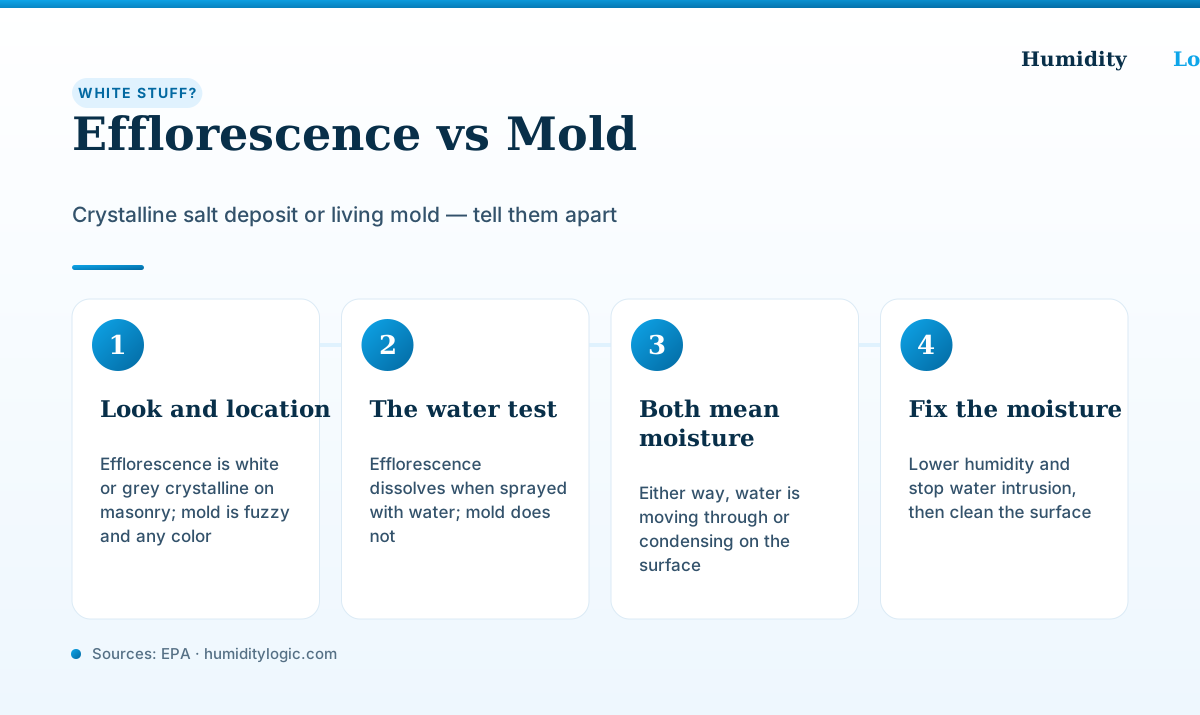
What is efflorescence, exactly?
Efflorescence is a mineral deposit, not a living thing. As InterNACHI’s inspector guidance puts it, it is “the dissolved salts deposited on the surface of a porous material (such as concrete or brick) that are visible after the evaporation of the water in which it was transported.” In plain terms: water seeps into masonry, dissolves natural salts inside the concrete, brick, or mortar, wicks to the surface, and then evaporates into the room. The water leaves, the salt stays, and you are left with a chalky white or grayish film.
The word itself comes from the French for “to flower out,” which describes how the deposits sometimes bloom into fluffy, feathery crystals. Color is usually white, though it can trend yellow or brown depending on the salts. Crucially, efflorescence forms only on inorganic masonry — the concrete, block, brick, and mortar that actually contain those minerals. It does not grow on wood, drywall, or paint, because there is nothing there for it to leach out of.
On its own, efflorescence is cosmetic. But it is never meaningless: it is physical proof that liquid water has traveled through the wall. That is why it so often shows up in basements, on foundation walls, and low on masonry near grade.
What does mold look like next to efflorescence?
Mold is the opposite kind of thing — a living fungus. The EPA notes that “mold may begin growing indoors when mold spores land on surfaces that are wet,” and once established it colonizes and spreads. Where efflorescence is a flat, dry, brittle crust, mold tends to look fuzzy, cottony, or slimy, and it grows in three dimensions rather than sitting as a thin film.
Color is a useful tell. Efflorescence is almost always white, yellow, or brown. Mold, by contrast, can be nearly any color — green, black, blue, gray, even pink or white. That is why a white patch is the confusing case: white mold and white efflorescence can look alike from across the room. The difference shows up in texture and in what the growth is sitting on.
Location often settles it. Efflorescence appears strictly on masonry. Mold prefers organic material — it will happily grow on wood framing, paper-faced drywall, cardboard boxes, fabric, and the dust film on a painted wall. If the white stuff is on a wooden joist, a drywall surface, or stored belongings, it is far more likely to be mold. For a deeper look at how to read fungal growth, see our guide to mildew vs mold.
How does the water-spray test tell them apart?
The fastest field test is water. Efflorescence is a water-soluble salt, so when you spray or dab a little water on it, it dissolves or softens and the deposit fades. Mold is a living growth, not a mineral, so water does not dissolve it — it just gets wet and stays put. InterNACHI lists this directly among its distinctions: “Efflorescence will dissolve in water, while mold will not.”
There is an even simpler companion test: pinch a bit of the growth between your fingers. Efflorescence crumbles into a fine powder, because it is crystallized salt. Mold does not turn to powder — it smears or holds together, because it is organic tissue rather than a mineral crust.
Two quick cautions. First, wear gloves and avoid disturbing large amounts of suspected mold, since spores become airborne when scrubbed. Second, no home test identifies a mold species, and you do not need one — the EPA advises that sampling is generally unnecessary because the response is the same regardless of type. If a white deposit passes the water and pinch tests as salt, treat it as efflorescence; if it resists both and sits on organic material, treat it as mold.
The three-second check: Spray water on the patch. If it dissolves and the surface is masonry, it is efflorescence. If it stays put — especially on wood, drywall, or fabric — treat it as mold.
Why do both point back to a moisture problem?
Here is the unifying idea: efflorescence and mold are two different symptoms of the same disease. Efflorescence tells you liquid water is migrating through masonry and evaporating at the surface. Mold tells you a surface has been wet long enough for a fungus to take hold. In a basement, the same conditions — a damp foundation, high indoor humidity, condensation on cool walls — can produce both at once, sometimes inches apart.
That shared cause is why chasing the deposit is a losing game. Efflorescence keeps returning as long as water keeps moving through the wall, because each wetting-and-drying cycle carries fresh salt to the surface. Scrub it off and it reappears after the next rain. Mold regrows for the same reason: the EPA is blunt that “the key to mold control is moisture control,” and that mold simply will not grow without water. Kill the moisture and you starve both problems.
Both also travel with the classic signs of a wet basement — a musty smell, damp-feeling walls, and visible condensation on masonry. If you see any of those alongside a white crust, you are almost certainly dealing with a genuine moisture load, not a harmless quirk of the concrete.
How do you actually fix it?
Fix the water first, then clean the surface — in that order. Cleaning before the moisture is under control just resets the clock. The EPA’s cleanup guidance leads with the same priority: “Fix plumbing leaks and other water problems as soon as possible. Dry all items completely.”
Work through the moisture sources in roughly this order:
- Stop water getting in. Grade soil to slope away from the foundation, clean and extend gutters and downspouts, and address any obvious foundation cracks or seepage. This is what actually ends recurring efflorescence.
- Lower indoor humidity. Aim to keep indoor relative humidity below 60%, ideally between 30% and 50%, per EPA guidance. A basement dehumidifier is usually the workhorse here — see our basement humidity guide for target ranges and sizing, and our overview of what counts as high humidity for context.
- Improve airflow and warm cold surfaces. Better ventilation and reducing cold spots cut the condensation that both efflorescence and mold rely on. You can gauge how close your walls are to that dew-point threshold with our condensation risk calculator.
- Then clean. Once the wall can stay dry, brush or rinse off efflorescence — a stiff brush or a rinse dissolves most of it, since it is just salt. For mold on hard surfaces, the EPA says to scrub it off with detergent and water and dry completely; porous items that stay moldy may need to be discarded.
Know when to call in help. The EPA recommends a professional when mold covers more than about 10 square feet, or after major flooding or sewage backups. Persistent water pushing through a foundation, even without much mold, can also justify a waterproofing contractor — because until the water stops, the white stuff keeps coming back.
The bottom line
Efflorescence and mold are easy to confuse and completely different in nature. Efflorescence is a dead, crystalline salt that sits on masonry, crumbles to powder, and dissolves in water. Mold is a living fungus that grows fuzzy on organic material and shrugs off a water spray. The spray-and-pinch test sorts them out in seconds. But the more important point is the one they share: both are your house telling you water is getting somewhere it should not. Fix the moisture — drainage, humidity, ventilation — and you solve the real problem, whichever white stuff you were looking at.
Frequently asked questions
What is the fastest way to tell efflorescence from mold?
Spray a little water on the growth. Efflorescence is a water-soluble salt, so it dissolves or softens and the deposit fades, while mold stays put because it is a living growth, not a mineral. You can also pinch it: efflorescence crumbles to powder between your fingers, and mold does not.
Is efflorescence dangerous to my health?
Efflorescence itself is not a health hazard. It is a harmless mineral salt left behind when water evaporates out of masonry, so it does not release spores or toxins. The real concern is what it signals — moisture is moving through the wall, and that same moisture can feed mold, which the EPA does treat as a health issue to remove.
Can efflorescence turn into mold?
Efflorescence does not become mold; they are completely different things, one a salt crystal and the other a fungus. But the moisture that causes efflorescence is exactly what mold needs to grow. So a wall with efflorescence is a warning that conditions may also favor mold nearby, especially on any wood, drywall, or paint touching that damp masonry.
Why does efflorescence keep coming back after I clean it?
Efflorescence recurs whenever water keeps moving through the masonry and evaporating at the surface, because each cycle carries more dissolved salt out. Brushing or rinsing removes today's deposit but not the water source. It stops returning only once you cut the moisture — improving drainage, sealing intrusion, and lowering indoor humidity so the wall can dry.
Do I need a professional to deal with the white stuff on my wall?
For efflorescence and small mold patches on hard surfaces, homeowners can usually handle cleanup and moisture control themselves. The EPA advises calling a professional when mold covers more than about 10 square feet, or after major flooding or sewage backups. Persistent water intrusion through a foundation may also warrant a waterproofing contractor.
Sources & references
Every figure on this page is checked against these published sources. Last reviewed August 4, 2026.