For accuracy and easy reading, a digital hygrometer is the better choice for almost every home: a good one reads within about ±2–3% RH and shows a clear number at a glance. Analog dial hygrometers need no battery, but their mechanical element drifts over time, they carry a wider ±5% tolerance, and they need periodic recalibration to stay honest. Below is how the two compare on accuracy, readability, calibration, and price — and which to buy.
How does each type actually measure humidity?
The two tools reach the same number — relative humidity (RH), the percentage of moisture the air holds versus the most it could hold at that temperature — by completely different routes.
A digital hygrometer uses an electronic sensor, almost always a capacitive one. A thin polymer film sits between two electrodes; as it absorbs and releases water vapor, its electrical capacitance changes, and a chip converts that change into an RH reading. This is the same sensing principle used in the precision humidity sensors inside weather stations and HVAC controls. Some budget models use a resistive sensor instead, which tracks how the moisture changes electrical resistance across a coated substrate — similar idea, usually slightly less precise.
An analog dial hygrometer is mechanical. A moisture-sensitive element — either a coiled bimetallic strip or a bundle of treated fibers (the classic “hair hygrometer”) — physically expands and contracts as humidity rises and falls. That tiny movement drives a needle around a printed dial. Nothing is electronic, which is why it needs no battery, but it also means the reading depends on springy physical parts that lose their calibration as they age.
The practical upshot: the digital sensor is reading a fast electrical property that settles in seconds, while the analog element has to physically absorb or shed moisture and mechanically move a needle before it catches up. That lag is why an analog dial can still show yesterday’s reading after you have run a dehumidifier all morning, and why a digital meter is better for spotting the short humidity spikes that follow a shower or a pot of boiling water.
Analog vs digital hygrometer: which is more accurate?
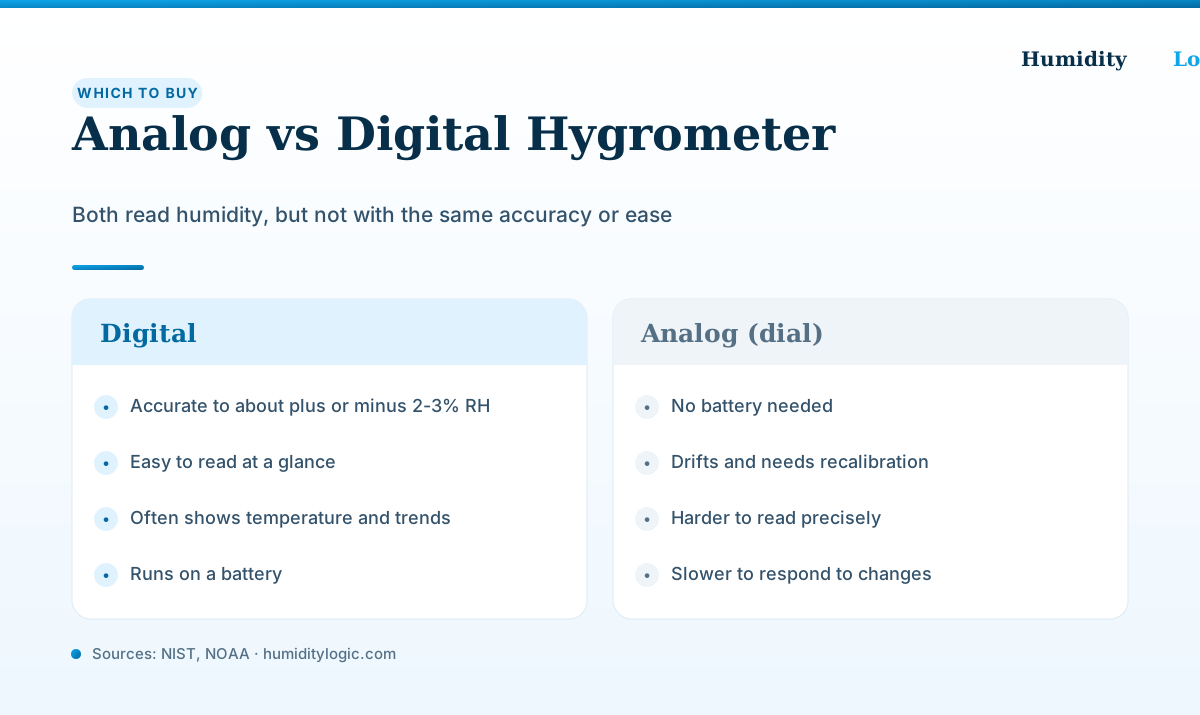
Digital wins on accuracy for most buyers. A quality digital sensor reads within roughly ±2–3% RH — some name-brand units claim ±1–2% — while a typical analog dial is specified at about ±5% RH, and older or cheaper dials can drift well past that. Digital sensors also respond faster to a change in the room and are far easier to read precisely, since you get a number instead of a needle hovering between tick marks.
| Feature | Digital hygrometer | Analog dial hygrometer |
|---|---|---|
| Typical accuracy | ±2–3% RH | ~±5% RH (often more with age) |
| Sensor | Capacitive or resistive (electronic) | Coil or hair (mechanical) |
| Readability | Clear digital number | Needle on a dial |
| Extra data | Temp, min/max, some app/logging | Humidity only |
| Response speed | Fast | Slow |
| Calibration | Often adjustable; drifts slowly | Manual set-screw; drifts faster |
| Power | Battery | None |
| Best for | Homes, humidors, storage rooms | Rough, glance-and-go tracking |
One honest caveat: “digital” does not automatically mean “accurate.” A well-made, freshly calibrated analog hair hygrometer can beat a bargain-bin digital unit. But as a general rule — and out of the box — a decent digital meter gives you a tighter, steadier reading with less fuss. National metrology labs reflect this: NIST calibrates electronic thermohygrometers across a 2%–98% RH range against a primary humidity generator, and capacitive sensors are the standard for that kind of precision work.
Why do analog hygrometers drift, and how do you fix it?
Analog dials drift because their sensing element is physical. A coil slowly loses tension; hair fibers stiffen and stretch differently as they age and cycle through wet and dry seasons. The result is a reading that creeps a few percent off over months — usually reading low in a dry room or high in a damp one. That is why manufacturers often build a small calibration screw into the back of the dial.
The check itself is the salt test, the same at-home method that works for either type. Put a spoonful of table salt in a small dish or bottle cap, add a few drops of water to make it a damp slush (not a puddle), and seal it in an airtight container or zip bag with the hygrometer. After about 24 hours the air inside stabilizes at close to 75% RH — a well-established property of saturated sodium chloride that underpins the ASTM E104 standard for fixed-humidity reference points. Ruuvi’s calibration guide walks through the same steps. If your meter reads 75%, it is accurate. If it reads 71% or 78%, that gap is your offset: turn the analog set-screw to 75%, or on a digital model note the correction (or use its calibration function if it has one).
Digital hygrometers drift too, just more slowly — expect to lose a few percent over 12–18 months — so an annual salt-test check is smart for either technology. For a full walkthrough of placement and calibration, see our guide to how to measure indoor humidity.
Readability, features, and price
Beyond raw accuracy, the day-to-day difference is what you can actually see and use.
Readability. A digital display gives you an exact figure — 44% — that anyone can read across a room. An analog needle asks you to judge where it sits between marks, which is fine for “is it roughly comfortable?” but poor for tracking a target band. If you are trying to hold a room between 30% and 50% RH, the precision matters.
Features. Most digital units also show temperature, and better ones log a running high and low so you can see whether humidity spikes overnight or after a shower. Some connect to a phone app for trends and alerts. Analog dials show humidity only. Note that neither one directly reports dew point, which the National Weather Service considers the better gauge of muggy comfort — though you can derive it from the temperature and RH a digital meter already gives you.
Price. Both are cheap. The EPA describes a home humidity meter as “a small, inexpensive ($10–$50) instrument available at many hardware stores.” A basic digital hygrometer often costs no more than a comparable analog dial, so accuracy is rarely a budget decision. Spending more on a digital model usually buys extra features — app connectivity, a bigger backlit screen, longer battery life — rather than a big jump in accuracy, since even mid-range digital sensors already land in the ±2–3% range. For a broader look at the different device types, see our overview of the humidity meter.
Which hygrometer should you buy?
For nearly every household, buy digital. The clearer display, temperature readout, min/max logging, and tighter ±2–3% accuracy are worth the few dollars — and the salt test keeps it honest year to year. Keep an analog dial only where you want no batteries to change and a ballpark reading is enough: a garage, a greenhouse corner, a decorative wall gauge in the living room.
Whichever you choose, the reading is only useful if you know what to do with it. Once your meter is placed well and calibrated, plug the number into our humidity comfort checker to see whether your room sits in the healthy range or needs a humidifier or dehumidifier to bring it back in line.
Frequently asked questions
Are analog or digital hygrometers more accurate?
Digital hygrometers are generally more accurate. A good digital model reads within about ±2–3% RH, while analog dial hygrometers usually carry a ±5% tolerance and drift further as their mechanical element ages. For most homes a digital meter is the better buy; analog dials are fine for rough, at-a-glance tracking.
How does a digital hygrometer measure humidity?
Most digital hygrometers use a capacitive sensor: a thin polymer film absorbs and releases water vapor, and its electrical capacitance changes with the moisture it holds. A chip converts that change to a relative-humidity percentage. Some cheaper models use a resistive sensor instead, which works on a similar principle but is usually a bit less precise.
How does an analog dial hygrometer work?
An analog hygrometer uses a mechanical element — a coiled metal strip or a bundle of hair-like fibers — that expands and contracts as it absorbs moisture. That movement turns a needle on a dial. Because it relies on physical parts that stretch and stiffen over time, the reading slowly drifts and needs periodic recalibration.
How do I calibrate a hygrometer with the salt test?
Put a small amount of table salt in a cap or dish, add a few drops of water to dampen it without dissolving it, and seal it in an airtight container with the meter. After about 24 hours the air inside holds roughly 75% RH. If your meter reads 75%, it is accurate; if not, note the offset or adjust it to 75%.
Do digital hygrometers need calibration too?
Yes, but less often. Digital capacitive sensors are more stable out of the box, yet they still drift a few percent over 12–18 months and benefit from a salt-test check once a year. Analog dials drift faster and may need checking every few months, especially in a damp or high-use spot.
Sources & references
Every figure on this page is checked against these published sources. Last reviewed July 28, 2026.
- NIST — Hygrometers (Thermodynamic Metrology, humidity calibration services)
- EPA — A Brief Guide to Mold, Moisture and Your Home
- National Weather Service (La Crosse) — Dew Point vs. Humidity
- Ruuvi — How to Calibrate a Hygrometer or Air Humidity Sensor
- ASTM E104 — Maintaining Constant Relative Humidity by Means of Aqueous Solutions