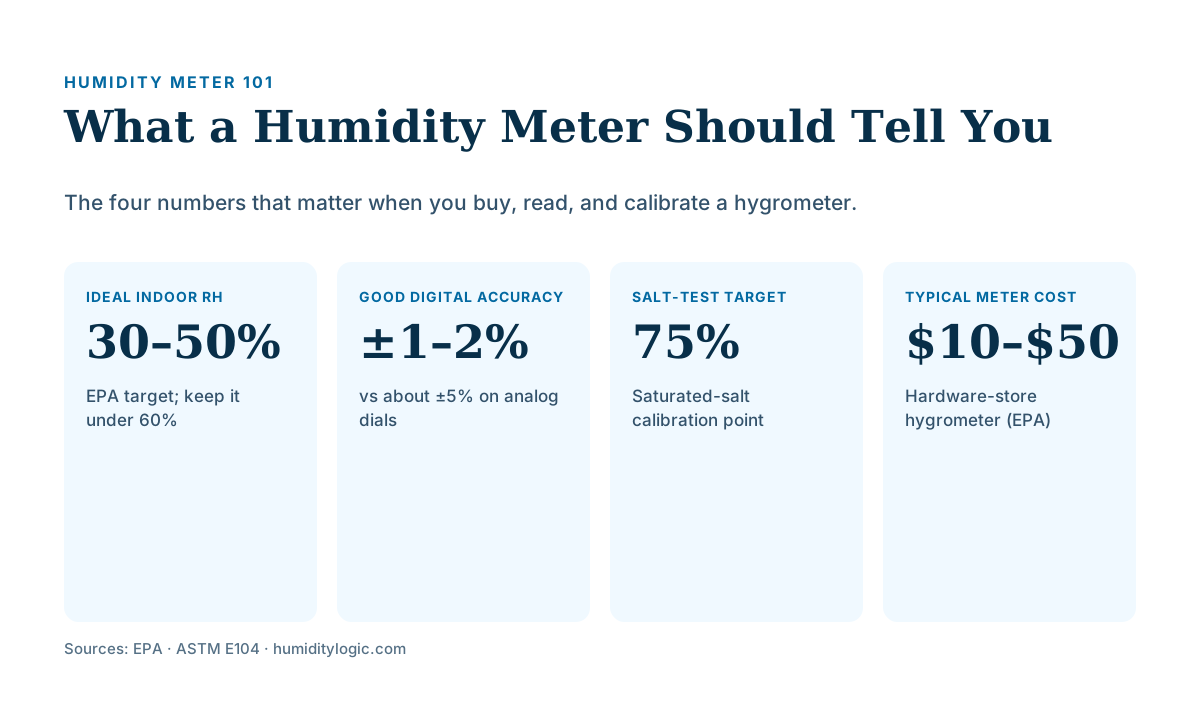
A humidity meter, or hygrometer, measures the relative humidity (RH) of the air around it — the percentage of moisture the air holds compared with the most it could hold at that temperature. The EPA advises keeping indoor RH under 60%, ideally 30–50%, and a hygrometer is how you check. Good digital models read within ±1–2%; analog dials run about ±5%. Placement and occasional calibration decide whether that number is true.
What does a humidity meter actually measure?
It measures relative humidity — how full the air is of water vapor, as a percentage — not the raw amount of moisture. Because warm air holds far more water than cold air, the same moisture shows a higher RH on a cool morning than on a warm afternoon.
That percentage is the number that governs comfort and household risk. Dust mites thrive above 50% RH, and mold risk climbs once RH passes 60%, which is why the EPA’s target band sits at 30–50% indoor humidity. A meter turns “the house feels damp” into a figure you can act on. Most home hygrometers also show temperature, and better ones log a running high and low so you can see whether humidity spikes overnight or after a shower.
One thing a standard air hygrometer does not measure is moisture inside materials. A pin-type moisture meter reads the water content of wood, drywall, or concrete for leak hunting and construction — a different tool for a different job. This guide is strictly about the air.
Analog vs digital humidity meter: which should you buy?
Buy digital for accuracy and extra features; keep analog only for rough, glance-and-go tracking. Digital sensors are electronic and typically read within ±1–2% RH, while mechanical analog dials usually carry a ±5% tolerance and can drift wider as their sensing element ages.
The trade-offs are straightforward:
| Feature | Digital hygrometer | Analog dial hygrometer |
|---|---|---|
| Typical accuracy | ±1–2% RH | ~±5% RH (sometimes more) |
| Extra data | Temp, min/max, some log/app | Humidity only |
| Calibration | Often adjustable in software | Manual set-screw, if any |
| Power | Battery | None |
| Best for | Homes, humidors, storage | At-a-glance ambient tracking |
For nearly every household, a digital meter is the better choice — the clearer display, temperature readout, and tighter accuracy are worth the few dollars more. The EPA notes that a humidity meter is “a small, inexpensive ($10–$50) instrument available at many hardware stores,” so precision does not require a big spend. Reserve analog dials for spots where you only need a ballpark and want no batteries to change.
Where should you place a humidity meter for a true reading?
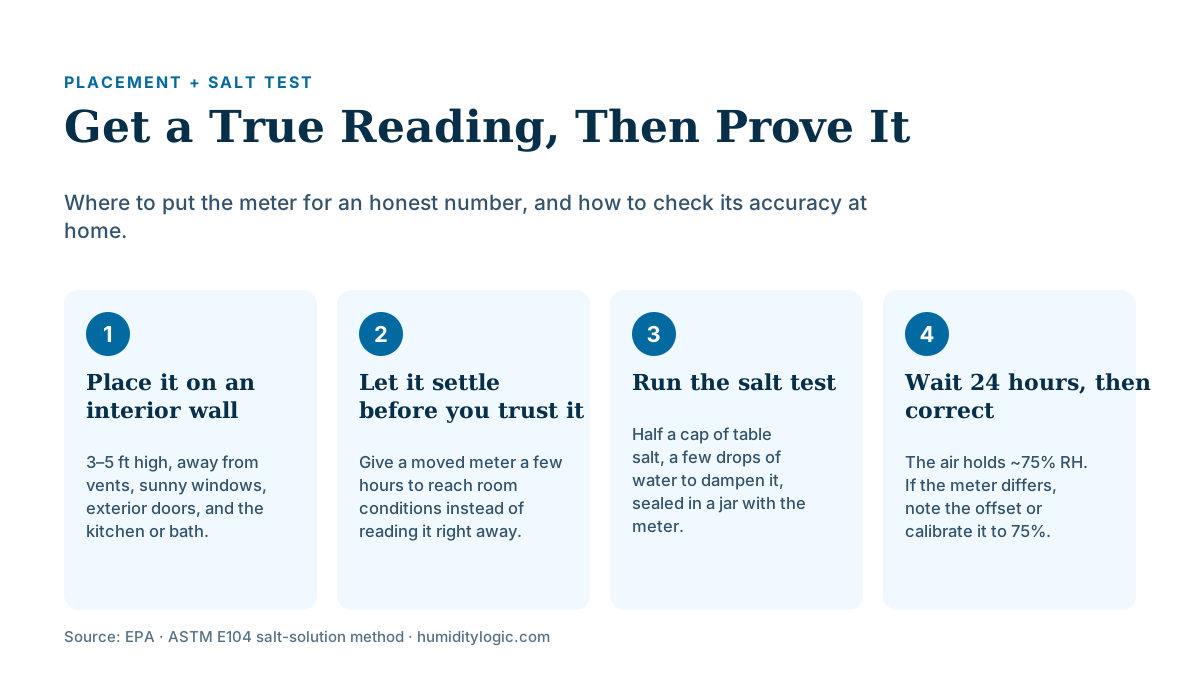
Put it in a main living area, on an interior wall, about 3–5 feet off the floor, and keep it away from anything that locally heats, cools, or wets the air. Even an accurate meter reports the wrong number if it sits in a bad spot.
Specifically, avoid these placements:
- Near HVAC supply vents — the blast of conditioned air is drier or warmer than the room and drags the reading with it.
- In direct sunlight or against a sunny window — solar heat raises the sensor’s local temperature and drops the RH it reports.
- Next to exterior doors — each opening swaps room air for outdoor air.
- In the kitchen or bathroom — cooking and showering spike humidity briefly, so a meter there tracks events, not your home’s baseline. Keep it in a drier room unless you specifically want to watch those swings.
Give a meter a few hours to settle after you move it, since the sensor needs time to reach room conditions. If you are troubleshooting one room, such as sizing a dehumidifier for a basement, put a second meter there — humidity varies floor to floor, and a muggy basement can read far higher than the living room upstairs.
How do you calibrate a humidity meter with the salt test?
Seal the meter in a container with damp salt and check it against a known 75% RH. A saturated table-salt solution holds relative humidity near 75% in a closed space — the reference point behind the standard ASTM E104 salt-solution method — so it gives you a free, repeatable accuracy check at home.
The procedure is simple:
- Dampen the salt. Put a tablespoon or so of table salt in a bottle cap or small dish and add a few drops of water — enough to make a wet slush, not enough to dissolve it into liquid.
- Seal it with the meter. Place the cap and the hygrometer together in an airtight container or zip bag, without letting the meter touch the salt.
- Wait about 24 hours. Keep it at a stable room temperature and leave it closed so the air inside reaches equilibrium.
- Read and correct. If the meter shows 75%, it is accurate. If it reads, say, 70% or 80%, that 5-point gap is its offset — either subtract it in your head going forward or, on an adjustable digital model, calibrate it to read 75%.
This home method is not lab-grade, but for household use it is more than accurate enough. Calibrate once a year for a typical home; check more often — every few months — for a meter kept somewhere harsh like a humidor, greenhouse, or damp crawl space.
When does a humidity meter reading mean you should act?
Act when the meter sits above 60% RH for more than a day or two, because that is where mold risk and a clammy, dust-mite-friendly environment begin. Readings in the 30–50% band are the goal; a persistent number above 60% signals a moisture problem worth fixing.
A single high reading after a shower or a rainy day is normal. A baseline that stays high is not. If your meter regularly shows 60% or more, work through why the house is humid and the practical fixes for lowering indoor humidity — better ventilation, source control, and often a dehumidifier. You can also sanity-check a reading against comfort using our humidity comfort checker.
Keep the meter’s limits in mind. RH is temperature-dependent, so the same moisture reads differently as the room warms and cools; for condensation questions, dew point is the more reliable lens. And a meter measures the air only — it will not find mold behind a wall. If you can already see mold, the EPA’s rule is that a patch under about 10 square feet (roughly 3 ft by 3 ft) is generally a do-it-yourself cleanup, while larger areas or significant water damage call for an experienced remediation contractor.
The bottom line
A humidity meter is the cheapest instrument that meaningfully improves how you manage a home — a $10–$50 hygrometer turns vague dampness into a number you can target. Buy digital for its ±1–2% accuracy, mount it on an interior wall away from vents, sun, and doors, and prove it with a 24-hour salt test now and then. Once you trust the reading, holding the air in the EPA’s 30–50% band becomes a measurable, repeatable task instead of a guess.
Frequently asked questions
What is a humidity meter and what does it measure?
A humidity meter — also called a hygrometer — measures the relative humidity (RH) of the surrounding air, shown as a percentage of the maximum moisture the air can hold at its current temperature. Most home models also display temperature. The EPA recommends keeping indoor RH under 60%, ideally between 30% and 50%.
Are analog or digital hygrometers more accurate?
Digital hygrometers are generally more accurate. A good digital sensor reads within about ±1–2% RH, while analog dial hygrometers typically carry a ±5% tolerance and can drift further over time. For most homes a digital meter is the better buy; analog dials are fine for rough, at-a-glance tracking.
Where should I put a humidity meter for an accurate reading?
Place it in a main living area on an interior wall, roughly 3–5 feet off the floor, away from HVAC vents, sunny windows, exterior doors, and the moisture of a kitchen or bathroom. Any heat source or draft near the meter will skew the number, even on an accurate device.
How do I calibrate a humidity meter with the salt test?
Put a small amount of table salt in a cap or dish, add a few drops of water to dampen it without dissolving it, and seal it in an airtight container with the meter. After about 24 hours the air inside holds roughly 75% RH. If your meter reads 75%, it is accurate; if not, note the offset or adjust it to 75%.
How often should I calibrate a hygrometer?
Once a year is enough for most homes and offices. Calibrate more often — every few months — if the meter lives in a harsh environment like a greenhouse, humidor, or damp basement, or if an accurate reading is critical to what you are storing.
Sources & references
Every figure on this page is checked against these published sources. Last reviewed July 21, 2026.
- EPA — A Brief Guide to Mold, Moisture and Your Home
- Ruuvi — How to Calibrate a Hygrometer or Air Humidity Sensor
- ASTM E104 — Standard Practice for Maintaining Constant Relative Humidity by Means of Aqueous Solutions
- National Weather Service (La Crosse) — Dew Point vs. Humidity
- Bob Vila — The Best Hygrometers to Measure Your Home’s Humidity