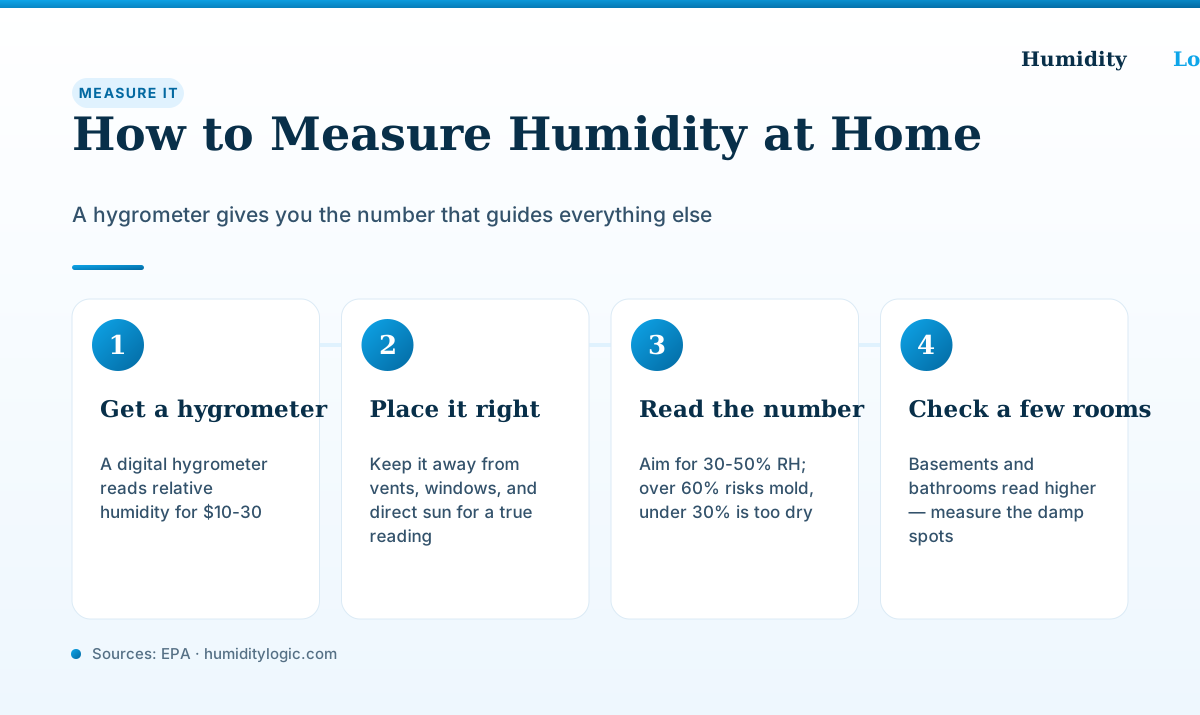
To measure the humidity in your home, use a digital hygrometer — a small, inexpensive meter that reads the moisture in the air. Place it away from vents, windows, and direct sun, give it 20-30 minutes to settle, and read the relative humidity percentage it shows. For a healthy, comfortable house, aim for 30-50% RH; above 60% invites mold, and below 30% feels too dry. Checking a few rooms tells you where moisture is really building up.
What do I need to measure humidity at home?
You need a hygrometer — a device made specifically to read the humidity of the air. For home use, a digital hygrometer is the right tool. It reads within about ±2-3% RH, shows a clear number (usually alongside the temperature), and many models track a running high and low so you can catch overnight spikes. The EPA notes that a humidity meter is “a small, inexpensive ($10-$50) instrument available at many hardware stores,” so an accurate reading does not require a big spend — most solid home units run $10-30.
The number a hygrometer reports is relative humidity (RH): the percentage of moisture the air currently holds compared with the most it could hold at that temperature. That “compared with” part is why RH shifts as a room warms or cools even when no water is added — a point the National Weather Service illustrates by noting that air at 80°F with a 60°F dew point sits at 50% RH. If you want the deeper contrast between the moisture percentage and the actual moisture content, our guide on dew point vs. humidity breaks it down.
You do not strictly need anything fancier than a single meter. But if you plan to compare rooms, a couple of inexpensive units — or one you move around — makes the job faster.
Analog vs. digital: which hygrometer should I use?
Both types reach the same RH number, but by different routes. A digital hygrometer uses an electronic sensor that settles in seconds and is easy to read to the exact percent. An analog dial hygrometer uses a mechanical element that physically expands and contracts with moisture, moving a needle around a printed dial.
For measuring your home, digital wins on two counts that matter: accuracy and speed. Analog dials typically carry a wider ±5% tolerance, drift as their springy parts age, and lag behind fast changes — an analog needle can still show this morning’s reading after you have run a dehumidifier for hours. A digital sensor catches the quick spikes that follow a shower or a pot of boiling water. Analog dials are fine for rough, glance-and-go tracking; if you want the full comparison before buying, see our analog vs. digital hygrometer breakdown.
Where should I place the hygrometer?
Placement matters as much as the device — even a perfectly accurate meter reports the wrong number in a bad spot. Set the hygrometer roughly at chest height in the main part of the room, with the sensor exposed to open air rather than tucked behind furniture. Daikin’s placement guidance is to keep it away from “sources of heat, cooling, or moisture, such as radiators, air vents, or sinks, as these can skew readings.”
In practice, keep the meter clear of:
- HVAC vents and registers — the dry or conditioned air blowing past reads far off from the room average.
- Sunny windows and direct sunlight — solar heat warms the sensor and drops the RH reading artificially.
- Radiators, heaters, and appliances — any local heat source skews the number.
- Exterior walls and doors — these run cooler and damper than the room’s core.
- Kitchens and bathroom fixtures — sinks, showers, and cooking add bursts of moisture that misrepresent the whole space unless that room is exactly what you are testing.
Let it acclimate before you trust the number
A hygrometer needs time to reach the room’s true temperature and moisture before its reading means anything. Give it at least 20-30 minutes to settle after you place or move it — longer if you carried it in from a garage, car, or anywhere much warmer or colder. Reading it the instant you set it down is the most common mistake, and it produces a number that is simply the device catching up, not the room.
How do I read and interpret the number?
Once the meter has settled, read the relative humidity percentage and compare it to the healthy range:
- 30-50% RH — the target zone. Comfortable for people, and dry enough to discourage mold and dust mites. The EPA’s ideal band.
- Under 30% RH — too dry. Expect static shocks, dry skin, cracking wood, and irritated sinuses, especially in winter. If you land here often, our guide on how to increase humidity covers fixes.
- Over 60% RH — too damp. The EPA links sustained humidity above 60% to mold growth, and condensation on windows or pipes is a visible warning sign. See what is considered high humidity for where the real risk begins.
For a fuller picture of the comfort bands and how they shift with the season, our ideal indoor humidity levels guide lays out the targets room by room. You can also drop your reading straight into the humidity comfort checker to see where it falls and what to do next.
Should I measure more than one room?
Yes. Humidity is not uniform across a house, and a single reading in the living room can hide a moisture problem elsewhere. Basements and crawl spaces almost always read higher — cooler air holds moisture against cold surfaces, and soil moisture migrates through concrete, so a basement can sit 5-15% above the main floor. Bathrooms and kitchens spike sharply during and after showers or cooking, then recede.
Take readings in the rooms most likely to be damp — the basement, bathrooms, and any space that feels clammy or smells musty — and at different times of day. Daikin recommends “multiple readings at different times of the day and in various areas of your home” to see the real pattern rather than one snapshot. If a particular room consistently reads high, that is where to act. Our guide on how to lower humidity in your house walks through the fixes, and if a dehumidifier is on the table, what size dehumidifier do I need helps you match the unit to the space.
How do I check that my hygrometer is accurate?
Cheap sensors can be off out of the box, and every sensor drifts over time, so it is worth a once-a-year sanity check with the saturated salt test. Put a small pile of table salt in a bottle cap or dish, add a few drops of water to make a damp slush (not a puddle), and seal it in an airtight bag or container with the hygrometer resting above — not touching — the salt.
A saturated salt solution holds the air around it at a known 75% RH. Ambient Weather’s method is to let the sealed setup stabilize, after which “the sensor should read 75% plus or minus the sensor’s rated margin of error.” If your meter reads 75%, it is accurate. If it reads 72% or 78%, note the offset and mentally correct future readings, or use the meter’s calibration adjustment if it has one. Repeat the test annually, since sensors drift with age and contamination.
The bottom line
Measuring humidity at home comes down to four steps: get a digital hygrometer, place it away from vents, sun, and moisture, let it acclimate for 20-30 minutes, then read the relative humidity and aim for 30-50%. Check the damp rooms, not just the comfortable ones, and verify the meter once a year with a salt test. That single number is the starting point for every decision about comfort, mold risk, and whether you need to add or remove moisture from your air.
Frequently asked questions
How do I measure the humidity in my home?
Use a digital hygrometer. Set it on an interior wall or shelf in the room you want to check, keep it away from vents, sunny windows, and moisture sources, and let it sit for 20-30 minutes. Then read the relative humidity percentage it shows. Aim for 30-50% RH, and stay under 60% to limit mold risk.
What is a good humidity level for a house?
The EPA recommends keeping indoor relative humidity below 60%, ideally between 30% and 50%. Readings above 60% raise the risk of mold and dust mites, while air below 30% tends to feel dry and can cause static, dry skin, and irritated airways.
Can I measure humidity without a hygrometer?
You can spot signs of high humidity — condensation on windows, a musty smell, or a clammy feel — but you cannot get an accurate number without a hygrometer. There is no reliable DIY substitute for a $10-30 meter, and the EPA describes a humidity meter as a small, inexpensive instrument sold at most hardware stores.
Why does my basement read higher humidity than upstairs?
Cooler air and contact with the ground make basements damper. Cool surfaces let moisture linger, and soil moisture migrates through concrete, so a basement often reads 5-15% higher than a living room. Bathrooms and kitchens spike too, right after a shower or cooking, which is why measuring several rooms matters.
How do I know if my hygrometer is accurate?
Use the saturated salt test. Seal the meter in an airtight bag with a cap of table salt dampened into a slush. A saturated salt solution holds about 75% relative humidity, so once the air inside stabilizes the meter should read roughly 75%. Any gap is the sensor's offset, and you can repeat the check once a year.
Sources & references
Every figure on this page is checked against these published sources. Last reviewed August 4, 2026.