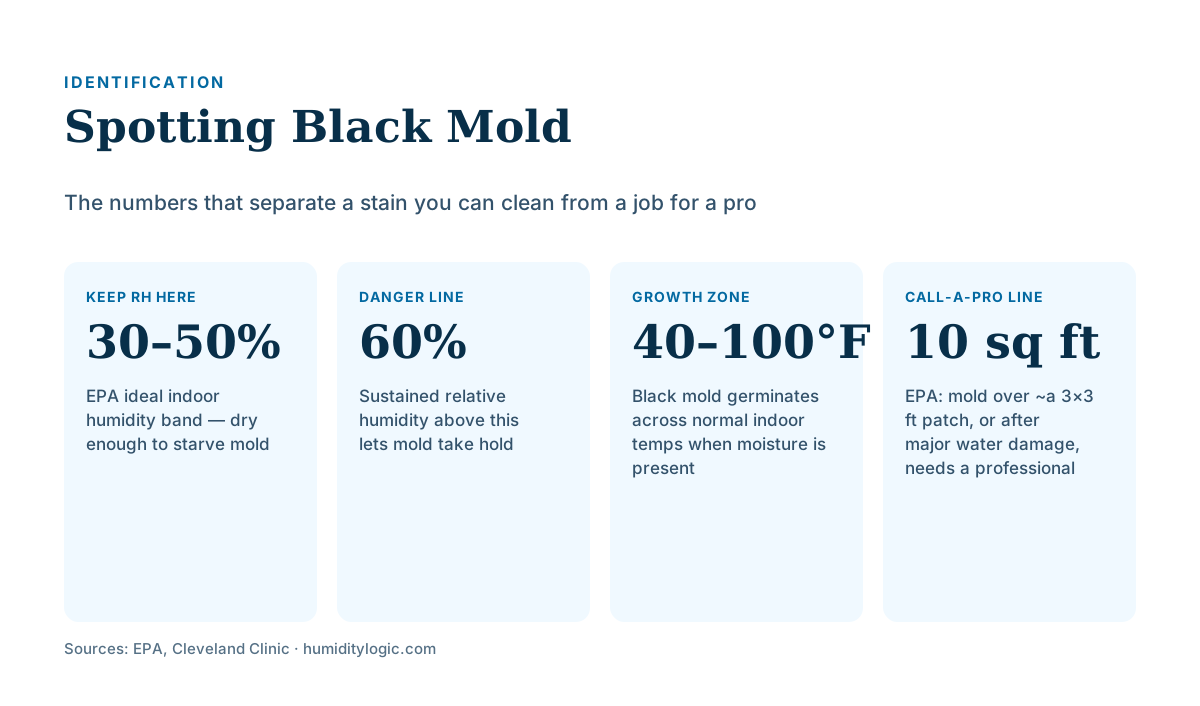
Black mold typically looks like dark green to black patches or streaks with a fuzzy or slimy texture, growing on damp, cellulose-rich surfaces such as drywall, wood, and tile grout. Unlike flat, powdery mildew, it penetrates the material it grows on. Its root cause is almost always moisture — indoor humidity sustained above 60% or an unfixed leak.
Color is where most people start, but it is also where they go wrong. “Black mold” describes an appearance, not a single species, and the shade on your wall cannot tell you what the mold is or how dangerous it is. What actually matters is recognizing the texture and the pattern, then finding and fixing the moisture underneath. Below is how to identify it, separate it from the harmless-looking things it mimics, and act without turning a small stain into a bigger problem.
What does black mold look like?
Black mold appears as dark green, gray, brown, or black blotches that look fuzzy or slimy rather than dry and dusty. The color is rarely uniform — a colony is often mottled, with streaks and patches of slightly different tones spreading across a damp surface. When it is actively growing in humid conditions, the surface can look wet or greasy rather than powdery.
The most reliable visual signal is not the color but the way it grows. Mold expands outward in irregular clusters and looks three-dimensional up close, with a raised, textured surface. According to the Cleveland Clinic, black mold is “a type of fungus that looks dark green or black,” and it thrives specifically in “damp or water-damaged areas of your home.”
One thing sight cannot do is confirm the species or the risk. Plenty of ordinary molds are dark, and the only way to know exactly what you are dealing with is lab testing. That is why the practical goal is never to identify the exact organism by eye — it is to recognize that you have mold, and to treat any indoor growth as something to remove.
Where does black mold usually grow?
Black mold grows wherever moisture lingers on a cellulose-rich material — most often bathrooms, basements, and anywhere water has leaked. Cellulose is the food source, so drywall, wood, paper, ceiling tiles, and the paper backing behind wallpaper are all prime targets. Add steady dampness and you have everything a colony needs.
The usual hot spots follow the water. In bathrooms it shows up in grout lines, along the ceiling above a shower, and behind the toilet tank. In basements it colonizes concrete walls, the framing near the floor, and cardboard boxes stored against a cool exterior wall — basements run humid because cool surfaces pull moisture out of the air, which is why basement humidity is such a common trigger. Elsewhere, look under sinks, around window frames where condensation collects, near roof leaks, and behind furniture pushed tight against an outside wall where air cannot circulate.
If you can smell a musty, earthy odor but cannot see growth, that smell is a clue that mold is active somewhere out of sight — often inside a wall cavity or under flooring where a slow leak has kept things wet.
How is black mold different from mildew?
Mildew is flat and powdery and sits on the surface; black mold is fuzzy or slimy and penetrates the material, breaking it down over time. That difference — surface versus structural — is the one that matters most, because it tells you whether you are cleaning a cosmetic film or dealing with something that is actively damaging your home.
Per SERVPRO, mildew is typically “white, gray, or yellow” and “sits on top of surfaces and rarely causes structural harm,” while black mold is “black, dark green, brown, gray, or orange” and “can penetrate materials and break them down over time.” A quick field test: if a dark spot wipes away completely and never comes back, it was likely surface mildew or soap scum; if it returns, or if the material underneath feels soft or stained through, treat it as mold.
| Feature | Mildew | Black mold |
|---|---|---|
| Texture | Flat, powdery | Fuzzy or slimy |
| Color | White, gray, yellow | Dark green, gray, brown, black |
| Where it lives | On top of the surface | Penetrates into the material |
| Damage | Mostly cosmetic | Breaks material down over time |
How can you tell mold from dirt or soot?
The tell is texture and behavior: mold is fuzzy or slimy and keeps coming back, while dirt and soot are flat, static, and wipe away for good. Dust, dirt, and soot are inert particles — they settle on a surface, sit there, and lift off with a damp cloth without regrowing. Mold is alive, so it grows outward, feels raised or greasy, and reappears in the same damp spot after you clean it.
Location is the second clue. Soot collects near heat sources and vents; road grime gathers by doors and windows from outdoor air. Mold shows up specifically where moisture concentrates — cool corners, behind the toilet, along a window sill that sweats in winter. If a dark patch is spreading in a chronically damp area and returns days after you wipe it, moisture is feeding living growth, not accumulating dust. When condensation is the source, our guide on condensation on windows covers the moisture side of the problem.
What actually causes black mold?
The root cause is moisture — full stop. Mold needs four things to grow: moisture, oxygen, a temperature between 40°F and 100°F, and a cellulose food source, according to the Cleveland Clinic. Three of those are present in nearly every home already, which leaves moisture as the single factor you can control. As the EPA puts it plainly, “The key to mold control is moisture control.”
That moisture comes from two places: liquid water and humid air. Liquid water is the obvious one — a plumbing leak, a leaky roof, a flooded basement, or condensation running off a cold window. Humid air is the quieter culprit. When indoor relative humidity stays high, cool surfaces stay damp enough for spores to germinate even without any visible leak. The EPA advises homeowners to “keep indoor humidity below 60 percent (ideally between 30 and 50 percent) relative humidity,” because sustained readings above that ceiling are enough to feed growth on their own.
This is why identifying the mold is only half the job. A patch you scrub off will simply return if the air around it stays damp. Holding humidity in the ideal indoor humidity range of 30–50% is what keeps it gone — you can check whether your home’s numbers land in the safe band with our humidity comfort checker. Understanding what counts as high humidity helps you spot the conditions that let mold start in the first place.
What should you do if you find black mold?
Fix the moisture first, then follow the EPA size rule to decide whether to clean it yourself or call a professional. The dividing line is roughly 10 square feet — about a 3 ft by 3 ft patch. EPA guidance states that “if the moldy area is less than about 10 square feet… in most cases, you can handle the job yourself,” and that larger areas, or situations involving a lot of water damage, should be handled by a professional.
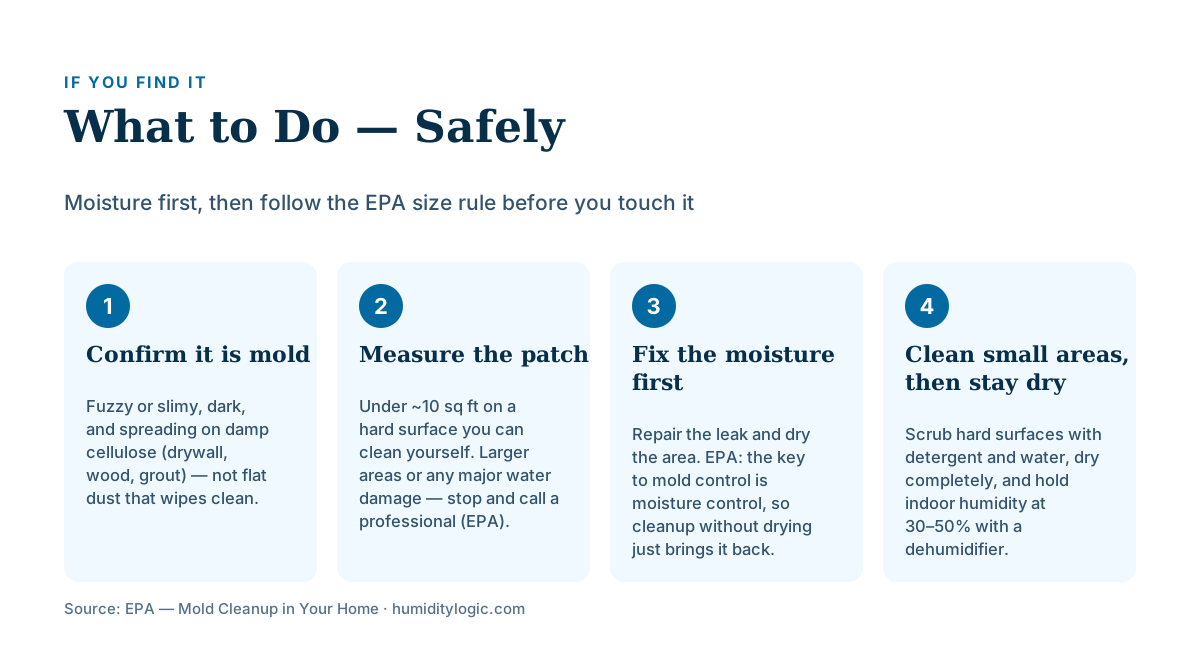
For a small area on a hard surface, the EPA’s method is simple: “Scrub mold off hard surfaces with detergent and water, and dry completely.” Fix the leak or moisture source before you clean, because cleanup without drying almost always leads to regrowth. Porous materials that mold has grown into — soaked drywall, carpet, ceiling tiles — usually cannot be salvaged and need to be removed rather than scrubbed.
Do not treat large-scale removal as a weekend project. If the patch is bigger than about 10 square feet, if mold followed sewage or flood water, or if your HVAC system may be contaminated, that is a job for a remediation professional, not DIY. And whatever you clean, the follow-through is the same: keep the room dry. Running a dehumidifier to control mold and using the broader tactics in how to lower humidity in your house are what stop it from coming back once the surface is clean and the leak is fixed.
Frequently asked questions
Is all black mold toxic?
No. "Black mold" is a color, not a species, and color alone cannot tell you the type or the risk. Many common molds are dark. Because you cannot confirm what you are looking at by sight, the EPA advises treating all indoor mold as something to remove and to fix the moisture behind it, regardless of color.
How can I tell black mold from mildew?
Mildew is flat, powdery, and usually white, gray, or yellow, and it sits on top of a surface. Black mold is darker, fuzzy or slimy, and it penetrates the material and breaks it down over time. If a patch wipes away cleanly and never returns, it was likely surface mildew; if it comes back or has grown into the material, treat it as mold.
How do I know if it is mold or just dirt?
Texture and behavior are the giveaways. Mold is fuzzy or slimy, spreads outward in damp spots, and tends to return after you wipe it. Dirt and soot are flat, static, and lift away with a cloth without regrowing. If the spot keeps coming back in a humid area, moisture is feeding living mold, not dust.
What humidity level stops black mold from growing?
Keep indoor relative humidity below 60%, and ideally between 30% and 50%, per EPA guidance. Mold spores cannot germinate without moisture, so holding humidity in that band on a hygrometer is the most reliable way to keep new growth from starting.
When should I call a professional for black mold?
Call a professional when the moldy area is larger than about 10 square feet (roughly a 3 ft by 3 ft patch), when mold followed major water damage or flooding, or when your HVAC system is involved. EPA guidance says jobs above that size threshold should generally not be handled as DIY.
Sources & references
Every figure on this page is checked against these published sources. Last reviewed July 21, 2026.