For most closets, a renewable desiccant dehumidifier is the right tool: it uses silica gel to pull moisture from still air, runs silently with no cord or moving parts, and recharges in a wall outlet when saturated. Keep the space under 60% relative humidity — ideally 30–50% — improve airflow, and don’t overpack. A small plug-in mini dehumidifier only earns its place in a large, persistently damp walk-in.
What is the best dehumidifier for a closet?
For a typical reach-in or small walk-in closet, a renewable desiccant unit beats a powered dehumidifier. Closets are still, enclosed, and rarely have an outlet, which is exactly where silica gel shines and where a compressor struggles.
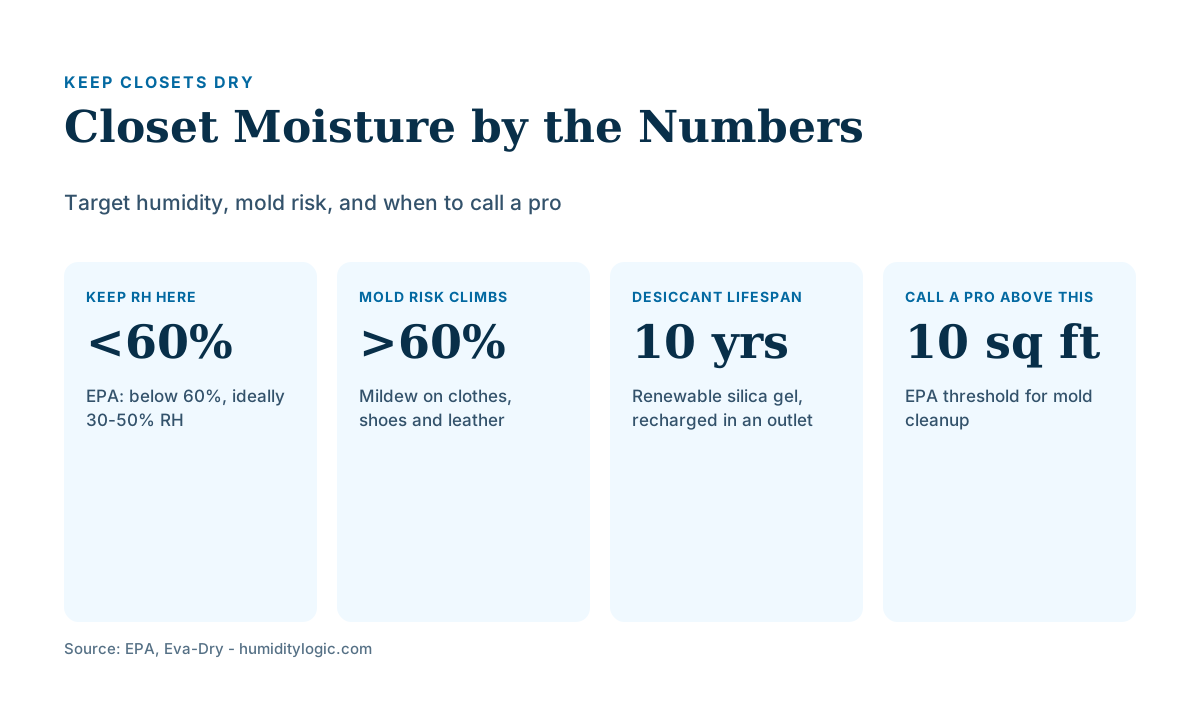
A renewable desiccant dehumidifier is a sealed cartridge of silica gel beads that adsorb water vapor straight out of the surrounding air — no fan, no compressor, no drainage. When the beads saturate, an indicator window changes color (commonly orange to green), and you plug the unit into a wall outlet for 12–14 hours to drive the moisture back out. Then it goes back to work. A common closet-sized unit like the Eva-Dry E-500 covers roughly 500 cubic feet (about a 63 sq ft closet), holds around 6–8 oz of water, lasts 20–30 days between recharges, and is rated to last up to 10 years.
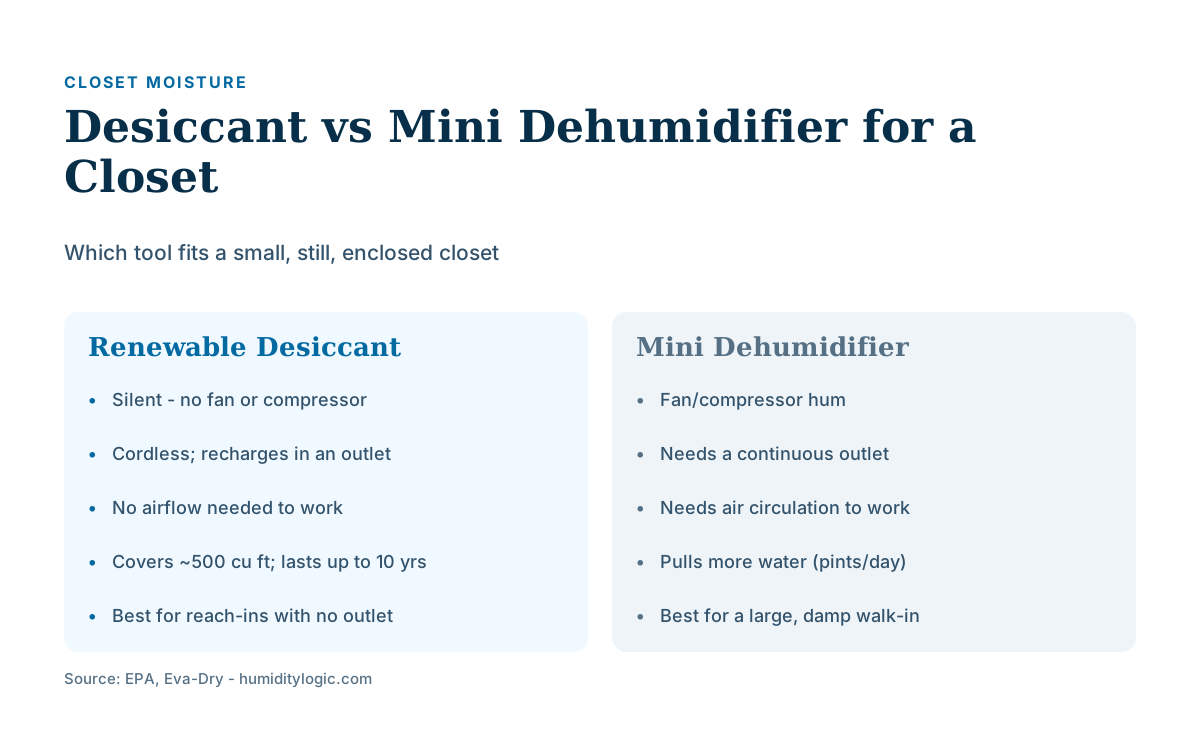
That trade-off — silent, cordless, low-capacity — is perfect for a closet, which has very little air to dry and no room for a noisy machine. A powered mini dehumidifier pulls far more water per day, but it needs an outlet, generates noise and a little heat, and its capacity is wasted on a space this small. Save it for a large walk-in closet that stays visibly damp and already has power.
Desiccant vs mini dehumidifier: which one for your closet?
Match the tool to the closet. A reach-in with a musty smell wants a desiccant unit; a large, chronically damp walk-in with an outlet may justify a small powered dehumidifier.
The two work on completely different principles. A desiccant unit is passive — it needs no airflow to function, so it does its job in the dead-still air of a closed wardrobe. A compressor-based mini dehumidifier is a tiny refrigeration system that must pull air across a cold coil, so it needs both an outlet and enough circulation to be effective. In a small, sealed closet, that airflow often isn’t there. (For the full technical breakdown, see compressor vs desiccant dehumidifiers.)
| Factor | Renewable desiccant | Mini dehumidifier |
|---|---|---|
| Power to absorb | None (recharge only) | Continuous outlet |
| Noise | Silent | Fan/compressor hum |
| Water pulled | Low (ounces) | Higher (pints) |
| Best closet | Reach-in, no outlet | Large damp walk-in |
| Ongoing cost | Electricity to recharge | Runs continuously |
If your “closet” is really a walk-in room that gets clammy year-round, treat it like a small room and size the unit properly rather than relying on a cartridge of beads.
Why does my closet get damp and musty?
A closet gets musty because it combines three mold-friendly conditions: high moisture, poor airflow, and a cool surface for water to condense on. Fix the moisture and the airflow, and the smell has nothing to feed.
That “musty” odor is not the fabric itself — it is airborne mold and mildew growing on the moisture in and around your clothes. The EPA is blunt about the cause: mold needs moisture to grow, and controlling moisture is the way to control mold. Three things stack up in a closet:
- Exterior walls. A closet built against a cold outside wall lets warm, humid indoor air condense on that cool surface — the same physics as condensation on windows.
- Dead air. A solid door seals the space, so humid air just sits. Mold loves still, damp air.
- Overpacking. Jamming clothes rail-to-rail blocks what little circulation exists and traps moisture against fabric.
If the whole house feels humid, the closet is just the worst-affected pocket. Tackle the root cause first with these ways to lower humidity in the house, then treat the closet as the last mile.
How do I keep my closet dry and mildew-free?
Hold the closet under 60% humidity, get air moving, and remove any moisture source. These are cheap, low-effort changes that prevent the problem rather than mask it.
Control the humidity. The EPA recommends keeping indoor humidity below 60%, and ideally between 30% and 50%. That is your target inside the closet too. A renewable desiccant unit or, in a large damp walk-in, a mini dehumidifier does the heavy lifting; you can spot-check with our humidity comfort checker.
Improve airflow.
- Swap a solid door for a louvered door, or leave the door cracked open when you can.
- Don’t overpack — leave finger-width gaps between garments so air can move.
- Keep clothing an inch or two off exterior walls and the floor; use a raised shelf or open wire shelving.
Kill the moisture source. Never store anything damp — let coats and gym clothes dry fully first. Add a moisture-absorbing product on a high shelf, and keep leather goods and shoes off the floor where humidity pools.
A few seasonal habits keep the space ahead of trouble. Recharge a desiccant unit the moment its indicator changes color rather than waiting; a saturated cartridge stops absorbing and lets humidity creep back up. In humid months, check the closet more often, since a reach-in against an exterior wall can swing well above the rest of the room. And if you notice the musty smell returning within days of cleaning, that is the signal your moisture control is undersized for the space, not that you need a stronger cleaner.
Together these steps line up with the ideal indoor humidity levels that protect clothes, shoes, and leather from mildew.
When is closet mold a job for a professional?
If visible mold covers more than about 10 square feet, or the closet flooded or had major water damage, stop and call a professional. Small patches you can clean yourself — but only after you fix what is wetting the closet.
The EPA’s rule is specific: if the moldy area is less than about 10 square feet (roughly a 3 ft by 3 ft patch), in most cases you can handle the cleanup yourself. Above that, or after significant water damage, the job needs professional remediation because disturbing a large colony can spread spores through the home.
Whatever the size, the EPA is clear that you fix the water problem first — a leak, condensation, or chronic humidity — because mold always grows back on a surface that stays wet. Scrub small patches off hard surfaces like painted shelving and let everything dry completely. Porous items that stay musty after cleaning, like a moldy fabric liner, are often best discarded. If your closet keeps regrowing mold, you have an unresolved moisture source; a dehumidifier for mold plus better airflow is the durable fix, not repeated wiping.
Frequently asked questions
What is the best type of dehumidifier for a closet?
For most closets, a renewable desiccant unit is the best fit. It uses silica gel to pull moisture from still air, runs silently with no cord or moving parts, and recharges in a wall outlet when saturated. A small plug-in mini dehumidifier only makes sense for a large walk-in closet with an outlet and a persistent dampness problem.
How do I get rid of the musty smell in my closet?
A musty smell is airborne mold and mildew feeding on moisture. Lower the humidity below 60 percent with a desiccant or mini dehumidifier, improve airflow by swapping a solid door for a louvered one and not overpacking clothes, and wipe any visible mildew off walls or shelves. The odor fades once the moisture source is gone.
Do desiccant closet dehumidifiers really work without electricity?
Yes, while they are absorbing. A renewable desiccant unit needs no power to draw moisture out of the air; you only plug it in periodically to dry out the silica gel so it can be reused. A typical unit runs 20 to 30 days between recharges and lasts up to 10 years.
What humidity should a closet be?
Keep a closet under 60 percent relative humidity, and ideally in the 30 to 50 percent range the EPA recommends for the whole home. That band is dry enough to discourage mold and mildew on fabric and leather without over-drying the materials.
Why does my closet get so damp and musty?
Closets are small, enclosed, and often share a wall with the cold exterior of the house, so warm indoor air condenses against that cool surface. Poor airflow behind a solid door and packed-in clothing trap that moisture, giving mold the still, damp conditions it needs.
Sources & references
Every figure on this page is checked against these published sources. Last reviewed July 23, 2026.