Basement condensation happens when warm, humid summer air meets the cool below-grade surfaces of your basement — walls, floors, and cold-water pipes — that sit below the air’s dew point, so water vapor condenses out onto them. That is why the walls “sweat,” the floor feels damp, and pipes drip in July but not January. Before you fix anything, run the foil test to separate condensation from seepage, then hold the basement’s relative humidity under 55% so those cool surfaces stop reaching the dew point.
Why Does My Basement Sweat in the Summer?
The soil around a basement stays cool all year, so below-grade walls and the slab floor hold temperatures well below the summer air aboveground. When warm, moisture-laden air drifts down the stairs or leaks in around windows and the rim joist, it touches those cool surfaces and cools rapidly. Air holds less water vapor as it cools, and at the dew point it becomes saturated and the excess moisture must condense out — onto the wall, the floor, or the nearest cold pipe.
The EPA states the mechanism plainly: when warm, humid air contacts a cold surface, condensation may form. The DOE’s Building America program describes exactly this happening below grade — during warm seasons in humid climates, humid air can leak into a basement and condense on cooler surfaces such as floor joists or below-grade wall surfaces, causing moisture problems. It is the same physics behind a foggy glass of iced tea, scaled up to a whole room. If the relationship between temperature and moisture is new to you, our dew point vs. humidity explainer walks through why the dew point, not the humidity reading alone, is the number that predicts a wet surface.
This is also why the problem is seasonal. In winter the outdoor air is cold and dry, its dew point is low, and even a cool basement wall stays above it. Come summer, outdoor dew points climb into the 60s and 70s while your basement walls sit in the low 60s — and the gap flips. For a fuller picture of what drives moisture in below-grade rooms, see our basement humidity guide.
Is It Condensation or Water Seeping Through the Wall?
This is the single most important question, because the two problems have completely different fixes. Condensation is moisture pulled out of the indoor air onto a cold surface. Seepage is liquid water pushing through the wall from wet soil outside. Treating one as the other wastes money and leaves the basement damp.
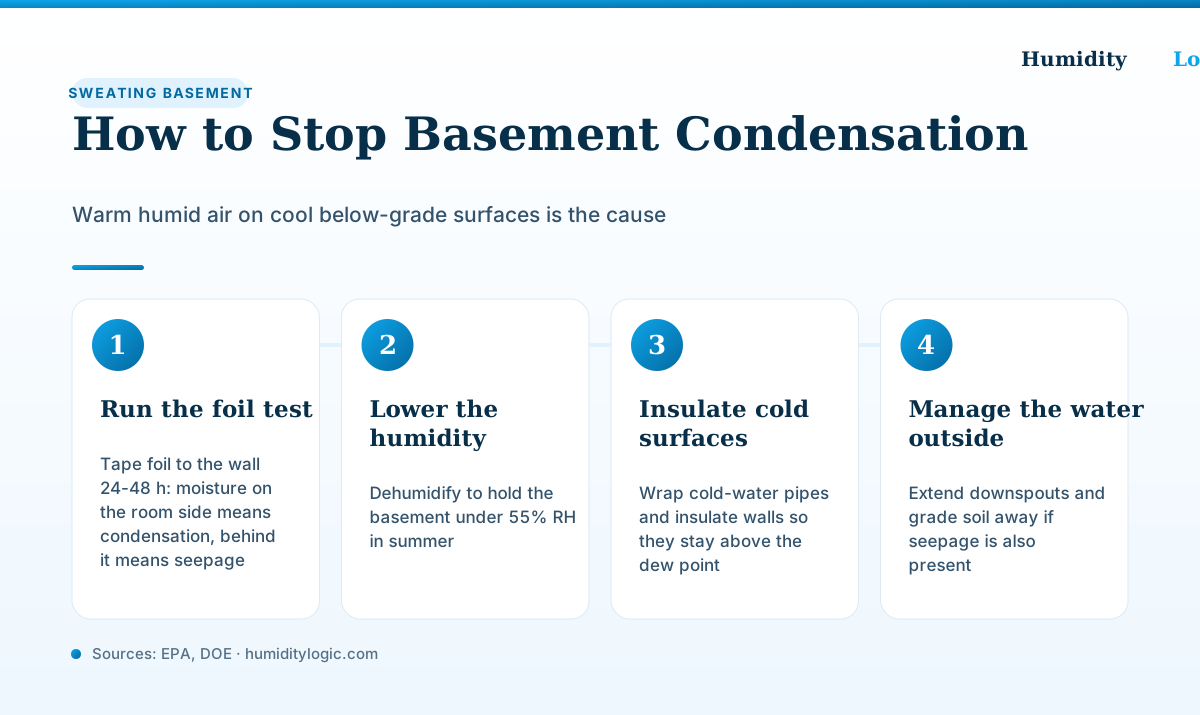
The foil test settles it cheaply. Tape a one-foot square of aluminum foil tightly against the damp wall, sealing all four edges, and leave it in place for 24 to 48 hours. Then peel it back and look at which side is wet:
- Moisture on the room-facing (front) side means humid indoor air is condensing on the cool wall. This is a humidity problem, and the fixes below will solve it.
- Moisture on the back side, against the concrete means water is migrating through the wall from the soil. That is seepage — a drainage and waterproofing issue covered in our wet basement guide.
A dry room side with a damp back side, water that worsens after heavy rain, or staining concentrated in one low spot all point to seepage. A broad film of fine droplets that comes and goes with the weather, and appears on pipes and cold floors as well as walls, points to condensation. Many basements have both, so if the foil is wet on both faces, plan to address humidity and drainage.
A few supporting clues help confirm the reading. Condensation tends to show up across the whole basement at once — every cool surface sweats together on a muggy afternoon, and the dampness eases overnight as the air cools and dries. Seepage is more stubborn and more localized: it favors the base of the wall, the cove joint where wall meets floor, and cracks, and it tracks rainfall rather than humidity. If wiping a surface dry leaves it dry for hours on a humid day only to bead up again, that is condensation reappearing. The same warm-air-on-cold-surface mechanism drives sweating on above-grade walls too, so our condensation on walls guide is a useful companion if the problem extends beyond the basement.
How Do I Stop Basement Condensation? (Cheapest Fixes First)
Once the foil test confirms condensation, work the dew-point equation from both sides: take moisture out of the air, and raise the temperature of the cold surfaces so they no longer reach the dew point. Start with the cheapest, highest-impact steps.
1. Lower the humidity — this is the fastest lever. The EPA advises keeping indoor relative humidity below 60 percent, ideally between 30 and 50 percent. In a basement, aim to hold it under 55% in summer. Run a dehumidifier sized to the space, empty or plumb its drain reliably, and keep a hygrometer nearby to confirm the number. Vent moisture-producing activities — bathrooms, laundry — to the outdoors, and resist opening basement windows on humid days, which only invites more warm, wet air onto the cold walls. Our basement dehumidifier guide covers sizing and placement, and you can estimate how far you need to drop the humidity with our condensation risk calculator.
2. Insulate the cold surfaces. If lowering humidity alone does not fully dry the walls, warm the surfaces so they stay above the dew point. Cold-water pipes are the easiest win: slip foam sleeves over them to stop the dripping that puddles on the floor and drives room humidity up. The DOE notes that insulating pipes reduces the risk of condensation forming on them, which can lead to mold and moisture damage. Insulating the below-grade walls raises their interior surface temperature above the dew point too — but the DOE cautions that insulating basement walls without adequately addressing moisture management can simply mask problems down the road, so confirm you are dealing with condensation, not trapped seepage, first. Wall insulation and rim-joist work are jobs for a qualified contractor because the wrong vapor detailing can trap moisture inside the assembly.
3. Air-seal the leaks that bring humid air in. Warm outside air sneaks into a basement around windows, at the rim joist, and through gaps where humid upstairs air spills down. Sealing those leaks keeps the moisture load down. ENERGY STAR notes that sealing air leaks and adding insulation makes a home more comfortable and energy efficient, and in a basement it directly cuts the supply of humid air reaching cold surfaces.
4. Manage the water outside. Even for a pure condensation problem, wet soil against the foundation keeps walls cold and clammy and adds to indoor humidity through the concrete. Extend downspouts several feet from the house and grade the soil so it slopes away from the foundation. If the foil test showed seepage as well, this step moves from optional to essential.
What Happens If I Ignore Basement Condensation?
Persistent dampness is exactly the condition mold needs, and it can take hold on a wet surface within 24 to 48 hours. The EPA is direct that controlling moisture is the way to control mold: keep indoor humidity down and dry any wet materials quickly. A chronically damp basement also produces that unmistakable musty odor as mold and mildew colonize walls, stored boxes, and framing — our guide to the musty smell in a basement traces that smell back to its moisture source.
The good news is that basement condensation is one of the more solvable moisture problems, because you are working with your own indoor air rather than fighting groundwater. Confirm the diagnosis with the foil test, pull the humidity under 55% with a right-sized dehumidifier, warm the coldest surfaces, and keep a hygrometer running to prove the walls stay dry through the summer. If your foil test instead pointed to water coming through the wall, shift your effort to drainage and waterproofing in the wet basement guide — that is a different fight with a different playbook.
Frequently asked questions
How do I tell basement condensation from a leak?
Tape a square of aluminum foil flat against the damp wall and leave it 24 to 48 hours. If moisture collects on the room-facing side of the foil, the water is condensing out of your indoor air. If the foil stays dry on the room side but is damp behind it, water is seeping through the wall from the soil and you have a drainage or waterproofing problem instead.
What humidity should a basement be in summer?
Aim to hold the basement under 55% relative humidity, and never above 60%. The EPA advises keeping indoor RH below 60 percent, ideally 30 to 50 percent. Lower humidity lowers the air's dew point, so cool walls, floors, and pipes stop reaching it and stop sweating.
Why does my basement get damp only in summer?
Soil keeps below-grade walls and floors cool year-round, often in the 60s. In summer, warm outdoor air carrying a lot of moisture reaches those cool surfaces, drops below its dew point, and condenses. In winter the outdoor air is dry and the effect largely disappears, which is why the sweating is seasonal.
Will a dehumidifier stop basement condensation?
Usually, yes, if the water is condensation rather than seepage. A dehumidifier lowers the air's dew point so cool surfaces no longer fall below it. Confirm the problem with the foil test first, size the unit to the space, and keep a hygrometer running to verify the basement stays under 55%.
Why are my cold-water pipes dripping in the basement?
That is condensation, not a leak. Cold-water pipes run below the dew point of humid summer air, so moisture condenses on them and drips onto the floor, which raises the room's humidity further. Foam pipe sleeves stop the sweating; the DOE notes insulating pipes reduces the risk of condensation that leads to mold and moisture damage.
Sources & references
Every figure on this page is checked against these published sources. Last reviewed July 28, 2026.