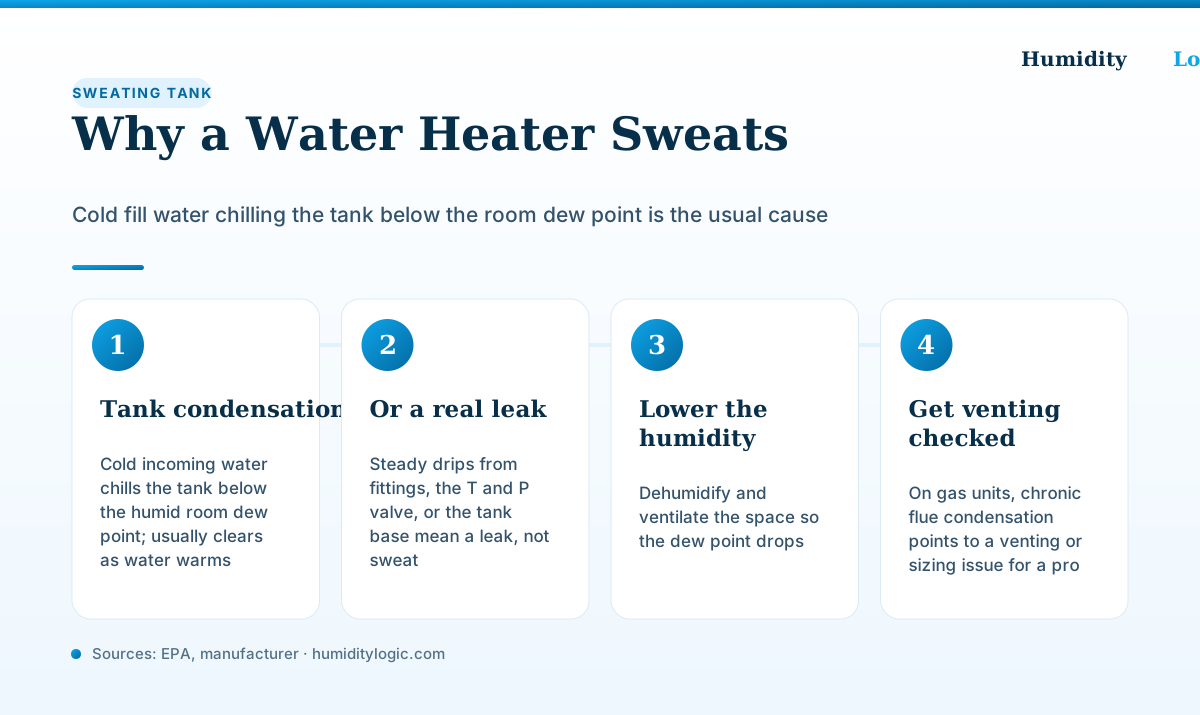
A water heater that “sweats” is usually showing harmless condensation, not a fault: cold fill water chills the tank below the room’s dew point, so humid air beads up on the cold metal exactly like a glass of ice water in summer, and it clears as the water reheats. Manufacturers call this normal after a new install, in cold weather, or after heavy hot-water use. The one thing you must rule out is a real leak — a steady, growing puddle from a fitting, the temperature-and-pressure (T&P) valve, the drain valve, or the tank base — which needs to be checked, not wiped away.
Why Is My Water Heater Sweating?
A sweating tank means its outer surface has fallen below the dew point of the surrounding air, so water vapor condenses on it. The trigger is the cold water inside. A tank holds 40 to 50 gallons that arrives straight from the municipal main or a well, often in the 50s °F, and the steel shell conducts that cold right to the outside. When the air around the heater is warm and moist — a common mix in a basement or utility closet — the vapor hits the chilled tank and turns to a film of water. It is the same physics behind condensation on cold water pipes and a sweating toilet tank: a cold surface plus humid air.
A.O. Smith describes this plainly: “A puddle of water near a newly installed water heater is usually condensation and not a leak,” because “the water heater is full of cold water” the first time it runs. Rheem’s guidance agrees that condensation forms “when cold water enters the tank and the outside air is hot,” and that it “is normal and common.” If you want to see how close your room’s air already is to condensing, our guide on dew point versus relative humidity explains the numbers, and the condensation risk calculator estimates the surface temperature at which sweating begins for your conditions.
Is It Condensation or a Real Leak?
The difference comes down to whether the water clears on its own or keeps coming back from one spot. Condensation shows up as a light, even film across the tank and disappears as the water heats — A.O. Smith notes it “should stop when the entire tank water is heated above approximately 115 degrees.” A leak is different: it drips steadily from a specific place and forms a puddle that grows even after the tank is hot.
To tell them apart, wipe the tank and the floor completely dry, then watch over the next several hours. If a light film returns and then vanishes once the water is hot, it was condensation. If water pools again from a particular fitting or from under the tank, you have a leak. Press a dry paper towel against the cold inlet and hot outlet connections to find the source. Loose threaded fittings can often be tightened; steady drips from the T&P valve discharge pipe usually signal that the home’s water pressure is too high (an expansion tank often fixes it); and water seeping from the tank base typically means the tank is corroding and cannot be repaired. Any of those is worth a plumber’s eyes.
Why Does It Sweat More in Winter and After Heavy Use?
Cold seasons and big hot-water draws both re-chill the tank below the room’s dew point. In winter, incoming water is much colder than in summer, so the tank’s outer surface stays cold longer before it can warm up. After a run of showers, laundry, or dishes, the tank refills with a fresh charge of cold water and the outside sweats all over again until the burner or element catches up. A humid room makes it worse, because the dew point rises with the moisture in the air and meets the cold tank sooner.
That is also why a heater in a damp basement or crawl space sweats more than the same unit in a dry, conditioned space. The manufacturers list “very cold weather or during periods of heavy use” as normal triggers precisely because both push the tank surface below the dew point. None of this is a defect — it is the tank telling you the surrounding air is humid and the water inside is cold.
How Do I Stop Water Heater Condensation?
Since sweating needs humid air to condense, the most reliable fix is to dry the room out so its dew point drops below the tank temperature. Run a dehumidifier in the space and ventilate it. The EPA recommends keeping indoor humidity below 60 percent and ideally between 30 and 50 percent; hold the room in that band and the air can no longer deposit water on the cold tank. The same EPA guidance advises you to “cover cold surfaces, such as cold water pipes, with insulation,” so insulating the cold inlet pipe feeding the heater cuts sweating there too.
A few practical steps help. Make sure no faucet or valve is leaking and cycling cold water through the tank, which keeps it permanently cold. Give the heater some breathing room so air can circulate instead of trapping moisture against it. And treat the wider damp problem, not just the tank — the humid air that sweats a water heater also drives condensation on walls and on a concrete floor nearby. Lower the room’s humidity and all of those ease together.
What About Condensation Inside a Gas Water Heater?
On a gas unit, there is a second kind of condensation that is worth understanding: combustion condensation inside the burner area and flue. When the tank is full of cold water, hot flue gases hitting those cold surfaces can condense into droplets that drip down onto the burner and sizzle. A.O. Smith explains this is normal at startup and that “newer heaters will condensate more than older heaters because modern water heaters are much more efficient,” since efficient units run cooler flue temperatures. Like tank sweat, it should stop once the water warms.
The line to watch is how long it lasts. A little at startup or after heavy use is expected. But water dripping in the burner or from the flue every time the burner fires — not just briefly at startup — points to a venting, draft, or sizing problem that a professional needs to diagnose. Chronic flue condensation can corrode the unit and signals the combustion setup is not clearing moisture the way it should. This is not a DIY area: gas, venting, and combustion components should be checked by a licensed technician, never adjusted by trial and error.
When Should I Worry About a Sweating Water Heater?
Treat it as harmless when the moisture is a light film that dries as the water heats, and treat it as a problem when water is steady, growing, or coming from one spot. A leak from the T&P valve, a fitting, the drain valve, or the tank base needs attention, and a heater near or past its 8-to-12-year lifespan that leaks from the bottom is usually failing. On gas units, persistent burner or flue condensation is a call-a-pro situation.
Do not confuse routine sweat with a dying tank and rush to replace a perfectly good heater — but do not wipe up a real leak day after day either. The reliable move is to lower the room’s humidity toward the 30 to 50 percent range, insulate the cold inlet pipe, and watch whether the water still returns after the tank is hot. If it clears, it was condensation. If it keeps pooling from a fixed point, get it checked.
Frequently asked questions
Is water heater condensation normal or a sign of a problem?
Light sweating on the tank is usually normal. Cold fill water chills the tank below the humid room's dew point, so moisture beads on the metal, then clears once the water warms. Manufacturers note it is common after a new install, in cold weather, or after heavy hot-water use. Steady drips that never dry point to a leak instead.
How do I tell condensation from a water heater leak?
Wipe the tank and floor dry, then watch. Condensation reappears as a light film and disappears as the water heats above roughly 115°F. A leak produces a steady, growing puddle from a specific spot: a fitting, the T&P valve's discharge pipe, the drain valve, or the tank base. Persistent water despite tight fittings usually means the tank itself is failing.
Why does my water heater sweat more in winter or after showers?
Both drop the tank surface below the room dew point. In winter, incoming water is far colder, so the tank's outside stays chilled longer. After heavy hot-water use, cold fresh water floods in and re-chills the tank. Add a humid basement and the moist air condenses on that cold metal until the water reheats.
How do I stop condensation on my water heater?
Lower the room humidity so the dew point drops below the tank temperature. Run a dehumidifier and ventilate the space, aim for 30 to 50 percent relative humidity, and insulate cold water pipes feeding the tank. Fixing a running faucet or leaking valve that keeps cold water cycling in also helps the tank hold its heat.
When should I call a professional about a sweating gas water heater?
Call a pro if water drips into the burner area or from the flue every time the burner runs, not just at startup. Chronic combustion condensation points to a venting, sizing, or draft problem, not simple tank sweat. Also call for any steady leak from the T&P valve, fittings, or tank base. Never troubleshoot gas or venting components yourself.
Sources & references
Every figure on this page is checked against these published sources. Last reviewed August 3, 2026.